Federated Farmers Welcomes ACT’s New Farming Policies
Federated Farmers has welcomed new rural policies released by ACT, saying they align closely with its own election priorities.




 increase font size
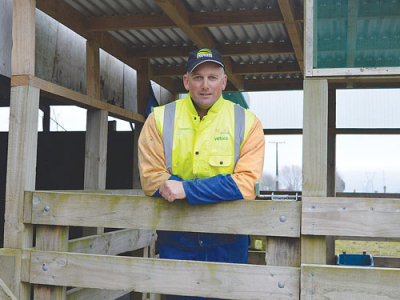 Chris Lewis.
Federated Farmers national dairy chair Chris Lewis says he is looking into transitioning to an A2 herd but he questions whether the premium will stick if everyone switches.
“If we are all going to start supplying A2 milk, will there still be a premium when the world is awash with it in five or 10 years time?” he queries.
“That is the question mark I have on it. I am looking at doing it… but knowing full well that if lots of other farmers in New Zealand, Australia and worldwide are doing it, will there be a premium for it if it is a common thing?”
Plenty of farmers are talking about it and have seen the rise of The a2 Milk Company on the stock exchange, he says. Some worldwide companies are looking at it.
“The only word of caution: is there going to be a flood of A2 milk and will there be a premium after that?”
He has had a herd milk sample done and it showed about 65% of his herd’s milk is A2.
Even with a big proportion of the herd already A2, for him to get his herd percentage to high 90% would be a big hurdle to pass. He is using A2 bulls across his herd and it would probably take him another generation of breeding to get to high 90%, taking at least five or six years.
As an example, Synlait requires you have your herd at 99% A2 milk. Some farmers may have one or two herds of A2 only and the other herd A1. They milk one herd into an A2 vat and the other into the A1 vat.
“They will split their herds up to get a premium,” says Lewis. “We’ve got a large herd but to be worthwhile I will want most of my herd to be A2 if I am going to chase it.
“I am looking into it. But breeding to get to where you need to be takes a very long time. It depends where your herd base is to start with.”
Lewis’s supply company Open Country Dairy is also looking at A2 milk. “But so is everyone else around the world. With everyone looking at it and looking to breed A2 milk, what is going to happen to the supply and demand graph?” he cites as his main reservation.
Federated Farmers has welcomed new rural policies released by ACT, saying they align closely with its own election priorities.

Federated Farmers is backing Feilding High School’s call to keep Agriculture and Horticultural Science as a standalone subject in Year 11.
National’s pledge to introduce 19 new national standards shows the party is serious about getting Wellington out of farming, Federated Farmers says.
Mobile phone coverage and reliability are deteriorating in rural areas, and farming families are bearing the cost, according to a Federated Farmers survey.
Central Otago District Council (CODC) has voted against a plan to spread treated sewage sludge from Cromwell and Alexandra on farmland near Lauder, a decision Federated Farmers says reflects strong opposition from rural residents.



Federated Farmers has welcomed new rural policies released by ACT, saying they align closely with its own election priorities.

Rural Contractors NZ says proposed changes to land transport rules for agricultural vehicles are a welcome response by the Government to out of date regulations which have seen members hit with huge fines.
Alliance is calling for final applications for its 2027 Graduate Programme, with applications closing on Sunday 25 October.
Decades piloting planes has ensured vet and farmer David Hayes is focused on safety. So, after a serious accident while welding on farm, he is sharing his experience so others can learn from it.
Canterbury milk processor, Synlait Milk has confirmed Leon Fung as its chief executive officer.
OPINION: Making it easier to collect rainwater and use it to grow crops and livestock is a no brainer.


OPINION: It seems Canterbury processor Synlait is still in the doldrums.
OPINION: Get offside with New Zealand First leader Winston Peters at your own peril.




