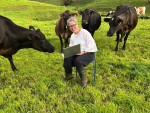
International Day of Rural Women: Two DairyNZ Farmers’ Stories
Today, 15 October, is the International Day of Rural Women, which recognises rural women’s contribution to farming, communities and the environment.




 increase font size
 Colin Glass.
DairyNZ has affirmed its commitment to the Dairy Tomorrow initiative which outlines six broad goals for the sector.
It is the theme of DairyNZ’s Farmers’ Forums which kicked off last week at Timaru.
DairyNZ director Colin Glass said Dairy Tomorrow was a sector-wide strategy designed to set our future direction and “improve lives with every drop of milk.”
It is a joint strategy adopted in conjunction with Federated Farmers, the Dairy Companies Association of New Zealand and the Dairy Women’s Network. Glass said its six key commitments were developed in conversations with farmers, who made it clear that they wanted to lead on environmental issues including climate change, and wanted sustainable farming solutions supported by research and development, an upskilled workforce and the highest standards of animal welfare.
Opening the forum, the first of five throughout the country over the next few weeks, Glass said the industry was going through “a reset and a crisis of confidence” but it was important to remember the future is positive.
DairyNZ was about helping farmers’ business to thrive as part of a sustainable sector.
Also under the Dairy Tomorrow banner was Dairy NZ’s ‘The Vision is Clear’ initiative on water quality.
“It’s about not accepting that stuff is our fault - it’s about accepting that we have a valuable role in changing the views of everyone in New Zealand on how we improve our water quality,” he said.
Dairying businesses had to accept that they have a footprint, but also that they have a positive future.
Glass noted that the world population was expected to grow by another 2.3 billion people by 2050.
“It means we need to produce more in the next 50 years than humanity has produced in the last 500.”
However, consumers’ needs would be different.
“We’ll be catering to a growing middle class and it’s really important that we are aware of what our customers and consumers demand.”
New Zealand’s advantages included having some of the world’s best dairy cow genetics, innovative skilled people, fertile soils, a temperate climate and an abundance of water.
Glass said dairy exports rose 5% last year.
“We are the largest income provider for this economy. Some suggest it’s tourism, but no – dairy has a far greater flow-on and multiplying effect through the wider business economy.”
Dairy remained a viable and positive business opportunity.
“The recent Dairy Industry Awards highlighted what a bright future there is for our talented pool of people, as the right owners and the right share-farmers and employees come together. It really is inspirational and it’s an opportunity for the future that no other sectors have.”
Glass said DairyNZ was looking for science-based solutions to future challenges, an example being the Tararua Plantain project which started this season in the Manawatu hoping to show how plantain can both reduce nitrate leaching through urine patches and improve the soil.
“That region is looking for a 60% reduction to meet Horizons One Plan targets,” said Glass.
However, he said a survey had shown dairy farmers have 69% confidence they would be able to meet climate reduction targets.
Today, 15 October, is the International Day of Rural Women, which recognises rural women’s contribution to farming, communities and the environment.
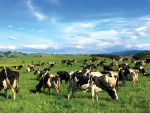
The first major update to the Dairy Cattle Code of Welfare in more than a decade has been released, marking what DairyNZ describes as an important step in ensuring animal welfare standards continue to evolve alongside scientific evidence and on-farm realities.
Have a plan in place for your cows and staff.
DairyNZ deputy chair Cameron Henderson has been re-appointed unopposed for another term.
OPINION: The stats speak for themselves.


National’s pledge to introduce 19 new national standards shows the party is serious about getting Wellington out of farming, Federated Farmers says.
The National Party’s policies to make it easier to grow fresh vegetables, secure reliable water and energy and simplify farm planning are practical changes that will give growers the confidence to invest, according to Horticulture New Zealand (HortNZ).
Fonterra Co-operative Group chief financial officer Andrew Murray has resigned to take up a role outside the dairy giant.
A major move is about to get underway to improve the quality and viability of dairy beef and cattle in NZ.
Veterinarians say changes to the code of welfare for dairy cattle provides a positive foundation for improved cattle welfare across the country.
Today, 15 October, is the International Day of Rural Women, which recognises rural women’s contribution to farming, communities and the environment.




OPINION: It seems Canterbury processor Synlait is still in the doldrums.
OPINION: Get offside with New Zealand First leader Winston Peters at your own peril.




