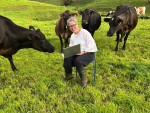
International Day of Rural Women: Two DairyNZ Farmers’ Stories
Today, 15 October, is the International Day of Rural Women, which recognises rural women’s contribution to farming, communities and the environment.




 increase font size
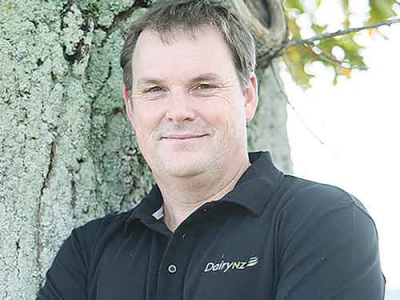 Andrew Reid.
‘Bizarre’ is how DairyNZ’s general manager for extension, Andrew Reid, describes the current season with its weird mixture of floods and droughts in regions that normally don’t get these conditions.
He says the recent declaration of drought in Southland and Otago followed by the massive deluge that hit parts of the West Coast are examples of the unusual weather experienced by dairy farmers nationwide.
“If we go back four to five months to spring, we would have seen in some areas the wettest spring ever experienced, as in Waikato and Bay of Plenty and southern regions of the North Island.
“Whereas Southland experienced the most favourable conditions they’ve ever had in spring and then suddenly the drought declaration. One minute we’re talking about saturated soils and the next minute it’s drought.”
Reid says this shows how rapidly things can change: in Southland a drought at this time of year is unheard of.
The rapidly changing weather has affected farms in different ways and in some cases farmers have benefited from this: some regions are getting bumper crops of maize.
“Bizarre is the best way of describing what has happened so far this season. The flash flooding on parts of the West Coast is a good example.”
Production varies from region to region and even within regions, but nationwide it appears to be down by about 3%.
The dry conditions have some farmers considering drying off or selling cull animals early; others have gone to once-a-day or 16-hour milking
“They have all made appropriate decisions given that in many cases feed supply was down and cow condition falling and the medium outlook for the season was pretty bleak. But it doesn’t take long for things to turn around after a decent spell of rain.”
Much will depend on what sort of an autumn we get, Reid says.
From March onwards farmers should start thinking about what next season might look like, capturing what they can this season but not compromising their operation; they should set up properly for the 2018-19 season.
“Once you get into March, make sure you have your feed plan sorted so you know what are the critical points on your farm calendar and when you need to make those key decisions on drying off.
“At this point the focus needs to be next year, not this year, and farmers should be starting to do that planning now so they know what their feed supply is like for the rest of the year.”
DairyNZ consulting officers nationwide will be telling farmers to be mindful of what they’re paying for supplementary feed and to focus on making the most of pasture, Reid says.
“A couple of key messages are ‘make money from milk’ and ‘it’s easier to take the cows to the feed than take the feed to the cows’.”
He says farmers must keep aware of Mycoplasma bovis, ensuring that while they prepare for winter by shifting animals around they maintain sound biosecurity. And in some areas – especially the lower North Island – humidity is increasing the risk of facial eczema.
Today, 15 October, is the International Day of Rural Women, which recognises rural women’s contribution to farming, communities and the environment.
The first major update to the Dairy Cattle Code of Welfare in more than a decade has been released, marking what DairyNZ describes as an important step in ensuring animal welfare standards continue to evolve alongside scientific evidence and on-farm realities.
Have a plan in place for your cows and staff.
DairyNZ deputy chair Cameron Henderson has been re-appointed unopposed for another term.
OPINION: The stats speak for themselves.


Federated Farmers has welcomed new rural policies released by ACT, saying they align closely with its own election priorities.

Rural Contractors NZ says proposed changes to land transport rules for agricultural vehicles are a welcome response by the Government to out of date regulations which have seen members hit with huge fines.
Alliance is calling for final applications for its 2027 Graduate Programme, with applications closing on Sunday 25 October.
Decades piloting planes has ensured vet and farmer David Hayes is focused on safety. So, after a serious accident while welding on farm, he is sharing his experience so others can learn from it.
Canterbury milk processor, Synlait Milk has confirmed Leon Fung as its chief executive officer.
OPINION: Making it easier to collect rainwater and use it to grow crops and livestock is a no brainer.

OPINION: It seems Canterbury processor Synlait is still in the doldrums.
OPINION: Get offside with New Zealand First leader Winston Peters at your own peril.




