MANY DAIRY farmers will have to lift their game to comply with a new environmental code of practice announced last week.
The new ‘Sustainable Dairying Water Accord’ is a two way partnership between the Dairy Companies Association of New Zealand (DCANZ) and DairyNZ and replaces the ‘Clean Streams Accord’ which expired last year. Federated Farmers supports the new accord and has signed on as ‘friends’. Others such as regional councils, government agencies, fertiliser and irrigation industries and iwi are likely to do the same.
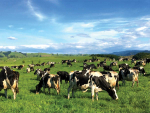
The new agreement covers five key areas: riparian planting, nutrient management, effluent management, water use management and conversions. It promises that 90% of all dairy cattle on the milking platform will be excluded from waterways by May 31, 2014 and 100% by May 2017.
The new accord requires farmers to better manage nitrogen and phosphorous through an industry-wide monitoring and support system. They must also comply with regional council effluent rules and improve water efficiency in irrigation systems and around their cow sheds. Farmers undertaking conversions will have to meet ‘good practice standards’.
DairyNZ chairman John Luxton says the new accord will take effect from the start of this year’s dairy season and is a broader and more comprehensive commitment than its predecessor, the ‘Clean Streams Accord’. “The new accord covers all dairy farmers, not just Fonterra suppliers. All dairy companies and DairyNZ will be accountable for its commitments and farmer uptake will be supported through supply contracts and support programmes.”
Farmers grazing dairy cows away from their milking platforms will be required to ensure they don’t get into streams. Luxton believes councils will before long require this as a matter of course, but he forsees problems given that cows grazing off-farm in winter may be on hilly country difficult to fence.
The new accord is based on some proposals thrashed out by the Land and Water Forum (LAWF) in line with its ‘collaborative model’; environmental groups have been consulted as part of the process.
Says Luxton, “I suspect there will be the odd recalcitrant farmer and they will have to take some action over that, but in most cases farmers do respond once they’re told what’s expected of them.”
DairyNZ will design resources to help farmers meet the targets. Fonterra plans to hold 50 supplier meetings between March 4 and 15 to explain the new accord and other companies are expected to likewise. Getting information out to farmers is critical, says Luxton. “If you go to a regional council and ask them what to do, most refuse to tell you.”
DCANZ chief executive Simon Tucker describes the new Accord as a commitment by all companies to an ‘environmental benchmark’. Each company will have its own way of ensuring these obligations are met.
“For example Fonterra has the ‘supply fonterra’ model for this and most companies will adopt a similar approach. Westland and Synlait are both heading in that direction and the other companies will as well.”
Tucker says the new accord has been a ‘long time in gestation’, partly to enable DCANZ to work with all stakeholders including central and local government. “We have worked very carefully through all the issues with the councils and [are asking them] to join this commitment as ‘friends’…. We recognise councils have legal obligations under legislation and there is no way that we are seeking to replace that.”
Tucker says if farmers comply with the new accord they may in some instances meet the rules and limits set by some councils. But he says in some catchments such as around Lakes Taupo and Rotorua, farmers will have to comply with higher standards set by the local councils. He says the main thing is that there is nothing in the new accord will run counter to any rules set by councils.