
NZ Food Safety Boss on Balancing Speed and Risk in Approvals
Striking a balance between meeting the needs of industry to speed up approval time for products but on the other hand ensuring that risks are properly assessed.




 increase font size
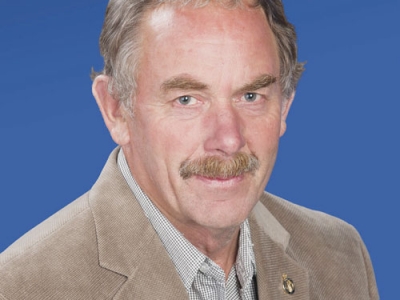 Joe Carr, Northland councillor.
A record number of Northland dairy farms achieved full environmental compliance last season.
Joe Carr, chairman of the Northland Regional Council's environmental management committee, says 65% of the 900-odd farms inspected over four months from mid August last year were fully compliant – a record.
Carr, an Okaihau beef farmer and forest owner who represents the Hokianga-Kaikohe constituency, says 944 farms were visited by the council or its contractor last season.
Of the 697 farms with resource consent to discharge farm dairy effluent (FDE), 419 (60%) fully complied, 188 (27%) had minor compliance issues and 90 (13%) were significantly non-compliant.
However, Carr says the 13% non-compliance rate was the lowest ever for consented farms. Last year, 139 farms (20%) had been significantly non-compliant.
Similarly, of the 247 non-consented farms visited, 190 (77%) had been fully compliant, 13 (5%) had minor compliance issues and 44 (18%) were significantly non-compliant.
Again, there had been a marked improvement in the significant non-compliance rate. Last year 26% (67 non-consented farms) had been significantly non-compliant.
"The overall rate for significant non-compliance for the year is 14% compared with 21% last year," Carr says. "This is the first time the overall significant non-compliance rates have been below 20%.
Carr says while all stakeholders are striving, there's still room for improvement. "However, it's pleasing to see the industry collectively lifting its game and making gains in overall compliance and subsequent improvements in water quality."
Northland's lagging behind other regions in compliance can be explained, Carr says:
All Northland farms are monitored every year from mid-August to early December when effluent loadings are highest and farm systems are under most stress. In contrast other regions spread their monitoring throughout the dairy season.
Visits are not pre-notified in Northland, unlike some other regions.
All discharges to water in Northland are sampled, unlike some other regions.
The council monitors all aspects of the farming operation covered by the relevant resource consent or rules, including stand-off pads away from the dairy, dead stock disposal and discharges from silage storage.
"Our overall monitoring is very robust and identifies actual problems. We are then able to work with our farmers to address and improve issues. To that end, significant non-compliance in Northland is typically followed up with an advisory visit," Carr says.
"If other regions applied the same rigour to their monitoring regimes, I believe their results would be at best similar and probably much worse."
Meanwhile, Carr says the council offers free, no-obligation advice to help develop tailor-made farm water quality improvement plans for individual properties.
He says freshwater on dairy farms forms part of a greater catchment system, which carries any accumulated sediment, bacteria or nutrients all the way to the coast, harbours and estuaries.
"Our plans [help] farmers improve water quality on their properties. Typically these plans include an aerial map of the property describing its soil resources and a short report (with photos) identifying suggested actions, prioritised for greatest water quality benefits."
Striking a balance between meeting the needs of industry to speed up approval time for products but on the other hand ensuring that risks are properly assessed.
Farms across the upper North Island are trialling different pasture mixes as part of a research programme that aims to build greater resilience into farming systems.
OPINION: Since when did one and one make three? Who didn't smell an elephant-sized rat when our leaders decided to give $60 million to save the cement factory in Northland?
New Zealand needs to make sure that it continues to focus on its own food security, according to HortNZ board member and blueberry grower Dermott Malley.
For 50 years, Tasman's Mel Ewers has been helping the apple sector navigate through compliance issues and training.


In Dacre, near Invercargill in New Zealand’s South Island, Bruce Dinnington is running a dairy operation unlike any other.

A free online platform aggregating governance vacancies across rural and regional New Zealand has been launched.
Environment Minister Nicola Grigg has announced details of a new rural plastics recycling scheme.
Agricultural drone operators say that a government decision to allow lower-risk drone work without certification won’t lower standards but drive innovation and efficiency.
OPINION: Warning bells are ringing in the arable sector.
Farmgate lamb prices are down by 8%, beef cattle by 4.5% and farm expenditure up by 4.2%.


OPINION: It seems Canterbury processor Synlait is still in the doldrums.
OPINION: Get offside with New Zealand First leader Winston Peters at your own peril.




