Federated Farmers Backs Year 11 Agricultural Science
Federated Farmers is backing Feilding High School’s call to keep Agriculture and Horticultural Science as a standalone subject in Year 11.




 increase font size
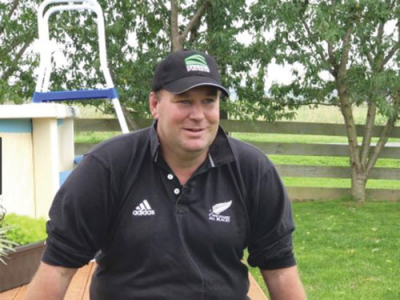 Andrew Hoggard.
When people say New Zealand should be a leader in agricultural climate change technology and systems, Feds climate change spokesman Andrew Hoggard says he gets “pissed off”.
“We are already a leader, if you look at carbon footprint per km of land or per kilo of milk solids or whatever,” he told Dairy News.
“Most things we produce we are already producing at world’s best or we are setting the target for world’s best. I don’t know how much more of a leader you can be.
“People need to eat food so the goal surely is to produce the food at the lowest possible footprint which NZ farmers are doing. To me that is leadership.
“Undoubtedly there are things we can do even better, because other countries will try to take that leadership mantle off us.
“But I get really pissed off when I hear these people saying ‘we should be leaders’. They are ignoring the reality that we are already doing pretty bloody good on a whole range of things in this space.”
He was responding to the report ‘A Zero Carbon Act for New Zealand’ by the Parliamentary Commissioner for the Environment (PCE), Simon Upton, which makes nine recommendations, among them to set up a climate change commission similar to a UK model. The idea is supported across the political spectrum in NZ.
The Feds insist that actions to tackle climate change can work if there is cross-party support backed by a climate commission informed by science.
Hoggard says more thinking is needed globally about how agriculture is treated. Rather than lumping everything together, action needs to be more strategic in recognising the world’s populace needs food, he says.
“We need to produce food at the lowest possible footprint… and have a scheme that works well across the planet,” says Hoggard.
“I heard a great presentation a couple of years ago from the international vice-president of the World Wildlife Fund who advocated strongly for more free trade as one of the solutions.
“Where you have countries trying to be self-sufficient in producing all their own food, often they are trying to go against nature.
“All these dairy farms in the middle of Saudi Arabia are a great example. What a waste of resources and energy: they are sucking out of the ground the water they desperately need, they are buying in feed from half the world away, all so they can produce [dairy] locally. Why not just buy it from any one of the other countries – NZ, US, EU? It makes more sense.
“That is part of the solution. It is quite humorous in the fact that mostly if you look at the likes of CPTPP and most trade deals, it is generally the green and environment groups that seem to be opposed to them. In fact they should be right behind them.”
Federated Farmers is backing Feilding High School’s call to keep Agriculture and Horticultural Science as a standalone subject in Year 11.
As part of its Election 2026 coverage, Rural News asked political parties how they would help pull the arable sector out of the doldrums. Here's what they said:
National’s pledge to introduce 19 new national standards shows the party is serious about getting Wellington out of farming, Federated Farmers says.
OPINION: Rivers never sit still. They start as snowmelt and rain in the high country, pick up a creek here and a stream there, and carry all of it down to where it's needed.
Mobile phone coverage and reliability are deteriorating in rural areas, and farming families are bearing the cost, according to a Federated Farmers survey.


Decades piloting planes has ensured vet and farmer David Hayes is focused on safety. So, after a serious accident while welding on farm, he is sharing his experience so others can learn from it.
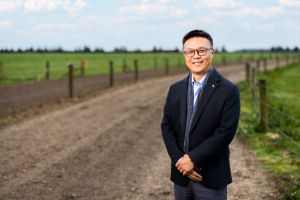
Canterbury milk processor, Synlait Milk has confirmed Leon Fung as its chief executive officer.
OPINION: Making it easier to collect rainwater and use it to grow crops and livestock is a no brainer.
As part of its Election 2026 coverage, Rural News asked political parties how they would help pull the arable sector out of the doldrums. Here's what they said:
Farmers are being encouraged to rethink how they manage waste on farm with the launch of ruralwastesorted.co.nz, a new website bringing together practical tips, real farmer experiences and resources.
New Zealand Winegrowers (NZW) is celebrating the India-New Zealand Free Trade Agreement (FTA) coming into force today, bringing New Zealand wine improved access to one of the world’s fastest-growing economies.


OPINION: It seems Canterbury processor Synlait is still in the doldrums.
OPINION: Get offside with New Zealand First leader Winston Peters at your own peril.




