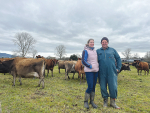
Research shows farm ownership a viable goal
Buying a farm is challenging but still achievable according to research recently carried out by Smaller Milk and Supply Herds (SMASH).




 increase font size

Three upcoming Waikato SMASH (Smaller Milk and Supply Herds) events will tackle three thought-provoking topics – energy use, pasture persistence and robotic milking.
Now in its third year, SMASH, supported by DairyNZ, is preparing for its 2013 events, some of which are taking place during February and March in Cambridge and Morrinsville.
SMASH chairman Noldy Rust says the days will be informative for dairy farmers, with the first event on February 12 in Cambridge, looking at how to produce and save energy on-farm.
"All farmers are conscious of how energy costs take significant dollars from their bottomline, but not all know how to set their dairy up to be energy efficient, and know whether the different energy generation technologies are actually worthwhile."
Guest speakers will discuss energy production and how to make dairy sheds more efficient.
NIWA's Stephan Heubeck will share information on energy generation (including solar, wind and microhydro) and NIWA research into generating energy from effluent.
Jim Miller, an energy consultant to Fonterra, will talk about how energy is used in the dairy shed and how farmers can make operational changes to save energy. Suppliers for the different energy generation systems will also be on-hand to answer questions.
Farmer, Andy Knibbs (pictured), will be on hand at the SMASH energy day to talk about his solar panels.
The second event, on February 21 in Morrinsville, is focusing on pasture persistence.
"Brian and Bridget Frost's farm was converted to tall fescue to deal with persistence issues, something many farmers struggle with, as pastures don't survive more than a year or two. The Frosts will share what they have learnt," says Rust.
DairyNZ senior scientist Errol Thom and farm systems specialist Chris Glassey will also talk about how to establish persistent pastures and how tall fescue can fit into existing systems.
The final SMASH event, on March 5, will be held on John Fisher's farm in Cambridge.
"We'll look at his robotic milking machine set-up and see this exciting technology in action," says Rust. "John will also share why they decided robotics was for them, how the farm has been set-up to work with it and the lessons learnt so far."
Although geared towards farmers with smaller operations, all are welcome to attend these events, as there is much of interest for everyone.
For more information and event updates, visit the SMASH website smallerherds.co.nz.
SMASH events 2013
February 12 Energy efficiency
Cambridge – Don Rowlands Centre, Lake Karapiro
February 21 Pasture persistence
Morrinsville – Brian and Bridget Frost's farm, 233 Seifert Rd, Tauhei
March 5 Robotic milking
Cambridge – John Fisher's farm, 387 Parallel Rd, Cambridge
All meetings run from 10.30am until 2pm.
Buying a farm is challenging but still achievable according to research recently carried out by Smaller Milk and Supply Herds (SMASH).
Anna Kalma is Smaller Milk and Supply Herds (SMASH’s) national coordinator and has seen it all in her time on the national committee.
Smaller Milk and Supply Herds (SMASH) needs your help.
A top farm accountant says in the present downturn, it's vital that farmers take heed of all the good advice on offer.
Michael Kiernan's lucerne crop was a godsend in the dry Southland summer this season.


High country stations, mixed sheep and beef farms, Māori-owned farms, corporates and family operations are among the nine commercial farms taking part in the Livestock Innovation Farming Transformation programme, known as LIFT.
OPINION: New health and safety guidance unveiled by the Government recently provides farmers greater certainty about what is expected of them when managing risks on farm.
The National Animal Welfare Advisory Committee (NAWAC) is seeking public feedback on proposed changes to the Code of Welfare for Rodeos.
A New Zealand initiative supporting farmers to restore the health of grazing landscapes has received international backing through the Regenerative Fund for Nature, a global collaborative fund supporting regenerative agriculture and the communities that produce natural fibres for the fashion industry.
Combine premium New Zealand products, blend in a family ritual and what do you get? A world-class functional drink.
Entries are now open across eleven regions for the 2027 New Zealand Dairy Industry Awards (NZDIA).

OPINION: It seems Canterbury processor Synlait is still in the doldrums.
OPINION: Get offside with New Zealand First leader Winston Peters at your own peril.




