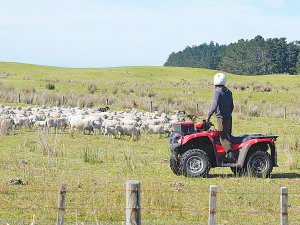
While quads’ stranglehold of the off-road market has been tempered by side by sides (UTVs), quads persist, particularly on narrow tracks or difficult terrain.
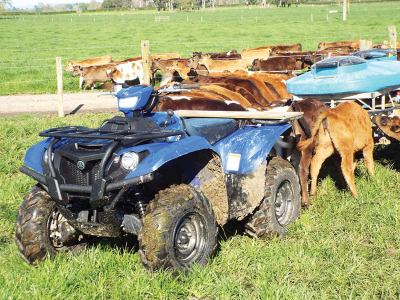
For a quad for heavy loads or tough conditions it’s hard to find a more capable machine than the Yamaha Kodiak 700 EPS.
It’s shod with heavy duty, 25 inch diameter Maxxis tyres carried on 12-inch steel wheels and weighs 307kg. It’s a large machine, with physical attributes that make it good for 600kg at the towbar and a useful 140kg spread between the front and rear racks.
Out on the farm the Kodiak, despite its weight, is easy to steer thanks to electronic steering that keeps driver effort light and gives good feedback on changing surfaces or terrain.
The SOHC, 4-valve, 686cc single cylinder, fuel injected engine starts easily and quickly settles to a steady tickover. Hitting the throttle results in smooth rapid progress, helped by Yamaha’s Ultramatic CVT system in which a toothed drive belt is kept under constant tension. This gives excellent downhill retardation, with all wheel braking by the one-way sprag clutch set-up.
A wide, long seat accommodates all sizes of riders, and full length footboards give a sense of safety and prevent seasoned bikers from putting their feet down before the vehicle comes to a stop.
Countering the machine’s turn of speed, disc brakes all round give a controlled stop. Their configuration is a right-hand lever control of the twin discs at the front and a left lever or the right-foot pedal actuating the rear single disc.
On the farm race the ride quality felt pliable, edging towards soft, but certainly a very comfortable ride. A double wishbone, A-arm set-up uses specially designed KYB shock absorbers with 180mm of travel at the front and 230mm at the rear.
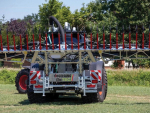
The machine took in its stride towing an 80 teat calfeteria loaded with 500L of milk along the main farm race and through muddy gateways. The 4WD engaged only to stop the front tyres ‘washing out’ on turns. The flat contours of central Waikato precluded hitting the diff-lock button.
Riding the 700 for a couple of weeks looked to be easy, evidenced by the shaft drive to the rear, a handy access cover at the left heel to get to the engine oil dipstick and a capable and powerful halogen headlight up front.
Keeping things clean was also easy with smooth panels, especially under the mudguards, and plenty of space around the front and rear axle components to let muck fall through, rather than lodge and collect. No excuses there.
Negatives? None that stood out, except the markings on the selector lever for forwards, reverse and park: not big enough for old buggers with less than perfect eyesight.