Subsoiling vs Drainage: Fixing Wet Paddocks This Spring
As we move further into spring, decisions are being made about working land for cropping, as daytime and ground temperatures increase.




 increase font size
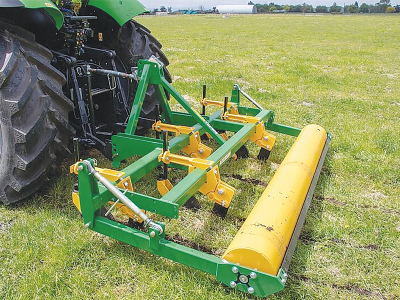 Depth is controlled by a full-width flat roller.
The benefits of sub-soiling and soil aeration are well known, not least their ability to create vertical fissures that help water and nutrients penetrate to plants roots, so helping increase production.
And it can be remedial in pugged paddocks or gateways by removing standing water and bringing ground back into production more quickly.
The Aitchison Earthquaker, marketed by Power Farming, has a 2.44m wide double-bar high-tensile steel frame with cast clamping components that secure legs or tines to the frame.
Straight legs or parabolic tines are made from bis-alloy steels, with dimensions of 500 x 16mm thick, to allow operating depths of 300-400mm. The straight leg is useful for causing ‘shatter’ and minimising inversion of the soil profile, so it should suit farmers not wanting to bring clay sub-soils into the surface layer.
The curved parabolic tine option causes some inversion, but offers key benefits in draught reduction by making the units 30% easier to pull.
Legs or tines each carry a knock-on/off point and wing assembly to ensure penetration and sub-soil or pan shatter. Overload protection from stones or trash is by a 20mm transverse shear bolt, pre-stressed to ensure a clean break.
A range of two to seven legs can be mounted to the frame, the former ideal for ‘loosening’ tramlines, all easily adjusted to create the desired effect and typically needing 60 to 150hp for effective use.
In operation, depth control is by a full-width flat roller assembly fitted with a scraper that also levels and firms the surface after use.
For those operating in grasslands, optional 350mm diameter disc coulters cut a path through the sward to allow the tine a clean entry and work in with the rear roller to ensure a prompt return to grazing or harvesting.
Product manager for Power Farming, JP Chapman, says “the Earthquaker is a versatile tool for removing pans and improving vertical drainage, and it lends itself to soil loosening in cultivation work, perhaps ahead of discs, tines or power harrows in primary cultivation or remediation.”
As we move further into spring, decisions are being made about working land for cropping, as daytime and ground temperatures increase.
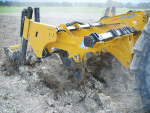
Subsoiling offers improved drainage and creates healthier soil conditions with increased worm activity, ultimately resulting in higher yields.
The practice of sub-soiling, by no means new, has been acknowledged by farmers and contractors as helping improve drainage and creating healthier soil conditions.


Federated Farmers has welcomed new rural policies released by ACT, saying they align closely with its own election priorities.

Rural Contractors NZ says proposed changes to land transport rules for agricultural vehicles are a welcome response by the Government to out of date regulations which have seen members hit with huge fines.
Alliance is calling for final applications for its 2027 Graduate Programme, with applications closing on Sunday 25 October.
Decades piloting planes has ensured vet and farmer David Hayes is focused on safety. So, after a serious accident while welding on farm, he is sharing his experience so others can learn from it.
Canterbury milk processor, Synlait Milk has confirmed Leon Fung as its chief executive officer.
OPINION: Making it easier to collect rainwater and use it to grow crops and livestock is a no brainer.


OPINION: It seems Canterbury processor Synlait is still in the doldrums.
OPINION: Get offside with New Zealand First leader Winston Peters at your own peril.




