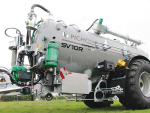
Pichon Adds SV10R and SV14 to SV Slurry Tanker Range
French manufacturer Pichon has expanded its SV slurry tanker range with the launch of two new models.




 increase font size

In agriculture, the emphasis for the last 150 years has been on using technology to know more about orchards, fields, and crops, which has been great, according to Watermetrics.
“We’ve uncovered inefficiencies, learned more about our land, and optimised inputs through tools like weather stations, soil moisture probes, sensors, satellites, flow meters, and more. But as often happens, yesterday’s solutions have created today’s problems.
“Technology has enabled us to deeply understand our land and crops in the modern farming landscape through numerous tools. We’ve accumulated a treasure trove of data to maximise our yields and optimise our resources.”
But, there’s a hitch – we are now navigating through a sea of data, often struggling to decipher it into actionable strategies, it says.
“Farmers in New Zealand are getting more and more data. Some of it’s expensive. Some providers are backward in sharing it.
“There are data gaps which can make a data stream unreliable. You can pay a lot for data that just doesn’t do the job accurately enough in important situations. Some data is confusing like a trigger point to irrigate and noticeably varying responses from an irrigation.
“Authorities want you to show that you are using data to manage water and nitrogen and be environmentally responsible and there can be variations around how- given the data interpretation.
“Dealing with data and transforming it into meaningful, actionable insights is actually quite difficult. Farmers are good at solving puzzles but they don’t have time to solve mysteries. Mysteries require improved analysis and interpretation of data for resolution. At the end of the day this is grasping the key indicators that affect plant health and yield. This leads to profit and we all want that.
“Historically, many agricultural companies have operated by amassing asymmetric information – having more knowledge than the next person.
www.watermetrics.co.nz
French manufacturer Pichon has expanded its SV slurry tanker range with the launch of two new models.
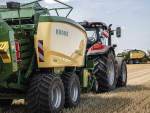
Recently revealed, Krone’s new Series Six, BiG Pack Plus and Pro balers are designed to use standardised components, interfaces, and control concepts, including pick-up, knotter systems and user interfaces.
Consuming around six years and more than 35,000 hours of physical and digital testing, the new sixth-generation Valtra T Series is being described as the most significant new release in the company’s history.
Strautmann has introduced a new Hay Edition auger for its Verti-Mix feed mixer wagons, aimed at operators using rations with larger proportions of hay or other long-fibre materials.
A long way from when AI meant plunging a plastic-covered arm armpit deep up a cow’s rear, John Deere has shown off its new artificial intelligence (AI) assistant, aptly called JD, which aims to simplify data processing on farms.


National’s pledge to introduce 19 new national standards shows the party is serious about getting Wellington out of farming, Federated Farmers says.
The National Party’s policies to make it easier to grow fresh vegetables, secure reliable water and energy and simplify farm planning are practical changes that will give growers the confidence to invest, according to Horticulture New Zealand (HortNZ).
Fonterra Co-operative Group chief financial officer Andrew Murray has resigned to take up a role outside the dairy giant.
A major move is about to get underway to improve the quality and viability of dairy beef and cattle in NZ.
Veterinarians say changes to the code of welfare for dairy cattle provides a positive foundation for improved cattle welfare across the country.
Today, 15 October, is the International Day of Rural Women, which recognises rural women’s contribution to farming, communities and the environment.


OPINION: It seems Canterbury processor Synlait is still in the doldrums.
OPINION: Get offside with New Zealand First leader Winston Peters at your own peril.




