Resilient Global Dairy Industry Overcoming Volatility
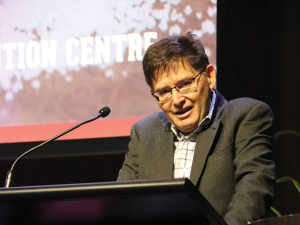
Fonterra chief executive, Richard Allen says being resilient has helped the dairy industry overcome extreme volatility in recent years.




 increase font size
 Allan Steele, Coolcare.
Last month marked one year since the launch of an innovative collaboration known as the PAUS Programme (Pay- As-You-Save), which has made it easier for Fonterra farmers to access next generation milk chilling technology.
Since the launch of the programme, around 50 Coolcare milk chilling units have been installed on Fonterra farms across the country, resulting in approximately 5800 tonnes of carbon dioxide equivalence (CO2e) being avoided - based on a total emissions warming impact (TEWI) calculation carried out on each farm’s conversion to a VariCool milk chilling system.
Coolcare – a New Zealand- owned and operated milk refrigeration company – has been collaborating with Fonterra, Purpose Capital, the New Zealand Green Investment Finance and Cool- Safe to deliver the PAUS Programme.
It’s an exclusive deal for the co-operative’s farmers whereby they can lease new milk chilling systems that are cost-effective to run and use fourth generation refrigerant gases that have CO2e of around 80% less than those typically used in older systems.
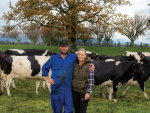
Joe and Becky Laming from Altavady Group near Oamaru are among the farmers who have signed up to the PAUS Programme, and they say they highly recommend it to others.
“It’s hassle-free and it works. Over 30 days in September 2024, it saved us $972 in dairy shed electricity and hot water generation compared to our previous system,” says Joe Laming.
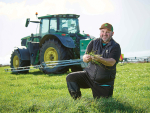
Timaru-based Bruce Murphy of Murphy Farms is another early adopter who says he’s enjoying the benefits of the new system.
“Our old unit was out of date, and this came as a good option,” says Murphy.
“What really appealed to me was the fact that the lease is seven years. Technology is moving at a fast rate, and in the end, we will have the ability to replace that unit with current technology.
“Murphy Farms are planning to convert all six of our farms to the PAUS Programme over the next couple of years.
“We are very happy with it, and it’s easy to operate.”
Fonterra and Nestle’s Net Zero Pilot Dairy Farm in the Taranaki is also using one of the units.
Anne Douglas, group director for Fonterra Farm Source, says the cooperative is delighted to be part of a collaboration that’s delivering tangible benefits to farmers.
“We’re always looking at ways to help make things easier on farm, and this includes working with others where it makes sense to,” says Douglas.
“Through the PAUS Programme, co-op farmers have a quality milk chilling option that’s not only cost effective and hassle free in terms of maintenance – but also delivers benefits such as reduced emissions and electricity savings.
“As more farmers take part, the positive impact on both the industry and the environment will continue to grow,” Douglas says.
Coolcare chief executive Allan Steele says the first year of the partnership has been about laying great foundations, including ensuring the best possible support in place for participating farmers.
“Farmer feedback has been positive overall, and the interest is growing,” says Steele.
“We are starting to scale up production of the units from our facility in Hamilton and we look forward to assisting more farmers through this initiative over the next 12 months.”
Fonterra chief executive, Richard Allen says being resilient has helped the dairy industry overcome extreme volatility in recent years.

Northland farmer Greg Collins has taken over as chair of the Fonterra Co-operative Council.
Fonterra’s 2026 financial year was a year of delivery, with record volumes of milk collected, processed and shipped by the co-op.
Dairy farmers, still holding onto their Fonterra shares despite switching milk supply elsewhere or exiting the industry, now face a stricter share sell-down requirement.
Milk powder prices are continuing their merry run, firming up a potential $10/kgMS farmgate price this season.


During the nesting season, from September to December, industrious starlings can quickly build nests in the darker areas behind tractor and vehicle, usually close to hot engines, typically resulting in localised damage or in some cases complete write-offs.
The meat processing industry is much more collegial than it was in the past and is now more focused on common goals.
With the last couple of months having seen some potential tractor purchases put on hold with the impending election and continued input cost rises, year-to-date figures, ending September, has seen deliveries up around 5% over the same period in 2025, with a total of 2026 units.
Beef+Lamb New Zealand is calling for nominations for director roles in the Northern South Island and Northern North Island electoral districts.
Fonterra chief executive, Richard Allen says being resilient has helped the dairy industry overcome extreme volatility in recent years.
The head of the Ministry for Primary Industries (MPI) trade and international relations group says New Zealand is well-positioned to secure trade access and compete internationally as the world becomes more complicated, demanding and uncertain.
OPINION: It seems Canterbury processor Synlait is still in the doldrums.
OPINION: Get offside with New Zealand First leader Winston Peters at your own peril.