'Regulatory Middlemen'
OPINION: Groundswell's opinion of the incumbent farm industry representatives isn't high.




 increase font size
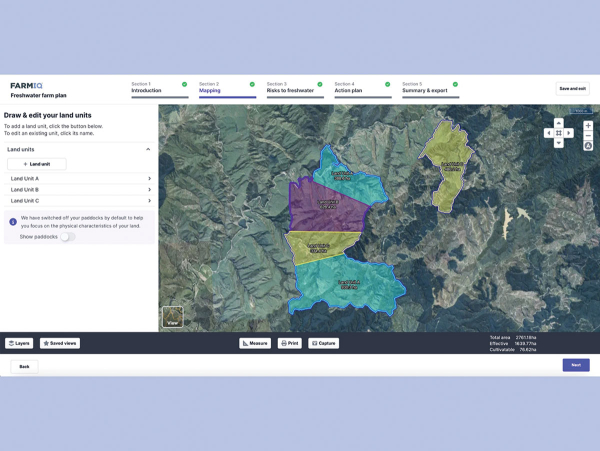 FarmIQ says its Farm Freshwater Plan tool was developed with the aim of helping farmers.
A step-by-step guide helping farmers through the process of creating a Freshwater Farm Plan (FWFP) has been launched by FarmIQ.
FWFPs are a regulated farm planning process for farmers and growers that will provide a practical way to identify, manage and reduce the impact of farming on the freshwater environment.
FarmIQ says its FWFP tool was developed with the aim of helping farmers with this new piece of compliance that has so far been rolled out in Waikato, Southland, West Coast, North Otago and Horizons regions.
It says the tool takes farmers through the process of mapping their land, assessing their risks to freshwater, and building an action plan. This is all linked to a digital map of their farm in FarmIQ, making it simple for farmers, farm advisors, certifiers, and auditors to develop or monitor these plans all in one place.
Farmers can either do the FWFP by themselves, or if they want a bit of a hand, they can give third party access to a consultant to do some of the heavy lifting for them.
Because FarmIQ is a map-based farm management system, it forms the perfect base for the map and land-unit focus of the FWFP regulations.
FarmIQ is a map-based farm management tool that helps farmers keep track of staff management, land and feed data, animal recording and compliance information.
Executive general manager for FarmIQ, Gavin McEwen, says that it has had a longstanding commitment towards providing tools that enable better integrated farm planning.
“Building on our existing software platform, and recognising the industry’s commitment towards improving water quality, we have invested in new functionality that walks users through the requirements to create a Freshwater Farm Plan,” says McEwen.
“It has been an excellent example of our software designers and subject matter experts working closely with government, processors, regional councils, catchment groups, consultants and, of course, farmers to create a software tool that, to date, has received excellent feedback.”
The release of FarmIQ’s FWFP tool coincides with a new version of the FarmIQ software being released – FarmIQ Lite – which offers a cost-effective entry point to utilise FarmIQ’s interactive farm map, staff management tools and compliance features, helping users keep up with industry rules and regulations.
Current FarmIQ users can use their existing farm map with hazards, water, landmarks, buildings, etc already loaded.
Alternatively, new users can build a farm map for the purpose of completing the FWFP but can also use that map as part of their everyday farm planning and management as well.
Additionally, external mapping resources can be integrated into the FWFP farm map as a shapefile, allowing flexibility to enhance a farmer’s farm map as desired.
All versions of FarmIQ will include the Freshwater Farm Plan tool, starting at $40 per month per farm.
OPINION: Groundswell's opinion of the incumbent farm industry representatives isn't high.

FarmIQ Systems has developed a free land management app to help remove barriers to New Zealand farmers and growers adopting digital tools.
Research suggests that up to 90% of the nutrient value in effluent can be retained if the material is used efficiently, with additional benefits being gained by increasing soil organic matter, leading to improved water holding, aeration and drainage.
Imagine transforming your dairy farm’s waste into a goldmine of savings and productivity.
Watermetrics was formed as a water data collector and currently supplies and services modern technology such as flow meters, soil moisture and EC probes, weather stations, hydrostatic and ultrasonic level sensors nationwide.


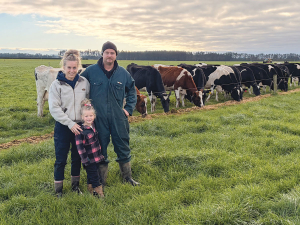
For Canterbury dairy farmers Sian Meijer and Rick Wobben, wearable technology has become one of their most valuable on-farm tools - helping manage 1850 cows across an expansive, high-performing dairy operation while improving efficiency, mating outcomes and day-to-day decision making.
Fonterra has unveiled its annual results for the 2026 financial year, posting $27 billion in revenue and close to $20 billion returned to New Zealand farmer owners and unit holders.
The first major update to the Dairy Cattle Code of Welfare in more than a decade has been released, marking what DairyNZ describes as an important step in ensuring animal welfare standards continue to evolve alongside scientific evidence and on-farm realities.
Ravensdown shareholders have elected Jane Montgomery and Kate Acland to the Ravensdown Board for three-year terms, following a closely contested director election.
Federated Farmers says new legislation replacing the Resource Management Act will cut red tape, unlock investment and help grow New Zealand's export-led economy, after the Planning Bill and Natural Environment Bill passed their third reading in Parliament yesterday.
Leading figures from the major political parties will be questioned on their primary sector policies at the Rural Issues Debate at Mystery Creek Events Centre, Hamilton, on 30 September.



OPINION: It seems Canterbury processor Synlait is still in the doldrums.
OPINION: Get offside with New Zealand First leader Winston Peters at your own peril.




