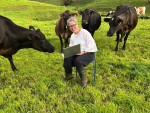
International Day of Rural Women: Two DairyNZ Farmers’ Stories
Today, 15 October, is the International Day of Rural Women, which recognises rural women’s contribution to farming, communities and the environment.




 increase font size
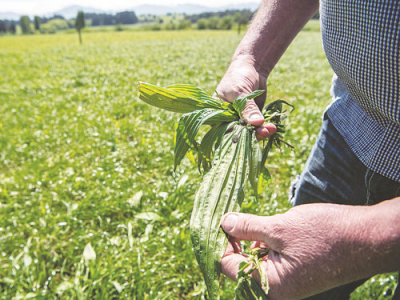 Plantain has proven to reduce nitrogen loss.
Plantain could ‘save’ some Manawatu dairy farmers faced with cutting nitrogen losses from pasture by 60%, comments DairyNZ.
Tararua farmers now face having to cut N loss by an average of 60% to meet the council’s One Plan targets.
To achieve the cuts farmers must adopt a range of onfarm changes, and the region’s new plantain research could be a key component, says DairyNZ.
The Tararua Plantain Project, funded by the Sustainable Farming Fund, is a new approach by DairyNZ to reduce farm N loss using plantain and good management.
“Plantain provides us with an excellent low-cost opportunity to meet this challenge,” says DairyNZ catchment engagement leader Adam Duker.
“It can be used as a pasture mix for dairy cattle feed, but its properties have also been proven to reduce nitrogen loss.
“Farmers in the catchment have already been making onfarm changes to reduce nutrients and sediment affecting the Manawatū River.
“The river water quality is improving as a result and, by adopting plantain as a fodder crop on their farms, we expect to see further improvements over time.”
The project involves paddock-scale research on six farms where plantain crops are expected to reduce nitrogen from cow urine. Plantain roots also lock more nitrate into soil, preventing run-off into waterways.
“The project is farmer-led... testing the feasibility of plantain at the farm and catchment scale.
“We’d like to see plantain as a staple part of the dairy cow’s diet in this area by 2025,” says Duker.
“It will allow our farmers to maintain similar levels of milk production.”
DairyNZ is working with Horizons Regional Council, Massey University, agronomists and a project team of six on the project, which began this season and will run for seven years. Its aim is to use plantain on 125 dairy farms to increase farm business and community resilience and achieve quantified gains in water quality.
Hard to beat
Plantain is highly palatable to animals, establishes rapidly, is pest-tolerant and is high in minerals.
This herb with a fibrous, coarse root system grows NZ-wide. It tolerates summer heat and in warmer regions grows well in summer. It best suits dairy farms where the amount and quality of summer feed limits milk production.
There are two ways to grow plantain: as a pasture mix or as a special purpose crop. It will remain productive for two-three years but will decline at a rate depending on weed control, nitrogen fertiliser application and grazing management.
Key management principles for longevity and yield include managing overgrazing and treading damage, frequent grazing at 25cm height, residual height, and first grazed no earlier than the six-leaf stage.
Today, 15 October, is the International Day of Rural Women, which recognises rural women’s contribution to farming, communities and the environment.
The first major update to the Dairy Cattle Code of Welfare in more than a decade has been released, marking what DairyNZ describes as an important step in ensuring animal welfare standards continue to evolve alongside scientific evidence and on-farm realities.
Have a plan in place for your cows and staff.
DairyNZ deputy chair Cameron Henderson has been re-appointed unopposed for another term.
OPINION: The stats speak for themselves.


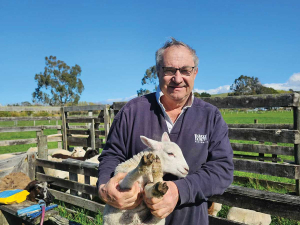
Decades piloting planes has ensured vet and farmer David Hayes is focused on safety. So, after a serious accident while welding on farm, he is sharing his experience so others can learn from it.

Canterbury milk processor, Synlait Milk has confirmed Leon Fung as its chief executive officer.
OPINION: Making it easier to collect rainwater and use it to grow crops and livestock is a no brainer.
As part of its Election 2026 coverage, Rural News asked political parties how they would help pull the arable sector out of the doldrums. Here's what they said:
Farmers are being encouraged to rethink how they manage waste on farm with the launch of ruralwastesorted.co.nz, a new website bringing together practical tips, real farmer experiences and resources.
New Zealand Winegrowers (NZW) is celebrating the India-New Zealand Free Trade Agreement (FTA) coming into force today, bringing New Zealand wine improved access to one of the world’s fastest-growing economies.



OPINION: It seems Canterbury processor Synlait is still in the doldrums.
OPINION: Get offside with New Zealand First leader Winston Peters at your own peril.




