Co-ops – NZ’s true shared ownership model
NEW ZEALAND should play to its strengths as the world’s most co-operative economy and consider the co-operative approach to running services in the community and state sectors.




 increase font size

NUFFIELD IRELAND has released a report ‘Dairy Cooperatives for the 21st Century’ written by County Waterford dairy farmer David Murphy, reports ICOS, the Irish Cooperative Organisation Society.
Murphy travelled to New Zealand and Australia, and to Europe and the Americas, looking at ways successful dairy cooperatives deliver a sustainable milk price to their farmer members, and how that leads to strong wealth creation in rural communities.
In Europe, Murphy focussed on FrieslandCampina and FloraHolland. His study tour then took him to Argentina and Brazil, and he was in New Zealand and Australia during September and October 2012.
“It was a steep learning curve in how a cooperative can gain power in the international marketplace by farmers coming together and rationalising their industry with a clear focus on maximising the value of their milk,” Murphy wrote.
His report outlines the key differences between the cooperative way of doing business and investor-owned businesses, and identifies the key points of success in cooperatives.
The Irish dairy industry, says Murphy, has failed to rationalise effectively. He believes an additional 2¢ per litre can be achieved by bringing the industry together in a consolidated processing, marketing and R&D platform.
Rather than sticking to just one service and doing it well, he reports that Irish dairy cooperatives have evolved into multipurpose organisations which not only process milk but also provide value for members through the supply of farm inputs. This evolution has clouded the ownership of cooperatives, however, with just 30% of shares now owned by active dairy farmers.
Over the 30 years of the EU milk quota, Irish dairy farmers have disconnected from their cooperatives, Murphy says. With quotas to be abolished in 2015, he sees an opportunity for Irish dairy farmers to expand production. “This is the time for us to to re-engage with our cooperatives and create a business which can compete effectively in a global context,” he writes. “We need a dairy co-op for the 21st Century.”
Six key suggestions are set out in the report:
1. Culture change: the need to create a single purpose milk processor. Handling 80% of Ireland’s milk, this cooperative would concentrate on maximising the value of members’ milk.
2. Business performance payments: the clearest interface between milk suppliers and management; the milk price needs to be transparent.
3. Share redemption: at board discretion, retiring members would sell their shares at a fair value to a new member, reducing redemption risk, and new shares would be issued when members grow production.
4. Cooperative education: programmes would be offered on the cooperative business model and how it differs from investor-owned business. Attendees would be awarded points, with a minimum number of points required for a member to be eligible to contest a seat at council or board level.
5. Constant evolution: a modern cooperative business needs new rules that reflect better communication and connectivity.
6. Encouraging excellence: from grassroots membership through representation structure to board level, excellence will be encouraged with a focus on the capability of management to deliver optimum business performance.
What might this mean for New Zealand dairy farmers?
• Ramsey Margolis is the executive director of Cooperative Business New Zealand.
www.nz.coop
NEW ZEALAND should play to its strengths as the world’s most co-operative economy and consider the co-operative approach to running services in the community and state sectors.
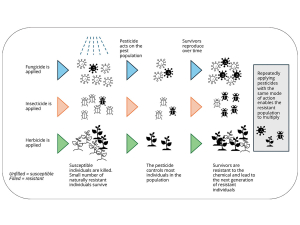
Growers and farmers are being encouraged to have an important conversation before the coming season starts: how to prolong the effectiveness of the crop protection tools they rely on.
A new digital assistant is now helping Ballance Agri-Nutrients farmers speed up nutrient information and ordering.
New Zealand apple and pear industry stakeholders are out in force for the annual conference in Queenstown.
Cameron Reed lives between two worlds.
Improving health and safety is about incremental gain rather than a sudden decision, says Leeston farmer and Federated Farmers health and safety spokesman David Birkett.
OPINION: City and regional councils have been put on notice - stop using extreme climate forecasting scenarios that can drive…
OPINION: The Green Party’s rivers and oceans policy may have a new name but nothing else has changed.