
Diplomatic Incident
OPINION: Your old mate hears an international incident is threatening to blow up the long-standing Anzac alliance as Kiwis and Aussies argue over who wants new Australian resident and former NZ Prime Minister Jacinda Ardern.




 increase font size
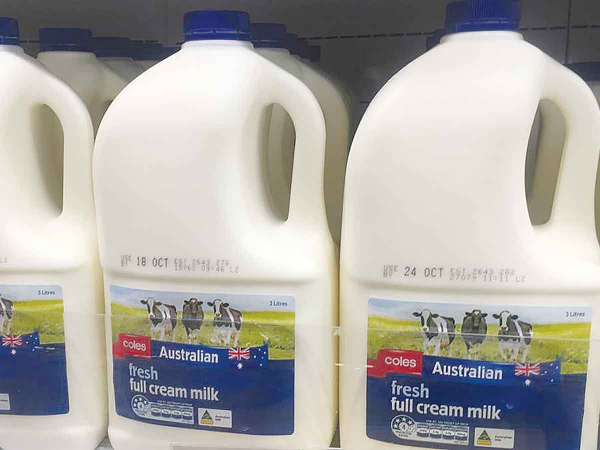 Coles-branded milk in Australia.
Imagine New Zealand supermarket chains buying raw milk directly from farmers — that's what's happening across the ditch.
While the idea may seem far-fetched here, Australian supermarket giant Coles is extending its raw milk buying scheme to more states, all in the name of delivering a better farm gate milk price to struggling Australian dairy farmers.
Coles has announced it is recruiting dairy farmers in South Australia and Western Australia to supply milk for Coles Brand fresh white milk, delivering guaranteed farmgate prices for farmers. South Australian dairy farmers are welcoming the move.
South Australian Dairy Association (SADA) chief executive Andrew Curtis says farmers welcome any market participant in the industry who pays a fair price to farmers.
The Australian dairy industry has been facing depressed prices in recent years, forcing some farmers to exit the industry and milk volumes to plunge.
Curtis told Dairy News that competition watchdog, the Australian Competition and Consumer Commission, was very critical of the role played by processors in the troubles that have surrounded the industry in recent years – reserving its harshest criticism for those processors.
“During the A$1 per litre milk war, SADA was critical of the supermarkets for their approach but equally of the processors, not least of which was Murray Goulburn, who enabled the war to continue by pushing down [farmgate] prices,” he says.
The Australian Dairy Code of Conduct now forces Coles, along with every other processor, to post their price well in advance of contractual confirmation. Last week, all milk buyers announced their opening price for the new season.
“They will be competing on the same footing as every other purchaser of milk in the market place,” says Curtis.
“Farmers will go to the best price offer and if Coles wants to purchase milk they will have to do so on a level playing field.”
Coles launched its new milk sourcing model in Victoria and Southern and Central New South Wales last July, contracting directly with local farmers to supply milk.
This effectively makes Coles another buyer in a crowded Australian market, where Fonterra Australia is struggling to maintain its market share.
While Fonterra isn’t a player in the fresh milk market, Coles is adding another layer of competition for milk processors.
A Fonterra spokeswoman says the company does very little by way of fresh milk in Australia – it’s a brands cheese and butter business.
All its milk comes from farmers in Victoria and Tasmania.
Under the new sourcing model, Coles offers a farmgate price directly to farmers, and pays dairy processors to process and bottle the milk under a toll processing agreement.
Changing landscape
The number of dairy farms across Australia has been declining for decades. SADA chief executive Andrew Curtis says dairy across Australia has been changing for many years.
In 1970, South Australia had over 1,000 farms, mostly small farms supplying local product.
But Curtis points out that individual cows are much more productive today and herds are much larger.
“A farm count is not a fair indication of the state of the industry and individual farms now produce much more milk with better cows and bigger herds than in the past.
“There is no indication this trend will change into the near future.”
OPINION: Your old mate hears an international incident is threatening to blow up the long-standing Anzac alliance as Kiwis and Aussies argue over who wants new Australian resident and former NZ Prime Minister Jacinda Ardern.

OPINION: Your old mate hears that at a recent China Business Summit, PM Christopher Luxon delivered a none-too-subtle "could try harder" report card on the red meat industry regarding its exports to China - particularly when compared to Australia.
Feeding infected milk is high risk for spreading diseases such as M. bovis.
More Australian states are embracing virtual fencing technology, opening growth opportunities for Kiwi companies like Halter.
Fonterra says its ongoing legal battle with Australian processor Bega Cheese won’t change its divestment plans.


National’s pledge to introduce 19 new national standards shows the party is serious about getting Wellington out of farming, Federated Farmers says.
The National Party’s policies to make it easier to grow fresh vegetables, secure reliable water and energy and simplify farm planning are practical changes that will give growers the confidence to invest, according to Horticulture New Zealand (HortNZ).
Fonterra Co-operative Group chief financial officer Andrew Murray has resigned to take up a role outside the dairy giant.
A major move is about to get underway to improve the quality and viability of dairy beef and cattle in NZ.
Veterinarians say changes to the code of welfare for dairy cattle provides a positive foundation for improved cattle welfare across the country.
Today, 15 October, is the International Day of Rural Women, which recognises rural women’s contribution to farming, communities and the environment.


OPINION: It seems Canterbury processor Synlait is still in the doldrums.
OPINION: Get offside with New Zealand First leader Winston Peters at your own peril.




