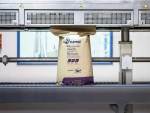
Milk Powder Prices Prop Up Farmgate Milk Price
Milk powder prices are keeping farmgate prices up, helping processors offset the dip in milk fat prices.




 increase font size
 Lion Dairy & Drinks managing director Peter West with Norco deputy chair Tony Wilson, QDO’s Wesley Judd, and Parmalat national manager, farm sustainability and communication, Steve Oldridge.
Queensland farmers have received a sobering message about the effects of a supermarket war on the price of milk and dairy products.
Lion Dairy & Drinks managing director Peter West told farmers at the recent Queensland Dairy Conference to brace for lower milk prices.
The price wars in the regular milk category started in 2011 when major retailer Coles unveiled A$1/L milk; rival supermarket chain Woolworths quickly matched the offer. Coles recently set the lowest mark yet for the product, cutting the cost from A95c/L to A90c/L.
“The prices I get today will be lower next year, lower the year after and the year after that,” West said. “I can guarantee you there will be five years of price deflation.”
He said a strategy of pursuing growth opportunities and cutting costs was driving Lion’s response, highlighting that consumer trends towards full fat milk, butter, coffee and natural products was great for the sector.
“DARE iced coffee now outsells Coca-Cola in convenience stores,” he said. “This is a market in enormous change and transition [and] it is the future of a more vibrant dairy industry.”
He said the need for authenticity in products – supported by the government’s new country of origin labelling laws – will also bode well for Australian dairy, but he urged caution about seeing China as the saviour of industry.
“The opportunities are there but it will be volatile and harder than everybody thinks. This market is hugely sophisticated and competitive.”
The company has also launched a new ‘Milk Matters’ campaign to remind local consumers of the effort that goes into producing a litre of milk.
“We want people to think again about all the work that went into that product, and we want them to have an emotional reaction to the things they take for granted -- your hard work required for this product that [often costs less] than water. [We want them to ask], is that right?”
The company has cut budgets and staff and offloaded its cheese businesses in an “unrelenting” effort to reduce costs.
West said a “strong focus on mutuality” – supporting farmers to be viable and successful – was also a focus of their approach and the company is looking to help suppliers reduce costs, eg by bulk energy purchasing.
“We all want to see the notion of a fair price. There will always be a tension about how much that is, but our aim will always be to pay the maximum we can afford.”
Parmalat’s Steve Oldridge told of new measures to help farmers save production costs including bulk energy and feed, and benchmarking tools and increased communication with farmers. He said the company and was looking to ensure suppliers had sustainable profit margins.
Milk powder prices are keeping farmgate prices up, helping processors offset the dip in milk fat prices.
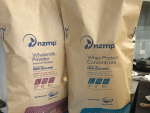
A milk glut around the world shows no sign of easing, putting downward pressure on farmgate milk prices for the next few months.
RaboResearch senior analyst Emma Higgins expects the 2026/27 dairy season to be another profitable one.
OPINION: The good news keeps getting better for NZ dairy farmers.
Buyers trying to secure supply are keeping dairy prices at elevated levels.


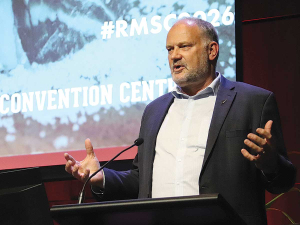
Good medium to long term prospects for NZ beef, especially in the US, has heighted the focus on various initiatives to capitalise on this situation.
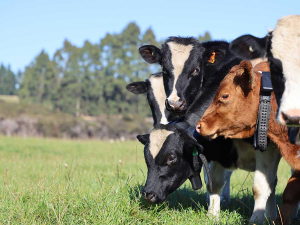
High country stations, mixed sheep and beef farms, Māori-owned farms, corporates and family operations are among the nine commercial farms taking part in the Livestock Innovation Farming Transformation programme, known as LIFT.
OPINION: New health and safety guidance unveiled by the Government recently provides farmers greater certainty about what is expected of them when managing risks on farm.
The National Animal Welfare Advisory Committee (NAWAC) is seeking public feedback on proposed changes to the Code of Welfare for Rodeos.
A New Zealand initiative supporting farmers to restore the health of grazing landscapes has received international backing through the Regenerative Fund for Nature, a global collaborative fund supporting regenerative agriculture and the communities that produce natural fibres for the fashion industry.
Combine premium New Zealand products, blend in a family ritual and what do you get? A world-class functional drink.



OPINION: It seems Canterbury processor Synlait is still in the doldrums.
OPINION: Get offside with New Zealand First leader Winston Peters at your own peril.




