
Westpac Urges Farmers to Prepare Now for El Niño Drought
Westpac NZ is calling on farmers and growers to start preparing now for the possibility of a dry summer, as likely El Niño conditions raise the risk of drought across parts of the country.




 increase font size
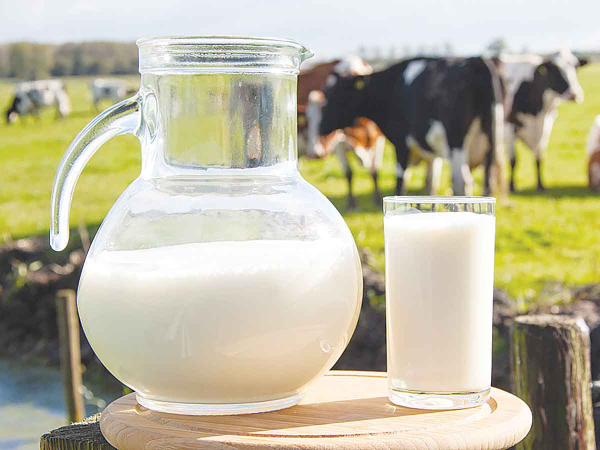 Gains in powder prices last week were broadly in line with what futures markets had anticipated.
Dairy prices have risen for five consecutive Global Dairy Trade (GDT) auctions, which augurs well for this season’s milk price.
Westpac senior economist Michael Gordon notes that gains in powder prices last week were broadly in line with what futures markets had anticipated.
“In contrast, milkfat prices held up better than the futures market had signalled, with anhydrous milkfat (AMF) setting another record high and butter closing in on its previous peaks. As we’ve seen in recent auctions, China was a significant buyer, although less present than they have been in past years. Buyers from Southeast Asia and the Middle East increased their share of WMP purchases, while Chinese demand was more notable in butter,” says Gordon.
Westpac is forecasting a milk price of $8.40/kgMS for this season. Fonterra has taken a more conservative route, opening with a range of $7.25 to $8.75, giving a midpoint of $8/kgMS.
Gordon notes that Fonterra’s forecast is a relatively conservative view compared to its existing forecast of $8.40/kgMS – a view that they’ve held since March, when GDT auction prices were somewhat lower than they are today.
“Futures markets are closer to our view, currently pricing a return of $8.55/kgMS. Indeed, Fonterra acknowledged that they’ve taken a cautious view at this stage, citing uncertainty around key factors such as the strength of Chinese consumer demand.”
Explaining the bank’s forecast, Gordon says they are assuming that milk powder prices hold at around their current levels on average over the season.
“That’s a reasonable baseline given that powder prices are around their long-term averages at the moment – so they’re neither looking particularly stretched nor unsustainably low.
“What’s more, the global milk market seems to be reasonably balanced as the new season begins, and both demand and production are expected to record only modest growth in the year ahead.”
But there’s one clear area where upside risks to the bank’s milk price forecast are emerging.
Gordon says milkfat prices have surged in recent months and are at or near record highs.
“Our farmgate price forecast assumes that this isn’t going to be maintained, and that milkfat prices will ease back over the course of the season.”
Westpac NZ is calling on farmers and growers to start preparing now for the possibility of a dry summer, as likely El Niño conditions raise the risk of drought across parts of the country.
Milk powder prices are keeping farmgate prices up, helping processors offset the dip in milk fat prices.
A milk glut around the world shows no sign of easing, putting downward pressure on farmgate milk prices for the next few months.
RaboResearch senior analyst Emma Higgins expects the 2026/27 dairy season to be another profitable one.
A new Westpac NZ community banking van begins making visits around Northland this week.


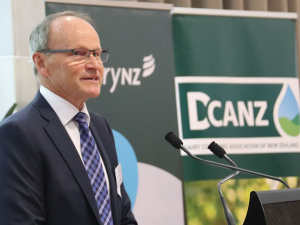
Dairy processors are ready to further boost New Zealand’s export earnings but want the incoming government to match their ambition with good policy.

Massey University is best placed to solve the “problems” facing the dairy industry, says vice chancellor, Pierre Venter.
Synlait's longest serving employee – a man who joined the Canterbury-based milk processor even before it began processing milk – is now its newest executive.
A dairy industry leader believes eradicating the common and costly disease, Bovine Viral Diarrhoea (BVD) is within reach.
A farmgate milk price of $10/kgMS this season is firming up as milk powder prices soar and the New Zealand dollar weakens.
Federated Farmers has welcomed new rural policies released by ACT, saying they align closely with its own election priorities.



OPINION: It seems Canterbury processor Synlait is still in the doldrums.
OPINION: Get offside with New Zealand First leader Winston Peters at your own peril.




