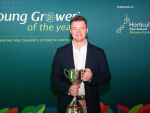
James Blair Named 2026 Young Grower National Champion
James Blair, an agronomist for AS Wilcox and the Pukekohe regional champion, has won the 2026 Young Grower national title.



 increase font size
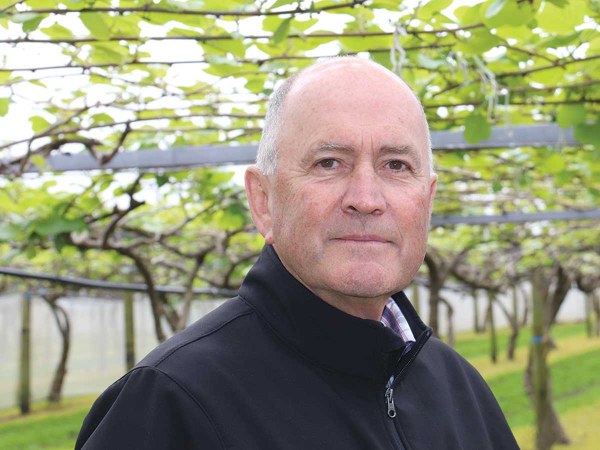 Hort NZ chair Barry O'Neil says unrelenting cost increases means growers are either not making any money or losing money as result of the current situation.
Horticulture NZ says 2022 is presenting more challenges than ever before.
Hort NZ chair Barry O'Neil says while the apple and kiwifruit harvests are in full swing, there is a degree of nervousness across the sector.
Firstly, there are labour shortages. O'Neil notes that while the Government has tried to help, increasing the cap on RSE workers from 14,000 to 16,000, other factors - such as Covid in the Pacific Islands and the Tongan volcano eruption - have impacted on the availability of RSE workers. He says, at present, there are only 10,000 of these workers in NZ and some have been here for a very long time due to the pandemic.
"Meanwhile, the cost of inputs such as fertiliser, seed and fuel have increased and overall input costs have risen by between 20% and 50%," O'Neil adds. "The added problem with these rises is that they have taken place in such a short period of time and this has meant that the value of the products hasn't kept pace with the speed of the rising inputs."
He says the result is a number of sectors are either not making any money or losing money as result of the current situation.
O'Neil says fertiliser costs have doubled in the past two years and, while road user charges have been reduced, this doesn't apply to diesel used on farm, which for many growers is a significant cost.
"The opportunities that were there for certain crops a few years ago have now been challenged by the growing government and international policy settings."
With rising costs and the pressure from government on compliance issues, O'Neil told Hort News that a lot more orchards have been up for sale and/or either replanted in other crops or amalgamated into larger orchards.
He says in the last five or so years there has been a trend away from the smaller family orchards into more corporate and commercial operations. He notes this is a trend right across the ag sector and not confined to horticulture.
"The other factor is getting product to market. It's not just the logistics issue of getting your box of products on a ship or getting it to market - it's the cost involved," O'Neil explains.
"Shipping container costs have gone through the roof and so have air freight costs. All these cost increases have an impact on the bottom line of growers."
James Blair, an agronomist for AS Wilcox and the Pukekohe regional champion, has won the 2026 Young Grower national title.
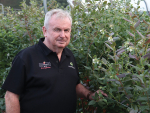
Blueberries have the potential to become a major horticultural export, earning up to $150 million within the next three to five years.
New Zealand needs to make sure that it continues to focus on its own food security, according to HortNZ board member and blueberry grower Dermott Malley.
According to a progress report on the Aotearoa Horticulture Action Plan (AHAP), New Zealand's horticulture sector is making real progress on the big issues facing growers.
Horticulture New Zealand’s Board has welcomed the re-election of grower-elected directors Alistair Petrie and Doug Brown.


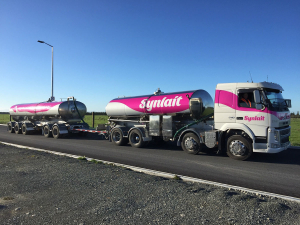
Synlait has swung to second-half profit as operations stabilise, but the dairy processor still posted a $75.4m annual loss.

LIC shareholders have elected a new North Island representative to the co-operative's Board, along with five representatives to its Shareholder Reference Group (SRG), following the company's Annual Meeting held in Invercargill.
Farmers across parts of Southland and South Otago are continuing to deal with difficult conditions after a prolonged run of wet weather, with pressure building around feed supply, stock management, pasture damage, farm infrastructure and everyday workloads.
Federated Farmers says it welcomes Labour's commitment to reviewing the Sharemilking Agreements Act, calling on other major parties to do the same.
For Canterbury dairy farmers Sian Meijer and Rick Wobben, wearable technology has become one of their most valuable on-farm tools - helping manage 1850 cows across an expansive, high-performing dairy operation while improving efficiency, mating outcomes and day-to-day decision making.
Fonterra has unveiled its annual results for the 2026 financial year, posting $27 billion in revenue and close to $20 billion returned to New Zealand farmer owners and unit holders.


OPINION: The same mainstream media muppets that brought you Jacindamania in 2017 have been flat out pimping for the Opportunities…
OPINION: Your old mate reckons the atrocious way farmers in the UK are treated by their lords and masters in…




