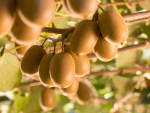
NZKGI Responds to Migrant Worker Exploitation Reports
Where any worker in the kiwifruit industry is mistreated, we expect the authorities to take action.



 increase font size
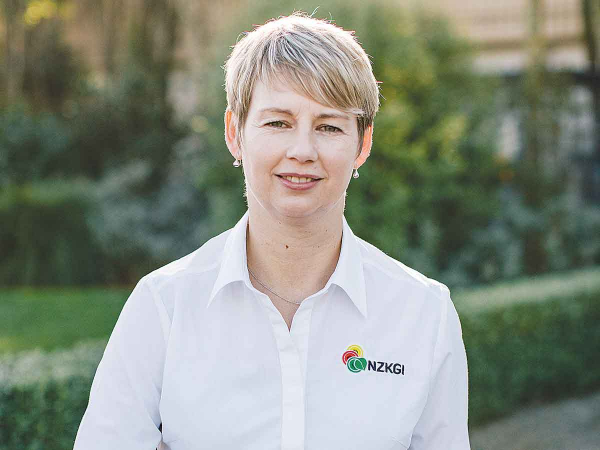 NZKGI chief executive Nikki Johnson.
NZ Kiwifruit Growers Incorporated’s (NZKGI) chief executive Nikki Johnson says growers came through the past season reasonably well.
This is despite the problems created by Covid-19.
But the growers organisation says labour still remains an issue for the industry with the possibility of fewer backpackers coming to New Zealand. NZKGI says backpackers make up about 25% of the current workforce, but they are now less likely to come to NZ in the present Covid environment.
Recently, the Government announced that $200,000 was being invested to help train people for jobs in the kiwifruit sector and make up for the shortfall of overseas workers – especially backpackers.
“The reason that backpackers work so well is they are only looking for short term work – between 2 and 12 weeks – and we can give that to them and they are not looking for any more certainty than that,” Johnson told Hort News.
She says this raises the issue of NZ being able to bring in workers from the Pacific Islands under the Recognised Seasonal Employer or RSE scheme. These people fill seasonal roles in various horticulture operations, including kiwifruit.
Due to Covid-19 closing borders, there is uncertainty about whether this may continue in the short term. Johnson says in this past season, the kiwifruit industry was unable to bring in many RSE workers when the border closed in March. However, the sector was able to utilise the services of some other RSE workers who’d been employed in other horticultural sectors and were stranded in NZ.
There is now a concerted effort by government to get more locals to take up employment in the agricultural sector. Career opportunities are being promoted and training offered. In the case of kiwifruit, Johnson points out that over 50% of the normal workforce in the industry are New Zealanders and they are an important part of it.
“Since Covid, we were lucky in finding people that were interested and we were able to place them in jobs. We operated a labour coordination centre where we had hundreds of people on our books that we were emailing every week,” she told Hort News. “We would ring packhouses and contractors and ask ‘do you have any vacancies?’ and we would tell those people where the vacancies were and so put quite a lot of effort into matching up people with jobs.”
But the challenge for kiwifruit, as it is for some other primary industries, is that many of the jobs are seasonal – something that Johnson recognises. But she says there are more opportunities now for people wanting permanent roles.
“Clearly there is a preference for permanent roles because that gives them certainty around their future, but because of their seasonal nature of our industry we can’t necessarily provide that.”
Where any worker in the kiwifruit industry is mistreated, we expect the authorities to take action.

Kiwifruit growers are watchful but remain optimistic as concerns around the potential effects of the El Niño weather pattern this season.
More signs of a booming kiwifruit sector.
After delivering a strong financial year, rural trader PGG Wrightson says the coming months will depend on customer confidence and weather.
New Zealand growers have always adapted to changing conditions, but one challenge is steadily gaining ground across the horticulture sector: resistance.


Synlait has swung to second-half profit as operations stabilise, but the dairy processor still posted a $75.4m annual loss.

LIC shareholders have elected a new North Island representative to the co-operative's Board, along with five representatives to its Shareholder Reference Group (SRG), following the company's Annual Meeting held in Invercargill.
Farmers across parts of Southland and South Otago are continuing to deal with difficult conditions after a prolonged run of wet weather, with pressure building around feed supply, stock management, pasture damage, farm infrastructure and everyday workloads.
Federated Farmers says it welcomes Labour's commitment to reviewing the Sharemilking Agreements Act, calling on other major parties to do the same.
For Canterbury dairy farmers Sian Meijer and Rick Wobben, wearable technology has become one of their most valuable on-farm tools - helping manage 1850 cows across an expansive, high-performing dairy operation while improving efficiency, mating outcomes and day-to-day decision making.
Fonterra has unveiled its annual results for the 2026 financial year, posting $27 billion in revenue and close to $20 billion returned to New Zealand farmer owners and unit holders.


OPINION: The same mainstream media muppets that brought you Jacindamania in 2017 have been flat out pimping for the Opportunities…
OPINION: Your old mate reckons the atrocious way farmers in the UK are treated by their lords and masters in…




