
NZ Apple Sector Pushes for Japan & Korea Market Access
The apple sector is working with the Government to unlock access to two key markets that could bring millions in revenue for apple growers.



 increase font size
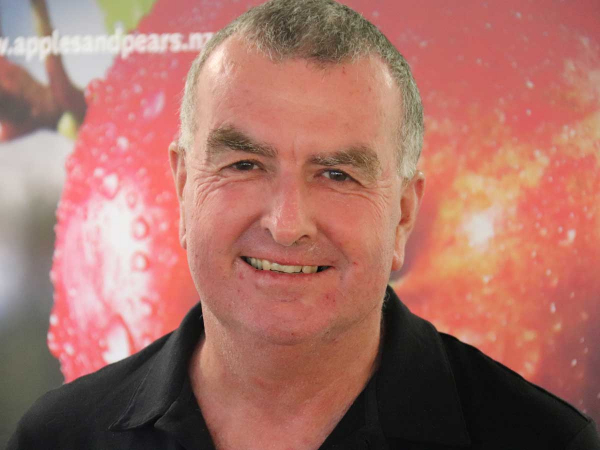 New Zealand Apples and Pears Inc chief executive Allan Pollard.
The labour shortage on orchards is biting into apple exports.
New Zealand Apples and Pears Inc (NZPA) says the industry now expects the export share of the gross national crop to be around 347,718 metric tonnes of 19.3 million cartons.
This is 14% below the 2020 gross national crop, representing a $95 - $100 million year on year reduction of export earnings.
In January, the industry was forecasting a gross national crop of 558,672 metric tonnes, 5% down on the 2020 harvest.
The export share of the gross crop was forecast to be 374,751 metric tonnes (20.8 million cartons), 7% down on 2020, reflecting a shortage of available labour and significant hail events in the Nelson and Central Otago regions.
But NZPA chief executive Alan Pollard says as peak harvest nears it has become increasingly clear that the sector will not achieve those initial forecasts.
“Labour availability on orchards and in our post-harvest operations is well short of numbers needed by the industry despite doing all we can to attract New Zealanders into work. In addition, the fruit size is coming in smaller on average than we forecast.”
Of the varieties exported, Braeburn is the most significantly impacted with a revised estimate of 1,468,000 cartons some 44% below 2020 levels.
Royal Gala, which remains the variety with the largest share of exports, is now forecast to be 15% or 1,088,000 cartons down on 2020, with Cripps Pink at 15% down and Fuji 19% down.
On the other hand, Dazzle, Envy, Honeycrisp and Rockit continue to show strong growth as new plantings come into production.
“While the size profile is smaller than we expected, putting premium sizes into short supply, quality remains very good, and the fruit is well coloured,” says Pollard.
“New Zealand has a global reputation for reliability, consistency and quality, and 2021 will be no exception. Demand is strong in our key markets, but we remain concerned about continuing disruption to international shipping schedules and port congestion.”
The apple sector is working with the Government to unlock access to two key markets that could bring millions in revenue for apple growers.

Agriculture Minister Todd McClay has admitted that a scheme bringing workers from Pacific nations to work on orchards has become too hard to navigate but says changes are coming.
New Zealand apple and pear industry stakeholders are out in force for the annual conference in Queenstown.
Danielle Adsett has been announced as the new chief executive of New Zealand Apples and Pears (NZAPI).
Scientists from Plant & Food Research have been collecting data from apple orchards in Hawke’s Bay to better understand the impact of Cyclone Gabrielle.


Alliance is calling for final applications for its 2027 Graduate Programme, with applications closing on Sunday 25 October.
Decades piloting planes has ensured vet and farmer David Hayes is focused on safety. So, after a serious accident while welding on farm, he is sharing his experience so others can learn from it.
Canterbury milk processor, Synlait Milk has confirmed Leon Fung as its chief executive officer.
OPINION: Making it easier to collect rainwater and use it to grow crops and livestock is a no brainer.
As part of its Election 2026 coverage, Rural News asked political parties how they would help pull the arable sector out of the doldrums. Here's what they said:
Farmers are being encouraged to rethink how they manage waste on farm with the launch of ruralwastesorted.co.nz, a new website bringing together practical tips, real farmer experiences and resources.

OPINION: The same mainstream media muppets that brought you Jacindamania in 2017 have been flat out pimping for the Opportunities…
OPINION: Your old mate reckons the atrocious way farmers in the UK are treated by their lords and masters in…




