
James Blair Named 2026 Young Grower National Champion
James Blair, an agronomist for AS Wilcox and the Pukekohe regional champion, has won the 2026 Young Grower national title.



 increase font size
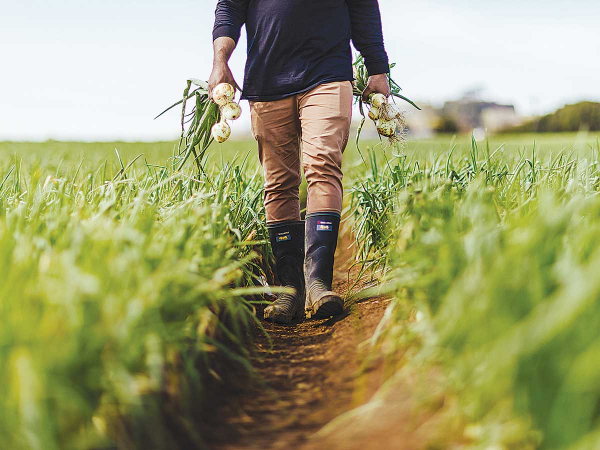 Hort NZ says protecting productive land is just one of the ingredients for growers to deliver fresh healthy food to New Zealanders.
Productive land is just one of the ingredients for growers to deliver fresh healthy food to New Zealanders, says Horticulture NZ.
Together with productive land, growers need labour, less compliance and lower input costs, says Hort NZ chief executive Nadine Tunley.
She made these comments following the Government's recently released National Policy Statement for Highly Productive Land (NPS-HPL), designed to protect the country's most productive land and providing security for both domestic food supply and primary exports.
According to Tunley, HortNZ has been advocating for nearly a decade for government policy that recognises the importance of the best soils and ensures that they are prioritised for what they are best for - producing healthy vegetables and fruit.
"All along we have said that with good planning, New Zealand can have fresh vegetables and fruit, and houses," she says.
Tunley notes that HortNZ will continue its advocacy to ensure that growers can sustainably and profitably use highly productive land.
"Our fight will go on. It's no use protecting our best land if growers cannot get access to inputs like freshwater, are bogged down with compliance, and can't afford fertiliser or to transport their produce," she adds.
"At the same time, growers need to know they have a skilful and reliable workforce available to plant, pick and pack. We also need to ensure that growers can afford to invest in new growing methods, in response to climate change."
Tunley says growers only need ongoing issues in one of these areas for their viability to be compromised, which could mean vegetables and fruit cannot be sustainably grown in New Zealand in the future.
Agriculture Minister Damien O'Connor points out that over the last 20 years, about 35,000 hectares of highly productive land has been carved up for urban or rural residential development - 170,000ha of this has been converted to lifestyle blocks.
"Once land is built on, it can no longer be used to grow food and fibre. That's why we are moving to protect our most fertile and versatile land, especially in our main food production areas like Auckland, Waikato, Hawke's Bay, Horowhenua and Canterbury," O'Connor says.
He says highly productive land provides food for New Zealanders, significant economic and employment benefits to communities and underpins the value of New Zealand's primary sector.
"Our Fit for a Better World roadmap that we developed with the sector will add $44 billion over 10 years to our primary sector exports but is dependent on maintaining access to our highly productive soils," he notes.
He claims the NPS-HPL enhances protection for highly productive land giving farmers, growers, and other food producers certainty into the future, and provide greater economic security for all.
James Blair, an agronomist for AS Wilcox and the Pukekohe regional champion, has won the 2026 Young Grower national title.
Blueberries have the potential to become a major horticultural export, earning up to $150 million within the next three to five years.
New Zealand needs to make sure that it continues to focus on its own food security, according to HortNZ board member and blueberry grower Dermott Malley.
According to a progress report on the Aotearoa Horticulture Action Plan (AHAP), New Zealand's horticulture sector is making real progress on the big issues facing growers.
Agriculture Minister Todd McClay has admitted that a scheme bringing workers from Pacific nations to work on orchards has become too hard to navigate but says changes are coming.



LIC shareholders have elected a new North Island representative to the co-operative's Board, along with five representatives to its Shareholder Reference Group (SRG), following the company's Annual Meeting held in Invercargill.
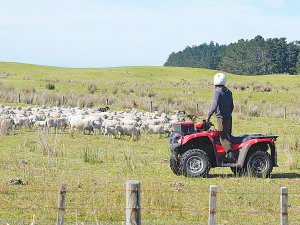
Farmers across parts of Southland and South Otago are continuing to deal with difficult conditions after a prolonged run of wet weather, with pressure building around feed supply, stock management, pasture damage, farm infrastructure and everyday workloads.
Federated Farmers says it welcomes Labour's commitment to reviewing the Sharemilking Agreements Act, calling on other major parties to do the same.
For Canterbury dairy farmers Sian Meijer and Rick Wobben, wearable technology has become one of their most valuable on-farm tools - helping manage 1850 cows across an expansive, high-performing dairy operation while improving efficiency, mating outcomes and day-to-day decision making.
Fonterra has unveiled its annual results for the 2026 financial year, posting $27 billion in revenue and close to $20 billion returned to New Zealand farmer owners and unit holders.
The first major update to the Dairy Cattle Code of Welfare in more than a decade has been released, marking what DairyNZ describes as an important step in ensuring animal welfare standards continue to evolve alongside scientific evidence and on-farm realities.


OPINION: The same mainstream media muppets that brought you Jacindamania in 2017 have been flat out pimping for the Opportunities…
OPINION: Your old mate reckons the atrocious way farmers in the UK are treated by their lords and masters in…




