A research partnership with Scion is bearing fruit for a Christchurch company set to export biodegradable vine clips for the first time.
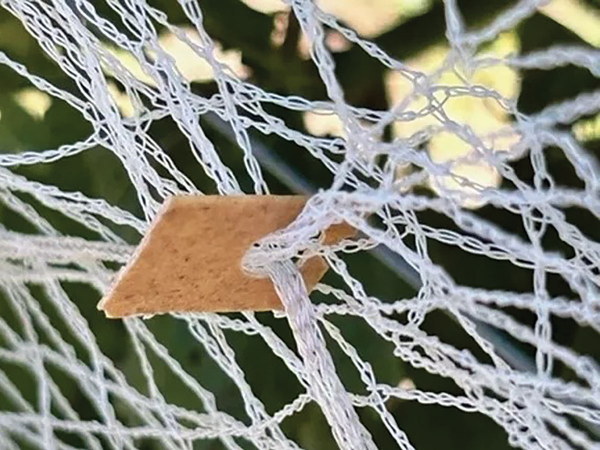
PolyNatural says it has begun taking commercial orders for its eco-friendly vine clips from South Australia and from vineyards across New Zealand. Made from biodegradable polymers and waste materials sourced from wood processing, the vine clips are designed to replace traditional plastic clips that are used to hold nets over ripening grapes to keep birds and other pests away. About 30 million of these plastic clips are used by the New Zealand wine industry every year.
The export milestone follows extensive product development and trials on vineyards in New Zealand and comes five years after the first prototype clip was created by Scion scientists in collaboration with PolyNatural’s parent company EPL.
General manager for sales and marketing, Gareth Innes, says the commercialisation process has been a journey of discovery.
“Good things take time and we’ve spent several years collaborating with Scion by testing formulations, using different materials and doing a lot of field research to develop a product that we’re confident winegrowers are very satisfied with.”
Vine clips and netting are essential to wine growing operations for pest management and to prevent fruit loss. But after six to eight weeks, nets are removed and clips fall to the ground. This leaves a growing pile of non-degrading plastic littering vineyards.
With the viticulture industry keen to adopt more sustainable practices and stamp out plastic waste, Scion began developing a faster-degrading vine clip made of grape marc and bioplastic. Led by researchers Dawn Smith and Stephanie Weal, Scion trialled different prototypes in the field, testing numerous formulations before arriving at the right mechanical and physical properties.
In 2020, EPL took up the challenge of improving the clip even further and getting it ready for production at scale.
“The technology and materials that we’re using now are different to what they were five years ago,” Innes explains. “But we couldn’t have achieved what we have if it wasn’t for the work that Scion did in those early trial stages.”
The vine clips are 100% biobased using renewable materials that have no petrochemicals or toxic additives. The material comes from waste generated from processing wood. That waste is then fermented using micro-organisms and shaped to create a durable clip that can fully degrade in the right soil conditions.
A number of New Zealand winemakers have successfully trialled the clips, including Cloudy Bay Vineyards in Central Otago and Marlborough. Central Otago Vineyard Manager Derek Beirnes describes them as the “perfect product”.
“Each clip does what it needs to do, whilst being environmentally friendly.”
As well as targeting the Adelaide wine growing region, PolyNatural is planning to export its vine clips to Canada and France, with support from New Zealand Trade & Enterprise.
Wider Hort Use
Lessons learned during the commercialisation process and further market research has sparked additional biodegradable products for the horticulture and viticulture industries.
To support demand for riparian planting and land revegetation projects, the company began trialling biodegradable plant protectors in 2021 to improve the survival rates of young plants from pests and the elements. The product range was launched commercially earlier this year.
It is also working on eco-friendly ties for the kiwifruit industry.
“There’s huge market demand for our prototype as we estimate the industry uses about 100 million plastic ties every year to hold their vines down,” Innes says.
Currently, most vine ties end up on the ground.