Fonterra's New Roadmap Targets Climate, Nature, Animals
Climate, nature and animal wellbeing make up Fonterra's refreshed sustainability roadmap released last week.




 increase font size
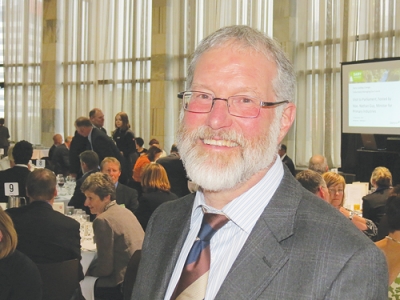 Rick Pridmore stresses it is early days, but the research is encouraging.
New Zealand scientists have identified animal-safe compounds that can reduce methane emissions from sheep and cattle by up to 90%.
The announcement came from Pastoral Greenhouse Gas Research Consortium (PGgRc) chairman and NZ Agricultural Greenhouse Gas Research Centre (NZAGRC) steering group member Dr Rick Pridmore.
He said the successful test of methane inhibitors was news NZ farmers could get excited about.
“The results are significant for two reasons. First, because they work on livestock consuming a grass-based diet and, second, because the short-term trials showed such dramatic results,” Pridmore explained.
“It must be stressed that these are early days. Further trials are needed to confirm these compounds can reduce emissions in the long term, have no adverse effects on productivity and leave no residues in meat or milk.”
He added that the group was already looking to engage with a commercial partner and, all going well, could possibly see a commercial product within five years.
More than 100,000 compounds had been screened, and many thousands tested in laboratory experiments over the past several years. To date five compounds, selected as the most promising options, have been tested on sheep and resulted in reductions of methane emissions from 30% to more than 90%.
“This is an exciting development and it is pleasing that funds made available by the NZ Government to support international co-operation in agricultural GHG (greenhouse gas) research have played a role,” the Ministry for Primary Industries’ international policy director and representative to the Global Research Alliance, Chris Carson, said.
Methane inhibitors were only one of several options NZ scientists were pursuing to help reduce greenhouse gas emissions from agriculture, Pridmore said.
Other approaches included breeding, developing a vaccine and specific feeds to reduce methane emissions, exploiting natural plant properties to reduce nitrous oxide emissions and increasing the amount of carbon stored in pastoral soils.
“Breeding for reduced methane emission is progressing very well. We have shown that the trait is heritable and indications to date show no negative production impacts. The difference between high and low emitters currently is about 6%,” Pridmore said.
“This means sheep farmers should have access to breeding value information in about two years that allows them to select for animals with lower methane emissions than the average sheep.
“Work on cattle is only starting but based on lessons we have learnt from sheep, we hope that cattle breeding values will follow within five years.”
Results from animal trials were presented at the NZAGRC-PGgRc Greenhouse Gas Mitigation Conference last week.
Climate, nature and animal wellbeing make up Fonterra's refreshed sustainability roadmap released last week.
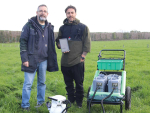
Researchers at Massey University are using a special piece of scientific equipment to improve the measurement of greenhouse gas emissions from pasture soils.
Four years since it was first detected in New Zealand, researchers and growers now know much more about management of maize pest fall armyworm (FAW).
Generative AI in the workplace, trials in the field, and industry-relevant research took centre stage at this year’s Grape Days events in Central Otago, Hawke’s Bay and Marlborough.
A hypothesis in a major dairy research programme that bulls genetically proven to be low methane producers could pass this trait onto their lactating daughters has been proven to be incorrect.


Converting a longstanding cropping farm to dairy was the only way to ensure the land stayed in the family long term, says new dairy farmer Rod May.

As the election heats up, Organics Aotearoa New Zealand (OANZ) has launched its election scorecard designed to help voters wanting to support policies that grow organic and New Zealand's organic sector.
A 'tsunami' of milk from key exporting countries is winding down and this may be good news for New Zealand dairy farmers.
Will the good times last? That's one of the key issues to come out of the latest Federated Farmers confidence survey.
Outgoing Fonterra Co-operative Council chair John Stevenson says that it has been a privilege to represent the co-op's farmer shareholders.
Have a plan in place for your cows and staff.




OPINION: The same mainstream media muppets that brought you Jacindamania in 2017 have been flat out pimping for the Opportunities…
OPINION: Your old mate reckons the atrocious way farmers in the UK are treated by their lords and masters in…




