McRae Wins Southern South Island B+LNZ Director Vote
Matt McRae, a farmer from Mokoreta in Southland who runs a sheep, beef and dairy support business alongside a sheep stud, has been elected to the Beef +Lamb NZ Board as a farmer director.




 increase font size
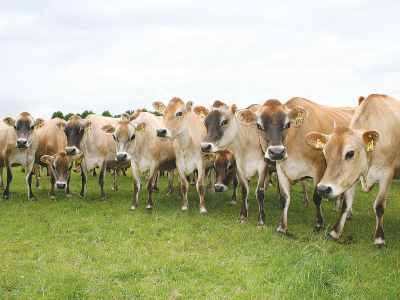 Jersey cows are shown to be more susceptible to Johne’s disease.
Johne’s disease remains an issue for livestock farmers New Zealand-wide.
While the levels of this production limiting disease are low, the industry cannot afford to become complacent, says Matt Ward, Beef + Lamb NZ’s general manager North Island.
He says the bacteria that cause Johne’s disease (Mycobacterium avium Paratuberculosis) is widespread in NZ and infects at least 50% of flocks and herds.
But despite the bacteria being everywhere, the rate of clinical disease is very low.
“In its clinical form, Johne’s disease is chronic, progressive, contagious and generally fatal. It affects cattle, sheep, deer, goats and wildlife,” he said.
Between 2008 and 2010, the Johne’s Disease Research Consortium (joint venture of science and industry) screened at least 5000 dairy herds for the disease through bulk vat milk ELISA tests. Only 1% of herds tested positive and 5% were classified as suspect for the disease.
Ward says while this is good news, Johne’s has the potential to severely harm animal welfare and market access.
“It can also adversely affect individual farm businesses, as clinical Johne’s disease reduces the productivity of dairy cattle seasonally and across the lifetime of the cow,” he explains.
“Modelling has shown the associated reduction in milk, protein and fat yields has the potential to reduce income on a dairy farm by 6-15%.”
Ward says the Johne’s Disease Research Consortium that ran between 2008-2016 developed practical and cost effective management tools and resources for use on farm to reduce the prevalence of the disease.
After the consortium finished, DairyNZ, Beef + Lamb NZ and Deer Industry NZ joined forces to form the Johne’s Advisory Group (JAG). This working group supports and gives insight to the industry on R&D and the control and management of the disease.
Ward says JAG shows the sectors working well together in controlling and managing a disease that could devastate NZ’s red meat and dairy industries.
“While we are unable to eradicate Johne’s disease, it is important we all work together to keep [disease] levels at a minimum to protect our businesses and our respective export industries.”
In the dairy industry, bulk milk vat ELISA testing shows up as a useful tool for screening dairy herds for Johne’s. However, it should not be attempted in late lactation as raised antibody levels in milk interfere with the tests.
Research has shown that dairy cattle are most likely to test positive to Johne’s disease between lactations three and six.
Ward says tests in young stock are notoriously unreliable, so there is little value in testing calves or heifers.
“Instead management should be focused on minimising their exposure to the disease from the environment or adult infected animals.”
Young animals are the most susceptible to the disease and Jersey cows are shown to be three times more susceptible to Johne’s disease than Holstein-Friesians.
• For more information about the control and management of Johne’s disease go to https://www.jdrc.co.nz/resources
Matt McRae, a farmer from Mokoreta in Southland who runs a sheep, beef and dairy support business alongside a sheep stud, has been elected to the Beef +Lamb NZ Board as a farmer director.
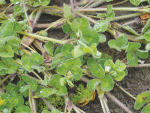
Recent widespread autumn rain will have triggered the germination of subterranean clover seeds, and the resulting seedlings should be allowed to reach the 3–4 trifoliate leaf stage before grazing, says Beef+Lamb NZ.
A hub farm in each of Beef + Lamb NZ’s seven regions and more focus groups are being rolled out for the red meat sector this year.
The red meat sector is poised for a strong rebound this season, with export receipts forecast to top $10 billion and farm profitability to almost double.
Progeny testing at Pāmu’s Kepler farm in Southland as part of Beef + Lamb New Zealand’s Informing New Zealand Beef programme is showing that the benefits of hybrid vigour could have a massive impact on the future of beef breeding.



Federated Farmers says it welcomes Labour's commitment to reviewing the Sharemilking Agreements Act, calling on other major parties to do the same.
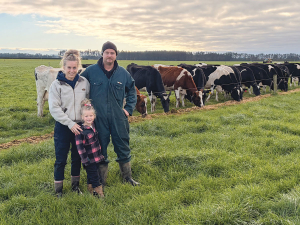
For Canterbury dairy farmers Sian Meijer and Rick Wobben, wearable technology has become one of their most valuable on-farm tools - helping manage 1850 cows across an expansive, high-performing dairy operation while improving efficiency, mating outcomes and day-to-day decision making.
Fonterra has unveiled its annual results for the 2026 financial year, posting $27 billion in revenue and close to $20 billion returned to New Zealand farmer owners and unit holders.
The first major update to the Dairy Cattle Code of Welfare in more than a decade has been released, marking what DairyNZ describes as an important step in ensuring animal welfare standards continue to evolve alongside scientific evidence and on-farm realities.
Ravensdown shareholders have elected Jane Montgomery and Kate Acland to the Ravensdown Board for three-year terms, following a closely contested director election.
Federated Farmers says new legislation replacing the Resource Management Act will cut red tape, unlock investment and help grow New Zealand's export-led economy, after the Planning Bill and Natural Environment Bill passed their third reading in Parliament yesterday.





OPINION: The same mainstream media muppets that brought you Jacindamania in 2017 have been flat out pimping for the Opportunities…
OPINION: Your old mate reckons the atrocious way farmers in the UK are treated by their lords and masters in…




