The country's farmers appear to be a little more upbeat than they were several months ago.
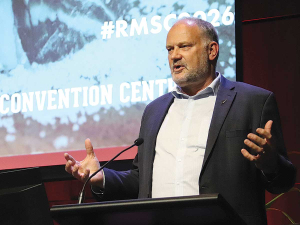
That’s the view of John Roche, the head of MPI’s On Farm Support – a team of people within the Ministry for Primary Industries whose role is to provide on-the-ground help for farmers and growers. The relatively small team has staff based in key locations around the country and its role is to help farmers and growers to navigate information, investigate opportunities, and access advice.
The team facilitates and encourages collaboration, building on the resources that already exist and filling in gaps where necessary. It is similar in some ways to the Irish equivalent, Teagasc, but much smaller in size and is an initiative by MPI to establish closer links with rural communities.
Roche says while things have improved, the primary sector is by no means out of the woods yet and farmers and growers are still doing it tough.
MPI’s reading of the situation in the rural community mirrors that of banks and other commentators who have identified factors including the new government with its promise of cutting red tape and unpalatable regulations as reasons for improved farmer confidence.
Roche says there are also other factors.
“I think it is probably a mixture of everything. Certainly, the season has come through biologically a lot better than we anticipated,” he told Rural News.
“Five months ago, the majority of experts were saying we were in for the largest El Nino in 40 years building in the Pacific and there was the possibility of catastrophic drought.”
But Roche says some good rains have come though the regions, resulting in good grass growth, and there has been a slight upward movement in schedule prices. But he adds that these are still very low – not helped by Australian lamb flooding onto the international market and driving down prices to our farmers.
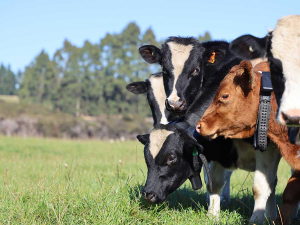
He says it appears with the better grass growth, more stock – both sheep and dairy cattle – are being held on farm, which could result in lower prices and strain on processing plants to deal with a potential bottleneck of stock in the future.
Roche’s other concerns are the conflicts in Ukraine and the Middle East which could impact financially on farmers and growers.
“Then there is China where we have seen the rebuilding of pig herds, which means that demand for other meats has softened, meaning lower prices for our exports.”
John Roche says MPI is closely monitoring the international situation and also looking at population growth and changing consumer habits. He says in terms of China, there appear to be no big trends, and while growth there for the coming year is expected to be a relatively modest 5%, this isn’t all that bad news for the world’s second largest economy.
“In the words of one of my farming mentors – panic slowly,” he says.