
Final call for Alliance’s 2027 Graduate Programme
Alliance is calling for final applications for its 2027 Graduate Programme, with applications closing on Sunday 25 October.




 increase font size
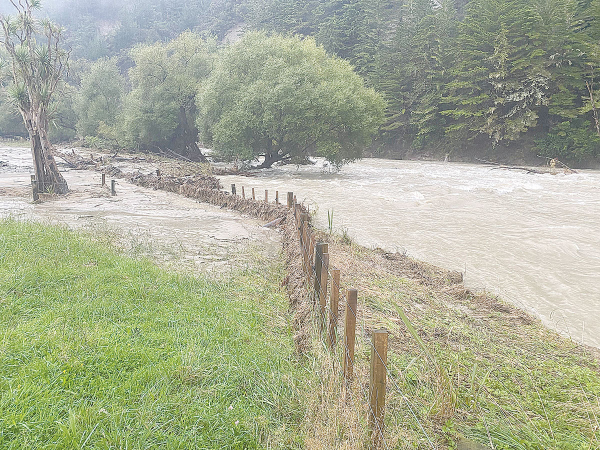 The impacts of Cyclone Gabrielle are still being felt by Hawke's Bay and Gisborne schools.
A new report has revealed the full impact of Cyclone Gabrielle on Hawke’s Bay’s principals and teachers.
The report, titled “We Are Still Here”, comes from research done by teachers’ union NZEI Te Riu Roa six months after the storm made landfall in February last year. It states that in the aftermath of the cyclone, teachers and principals in the region feel overworked, unsupported, and underprepared to navigate the longtail issues of the storm.
Mark Potter, president of NZEI Te Riu Roa, says school staff were the “quiet heroes” of the cyclone response, with many going above and beyond to provide students with a sense of normality.
“Across the region, they [schools] acted as places of emergency shelter, civil defence hubs and resource distribution centres,” Potter told Rural News.
“School principals acted as community coordinators, connecting different agencies and people toward response efforts and supporting whānau to access the supplies they needed to get back on their feet.”
The report makes six recommendations to improve both disaster responses and support for schools.
The first recommendations are that both schools and Early Childhood Education (ECE) centres are recognised for the role they play in disaster response scenarios, as well as taking steps to ensure they are prepared for a disaster.
“The other thing that is really important to note is that the ‘tail’ of a disaster is very long; it’s going to take years for the region to fully recover, especially when it comes to the mental health and wellbeing impacts,” Potter says.
The report notes there is an increase in the workloads of principals and teachers, something Potter says has manifested in both the material impacts of the cyclone – e.g. damage to school buildings – and an increase in mental health and wellbeing needs of children in schools.
He says the best way to support schools and manage that issue would be to increase staffing levels.
“The Ministry [of Education] actually did this last year, but the extra staffing was only granted until the end of 2023,” Potter says.
“What we are hearing now is that these mental health and wellbeing challenges have not gone away and in fact are getting worse, so we recommend that the extra staffing be reinstated for a further 12 months minimum.”
Beyond that, Potter says ongoing mental health and wellbeing support for both students and school staff is a requirement.
“It was great that the government extended the Mana Ake programme to Hawke’s Bay and Tairāwhiti,” he says.
“We need to make sure not only that all schools who need it have access to the programme, but that there is the workforce there to do it, that means for example that there are enough councilors around to meet the demand.”
Alliance is calling for final applications for its 2027 Graduate Programme, with applications closing on Sunday 25 October.

Federated Farmers is backing Feilding High School’s call to keep Agriculture and Horticultural Science as a standalone subject in Year 11.
Pāmu has welcomed Taranaki student Paige Burston as its newest First Foundation Scholar, supporting her journey towards a career in agriculture and animal science.
Three and a half years on from when Cyclone Gabrielle hit Hawke's Bay, some orchardists in the region are still receiving counselling to help them deal with the trauma they suffered.
Kaikōura families affected by July's severe storm have found a practical solution to a problem that's kept some children away from regular schooling for weeks: a washed-out section of Inland Kaikōura Road, which has stopped the local school bus from running its usual route.

Federated Farmers has welcomed new rural policies released by ACT, saying they align closely with its own election priorities.

Rural Contractors NZ says proposed changes to land transport rules for agricultural vehicles are a welcome response by the Government to out of date regulations which have seen members hit with huge fines.
Alliance is calling for final applications for its 2027 Graduate Programme, with applications closing on Sunday 25 October.
Decades piloting planes has ensured vet and farmer David Hayes is focused on safety. So, after a serious accident while welding on farm, he is sharing his experience so others can learn from it.
Canterbury milk processor, Synlait Milk has confirmed Leon Fung as its chief executive officer.
OPINION: Making it easier to collect rainwater and use it to grow crops and livestock is a no brainer.




OPINION: The same mainstream media muppets that brought you Jacindamania in 2017 have been flat out pimping for the Opportunities…
OPINION: Your old mate reckons the atrocious way farmers in the UK are treated by their lords and masters in…




