Cuddling cows
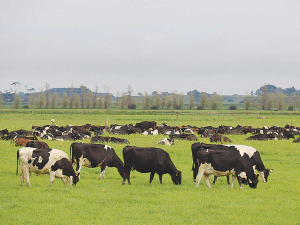
OPINION: Years of floods and low food prices have driven a dairy farm in England's northeast to stop milking its cows and instead charge visitors to cuddle them.




 increase font size
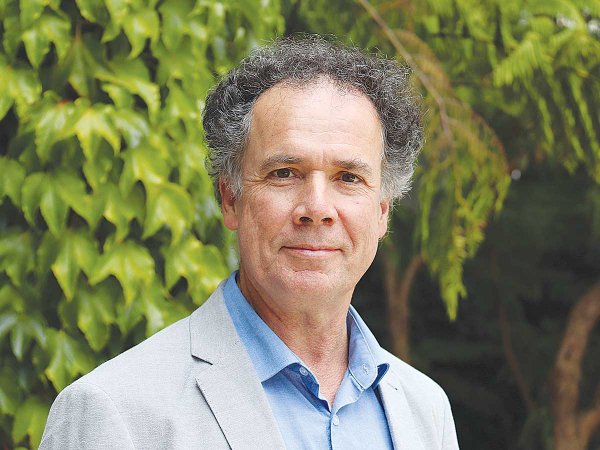 Bob Rees.
High-level policy agreements on greenhouse gases – such as the Paris Agreement – are challenging both policy makers and scientists, according to an international scientific expert in this field.
Professor Bob Rees, of Scotland Rural College in Edinburgh, says national policy makers are trying to implement the consequences of that agreement. However, he doesn’t think those who developed these big agreements worked through the details and how these might apply to individual sector – such as agriculture
“We need to know a lot more about what agriculture needs to do,” he says.
Rees thinks there is a misconception of where the emissions are coming from and that plans can be rolled out to farmers to tell them what they can do to reduce emissions on their farms. He says one easy way to reduce emissions is for farmers to be more efficient, which will reduce their costs and reduce emissions. However, he points out that this is a complex issue and education and training needs to be provided.
“Often there is inertia in the farming sector because people want to do what they have always done and doing things differently is not always attractive,” he explains. “I think the farming industry needs support from people – such as policy advisors, farm advisors and researchers – to implement some of the technologies that are available.”
Rees believes some areas of farming change is inevitable and, in some areas, it will be painful. He says in the UK it’s widely known that a large proportion of emissions come from livestock and that some farmers are inefficient and are being propped up by subsidies.
“In some cases, we are subsiding a sector that isn’t producing very much food, but is producing a lot of greenhouse gases. We have to target that and say that’s not the right way of managing that land and there are other land uses – such as forestry – which will be more profitable that will also cut carbon.
“But I also concede that, in some areas, we can simply improve efficiency and provide some carbon technologies and inhibitors that will help reduce emissions and we can carry on doing some of the things we are doing already.”
Rees rejects the notion that farming is being unfairly targeted saying that other sectors – such as transport – are equally unhappy about the way they are being treated.
Changing diets
There has been a lot of talk about the need for people to eat less meat as part of a global plan to keep livestock numbers at a sustainable level.
However, Rees points out that meat consumption in China and India is growing rapidly as these economies become more westernised.
“The trajectory of meat consumption in both those countries is steep and that is not compatible with the planetary resources that we have,” he claims.
“If China and India were to reach the level of meat consumption that we have in Europe and America, we would need another two planets to support it. We just haven’t got the land.”
However, Rees has a positive view of the dairy industry. He says dairy in some parts of the world like the UK Ireland and NZ is using grass to produce protein in way humans couldn’t do.
“So humans can’t eat grass and derive protein from it, whereas cattle can. Dairy production is a rational thing to do.”
Rees says dairy is a source emissions and way has to be found to bring emissions down be it making changes in the milk parlour, the feed or feed additives.
OPINION: Years of floods and low food prices have driven a dairy farm in England's northeast to stop milking its cows and instead charge visitors to cuddle them.
OPINION: The new Labour Government in the UK is facing the wrath of farmers. Last week thousands of farmers and their supporters converged in London protesting changes to inheritance tax for farmers announced in the Budget.
News that NZ and the UK have agreed 'in principle' to the terms of the free trade agreement (FTA) will come as welcome news to the dairy sector.
Comprehensive, inclusive and high quality and providing fantastic opportunities for our exporters.
Damien O'Connor is planning to head back to Europe again shortly to breathe oxygen into the free trade agreements that New Zealand is negotiating separately with the UK and the EU.


High country stations, mixed sheep and beef farms, Māori-owned farms, corporates and family operations are among the nine commercial farms taking part in the Livestock Innovation Farming Transformation programme, known as LIFT.
OPINION: New health and safety guidance unveiled by the Government recently provides farmers greater certainty about what is expected of them when managing risks on farm.
The National Animal Welfare Advisory Committee (NAWAC) is seeking public feedback on proposed changes to the Code of Welfare for Rodeos.
A New Zealand initiative supporting farmers to restore the health of grazing landscapes has received international backing through the Regenerative Fund for Nature, a global collaborative fund supporting regenerative agriculture and the communities that produce natural fibres for the fashion industry.
Combine premium New Zealand products, blend in a family ritual and what do you get? A world-class functional drink.
Entries are now open across eleven regions for the 2027 New Zealand Dairy Industry Awards (NZDIA).


OPINION: The same mainstream media muppets that brought you Jacindamania in 2017 have been flat out pimping for the Opportunities…
OPINION: Your old mate reckons the atrocious way farmers in the UK are treated by their lords and masters in…




