New Mates
OPINION: Proponents of regenerative agriculture tend to be naturally aligned with a 'green mindset', so they will be nonplussed with their new mates in the US of A.




 increase font size
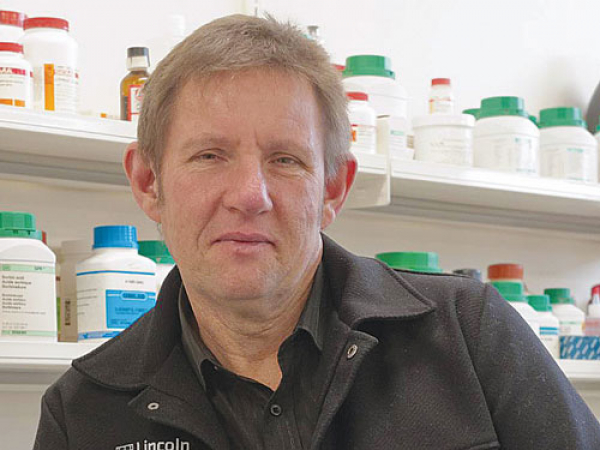 Lincoln University professor of Agricultural Science Jon Hickford warns against diverting an already limited public purse away from traditional research.
NZ's latest farming fad - regenerative agriculture (RA) - is getting a boost with more taxpayer funded backing.
A series of research projects, funded by a series of government bodies, include looking at whether regenerative agriculture offers ‘naturebased’ solutions for climate change in New Zealand. The project has seen a number of ‘working parties’ produce 20 reports, the first four of which were released on October 29, with the rest to be released over the next few weeks.
The project is led by Manaaki Whenua – Landcare Research senior researcher Dr Gwen Grelet and independent social researcher and sheep and beef farmer Sam Lang.
Grelet says traditional agricultural science takes a linear approach: knowledge from a single research discipline (such as plant breeding) is shared from scientists to farmers, who might then adopt one change and observe the result.
She claims RA research demands a ‘complexity aware’ approach, in which farmers are research partners, and knowledge comes from multiple disciplines and sources of innovation.
However, Lincoln University professor of Agricultural Science Jon Hickford strongly defends mainstream agricultural research against the claim that regenerative agriculture requires a new approach. As the New Zealand Institute of Agricultural and Horticultural Science (NZIAHS) president, Hickford was instrumental in producing a special edition of the NZIAHS magazine last December, strongly disputing many of RA’s claims.
He says the danger of using the term regenerative agriculture is the implication that how we currently farm in New Zealand is in some way degenerative.
“We’ve got some of the most, if not the most carbon-efficient production systems in the world,” he told Rural News. “Our pastoral production systems, sheep, beef and dairy, are arguably the best in the world anyway.”
Hickford warns against diverting an already limited public purse away from traditional research.
Meanwhile, in a foreword to the release of the first reports, it claims interest in RA has been steadily increasing among New Zealand farmers, industry, processors and marketers. The report says this highlights the need to better understand what it means in the New Zealand context – and for scientific testing of its claimed benefits.
It does, however, concede that RA’s definitions are “fluid and numerous” and vary depending on places and cultures.
“The lack of a crystalclear definition makes it a challenging study subject. RA is not a ‘thing’ that can be put in a clearly defined experimental box nor be dissected methodically.”
Grelet admits that RA is not a magic bullet, but she claims its grassroots popularity with farmers and incentives for adoption from some of the world’s largest food companies means it has potential for driving the transformation of New Zealand’s agri-food system.
But Hickford says the big challenge for regenerative agriculture is to show its value proposition to New Zealand farmers.
“We’re all for doing science but be wary about claims in the marketplace that are unverified.”
He notes that not only have the likes of the NZ Merino Company and Beef+Lamb New Zealand declared an interest in RA, but so have multinationals including Nestlé and Pepsi whose purpose is to “buy low and sell high”. He says this won’t necessarily be to the benefit of farmers.
Hickford says the argument that RA, like organics, has a high value proposition sounds compelling but is “untestable at this stage”.
“The net benefit economically of these systems might be quite small, if they exist at all. We’ve got to test it out, but I think you’re playing a high stakes game if you take the whole production system down a new and uncharted pathway.”
The RA research project has been funded by the Our Land and Water National Science Challenge, the NEXT Foundation and Manaaki Whenua – Landcare Research.
No Clash Between New and Old
Jon Hickford says agricultural scientists are already looking at the effectiveness of our farming systems and trying to improve them.
He gives as examples on-farm research trying to reduce carbon footprint and methane production.
Meanwhile, Hickford says claims of big chasms between ecology and traditional agricultural teaching at university level are “garbage”.
“Students are already able to major in environmental management, while doing Agricultural Science degrees.”
He says subjects such as the nitrogen cycle cannot be taught without covering its environmental and ecological impacts.
“We teach about the consequences and the impacts of farming at all levels, across most of the component disciplines of agriculture.”
OPINION: Proponents of regenerative agriculture tend to be naturally aligned with a 'green mindset', so they will be nonplussed with their new mates in the US of A.
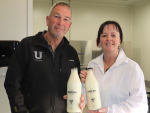
Wayne and Ange Moxham of Horowhenua have just been named as Fonterra's top organic performer for milksolids. As well as providing organic milk to Fonterra, the couple also sell Udderly Organic milk to more than 100 outlets in the region and are embarking on another exciting venture producing organic gelato. Reporter Peter Burke went along to see their farming operation.
A significant breakthrough in understanding facial eczema (FE) in livestock brings New Zealand closer to reducing the disease’s devastating impact on farmers, animals, and rural communities.
A breakthrough in the understanding of Facial Eczema (FE) in livestock could bring New Zealand closer to reducing the disease’s impact.
Reaction to the Government’s major overhaul of the country’s seven crown research organisations has so far been largely positive.



Now in its fourth year, the 2026 Fencing Industry Awards, formed part of the proceedings of the FCANZ Conference, held in Nelson during August.
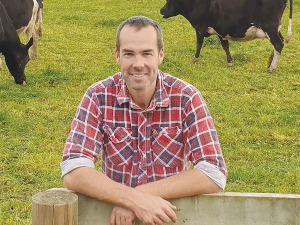
DairyNZ deputy chair Cameron Henderson has been re-appointed unopposed for another term.
OPINION: The stats speak for themselves.
Farms across the upper North Island are trialling different pasture mixes as part of a research programme that aims to build greater resilience into farming systems.
Election years are always a concerning time for farmers, according to DairyNZ chair Tracy Brown.
The Ballance Farm Environment Awards are coming to the West Coast of the South Island.


OPINION: The same mainstream media muppets that brought you Jacindamania in 2017 have been flat out pimping for the Opportunities…
OPINION: Your old mate reckons the atrocious way farmers in the UK are treated by their lords and masters in…