Milk Powder Prices Prop Up Farmgate Milk Price
Milk powder prices are keeping farmgate prices up, helping processors offset the dip in milk fat prices.




 increase font size
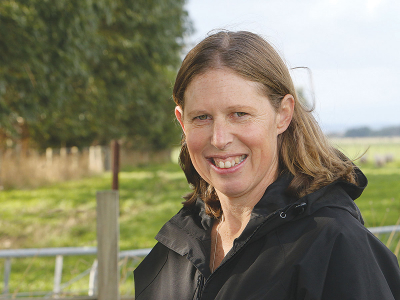 ANZ rural economist Susan Kilsby.
Is New Zealand becoming too reliant on China as a customer for primary product exports?
Everyone is asking this question, says ANZ rural economist Susan Kilsby.
“The way I see it, yes we are selling a lot into one market. But it is a massive market with a lot of different moving parts in it,” she says.
“So it is a little bit like selling into Europe – there are many different religions or cultures…. There’s a lot of differentiation within China.”
Kilsby was commenting to Rural News on the latest ANZ Agri Focus Report entitled ‘Fine China or Fragile China?’.
She says NZ needs to be exposed more to Asia than to the developed markets because the economies in Asia are growing much more rapidly.
“So being exposed to Asia is a really good thing. It would probably be great if we were exposed to a few more countries to a greater degree than we are. But if we weren’t as exposed to China as we currently are the return back to farmers wouldn’t be as good.”
Kilsby adds that despite the warnings sounding about the global economy for a while, it is perhaps not impacting us so much here in NZ because we still have strong demand for our products.
She also says that after the Global Financial Crisis we did not have the impact on our economy that many other economies had.
“We grew our exposure at that point to China which was growing rapidly while the global economy was not as strong.
“We are reasonably well positioned at the moment, being exposed to Asia. It doesn’t come without its risks and some of that is regulatory and [some of it] access into China. It can flip on a dime for certain products. But it has certainly paid off for us so far.”
Kilsby says farmgate returns are quite strong across all sectors currently with the only headwinds being less certainty in the global economic situation. “There is never a whole lot of certainty but less at the moment with the majority of the major economies across the world slowing a little…. Lower GDPs and as a result central banks cutting interest rates to stimulate economies.
“But certainly from markets we are selling into at the moment we are still seeing good returns across the board.”
For the meat industry, many of those returns have been driven by diverting more product -- lamb and beef -- into China. In China, chain restaurants specialising in beef are growing in the big cities.
The Agrifocus report says the projected milk price of $6.25-$7.25/kgMS for the 2019-2020 season is more conservative than expected, but there are signs this will increase in future.
“Milk prices for the coming season are on track to be stronger than the current season,” Kilsby says.
“Demand could be impacted by slowing global growth but global milk supply is expected to be contained which should support strong prices in the year ahead.”
NZ beef exports have held up well through the peak processing season, and beef exporters are benefitting from two strong markets: China and the United States.
Investment in horticulture continues as returns from apples and kiwifruit outperform the rest of the sector.
A strong start to the kiwifruit season has resulted in record export returns and for the first time gold fruit is expected to outperform green.
“We’re seeing an increase in gold kiwifruit as more orchardists convert from green to gold,” Kilsby says.
“Gold fruit matures earlier than green and it yields well which helps drive higher returns. While all gold has been picked the green harvest continues.”
Milk powder prices are keeping farmgate prices up, helping processors offset the dip in milk fat prices.

Case IH has unveiled its redesigned next generation Puma Series tractors, said to offer improvements in connectivity, operator comfort, fuel efficiency and drivability.
Cameron Reed lives between two worlds.
A milk glut around the world shows no sign of easing, putting downward pressure on farmgate milk prices for the next few months.
China remains New Zealand’s biggest market, taking $23 billion of our exports, but it’s no longer a commodity story, says Prime Minister Christopher Luxon.


High country stations, mixed sheep and beef farms, Māori-owned farms, corporates and family operations are among the nine commercial farms taking part in the Livestock Innovation Farming Transformation programme, known as LIFT.
OPINION: New health and safety guidance unveiled by the Government recently provides farmers greater certainty about what is expected of them when managing risks on farm.
The National Animal Welfare Advisory Committee (NAWAC) is seeking public feedback on proposed changes to the Code of Welfare for Rodeos.
A New Zealand initiative supporting farmers to restore the health of grazing landscapes has received international backing through the Regenerative Fund for Nature, a global collaborative fund supporting regenerative agriculture and the communities that produce natural fibres for the fashion industry.
Combine premium New Zealand products, blend in a family ritual and what do you get? A world-class functional drink.
Entries are now open across eleven regions for the 2027 New Zealand Dairy Industry Awards (NZDIA).



OPINION: The same mainstream media muppets that brought you Jacindamania in 2017 have been flat out pimping for the Opportunities…
OPINION: Your old mate reckons the atrocious way farmers in the UK are treated by their lords and masters in…




