A challenging year but better days are coming
For the primary sector, 2024 would go down as one of the toughest years on record. Peter Burke reports.




 increase font size
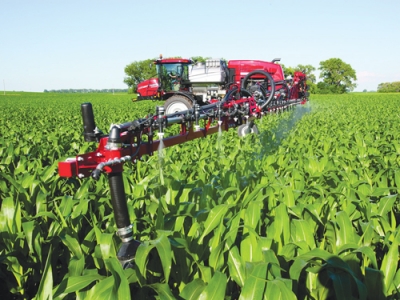
One way of getting more choice and better agri-chemical products to market is to improve the data protection for companies, says Agcarm chief executive Mark Ross.
This is the protection of information supplied to regulatory authorities in support of registrations of innovative agricultural compounds, new uses and reformulations of existing registered compounds, and reassessments of existing registered products.
Ross told Rural News that with a new application for an active ingredient the applicant only get five years data protection for that product.
“That is not long enough to encourage new applications or the big companies to introduce new products because they don’t get their money back. They have to do all the research and make sure it works and after that they don’t have the chance to get their money back.
“If they bring a product in for, say, cabbages, and they want to use it on Brussels sprouts, they have to put in another application; there is no extension on data protection. They might do that in year three but they only have two years remaining of data protection. What we are looking for is, when a new application is put in for a product, they get a 5-10 year extension of the five years.
“But the government is settling on three years extension so there will be a total of eight years protection but we would like to see that increased to a minimum of a five year extension.
“We are hoping a bill will come before the house shortly by which we can lobby for an extension on the protection through the select committee process.
“It is all about cost and benefits and if a company is going to introduce a new product, making sure they get their money back.
“It will be good for New Zealand, with more products, more choice and more environmentally friendly products available.”
MPI aims to have amendment to the data protection rules under the ACVM Act introduced in Parliament by July 1, 2015. The bill will go through select committee for consideration and stakeholders will have the opportunity to make submissions.
For the primary sector, 2024 would go down as one of the toughest years on record. Peter Burke reports.

Prime Minister Christopher Luxon says excessive regulation imposed by the previous government has resulted in an ‘obstruction economy’.
OPINION: This month, the government announced a pause to the rollout of the national farm plan system.
Farmers are overjoyed to see a halt to freshwater farm plans put in place by the previous government.
The two associations representing NZ's crop protection and animal health industries will merge this month.



Healthy snacking company Rockit has announced Wang Yibo, one of China's most influential celebrities, as its new brand ambassador.

Rabobank has celebrated the tenth anniversary of its AgPathways Programme, with 23 farmers from Otago and Southland gathering for two-and-a-half days to learn new business management and planning skills.
Adopting strategies to reduce worm burden on farm goes hand-in--hand with best practice farm management practices to optimise stock production and performance, veterinarian Andrew Roe says.
Last night saw the winners of the 2026 Beef + Lamb New Zealand (B+LNZ) Awards named at a gala dinner at Te Pae Christchurch Convention Centre.
A 12-month pathway programme has helped kickstart a career in dairy for an 18-year-old student-turned-farmer.
Zespri says its global fruit sales revenue has reached a record NZ$5.9 billion from sales of 248.1 million trays.





OPINION: The old saying 'a new broom sweeps clean' doesn't always hold up, if you ask the Hound.
OPINION: This old mutt went to school to eat his lunch, but still knows the future of the country, and…