Safer Farms Champions Promote Quad Bike Crush Protection Devices
Safer Farms Regional Champions are putting Crush Protection Devices (CPDs) through their paces and sharing their first-hand experiences with other farmers.




 increase font size
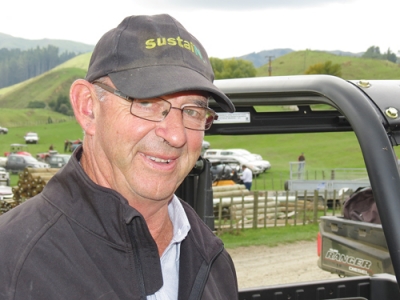 Mark Gemmell.
The ban on passengers on quads is inhibiting farmers getting good professional advice, says a Gisborne farmer, Mark Gemmell.
Rural News has been inundated with calls and letters from farmers concerned about WorkSafe New Zealand’s ban on carrying passengers on quads. They complain chiefly that the new rules are impractical, made by bureaucrats who don’t understand what life is like onfarm and that the rules will harm farm businesses.
Mark Gemmell, who runs a 720ha sheep and beef farm 50km from Gisborne, told Rural News the issue of pillion passengers on quads has got “completely out of hand”. The people making the rules fail to recognise the absurdity of some of them, he says.
“I have a couple of big Labrador dogs that weigh 40kg each and an old huntaway bitch that’s about 30kg. I willingly cart them around on my quad and I have never tipped it over.”
Gemmell, who works off farm for Ballance Agri-Nutrients, believes the best way of developing relationships with farmer clients is by sitting on the back of a bike – looking at the stock, sticking to the tracks, being sensible, doing soil testing and giving advice on their stock policy.
 And another Gisborne farmer, James Brownlie, applauds WorkSafe’s attempts and encouragement of the culture and safety – because “it’s well needed and there has to be some change of attitudes”. But, he says, unfortunately he cannot support the stance WorkSafe has taken on passengers on quads.
“Passengers on quads are an integral part of normal, everyday farm life and we can’t do without it,” Brownlie told Rural News. “It’s not at all dangerous, but is perceived as being dangerous because of the raising of the centre of gravity on a quad, based on static loads.
“But the human load can get off quickly when there is a problem, whereas it’s impossible to jettison a bag of fertiliser or anything else which might be on the back. I often have up to six dogs on the back of my quad and they are all trained so that in any tricky situation they jump off when they are told to.”
Brownlie is bothered that WorkSafe has been unable to provide any evidence that more than one person on a quad has a causative effect in an accident. He travels about 1000 hours a year on his quad and his staff do even more. He says given the kilometres these vehicles are driven, the accident rate is extremely low.
Brownlie believes the reaction of large farming enterprises, such as Landcorp, in banning passengers is a ‘knee-jerk’. He claims WorkSafe has taken on the corporate farms and the boards of these organisations are not prepared to stand up to the government safety body for fear of prosecution.
“I can see where the boards are coming from because they have had the gun pointed at them,” he says. “But I think they have got it wrong on this particular one.
“Farmers know their quads better than bureaucrats in Wellington. A farm consultant told me there is nothing safer than a farmer on his own tracks on his own quad. That consultant says he’d rather ride with that farmer than on his own quad. The safest thing is to be a passenger with an experienced person.”
Safer Farms Regional Champions are putting Crush Protection Devices (CPDs) through their paces and sharing their first-hand experiences with other farmers.
Matt McRae, a farmer from Mokoreta in Southland who runs a sheep, beef and dairy support business alongside a sheep stud, has been elected to the Beef +Lamb NZ Board as a farmer director.
Southland farmers are being urged to put safety first, following a spike in tip offs about risky handling of wind-damaged trees
It's hard to believe that quad bikes or ATVs have been around for about 50 years – even longer if you add in the balloon-tyred trikes that first appeared in the Bond movie Moonraker.
Federated Farmers says the farming sector has been unable to effectively address quad bike safety.


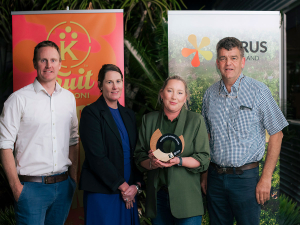
New Zealand's citrus growers were challenged to build their future on the value embedded in their fruit rather than the volume they produce, at Citrus New Zealand's annual gathering in Gisborne on 17 September.
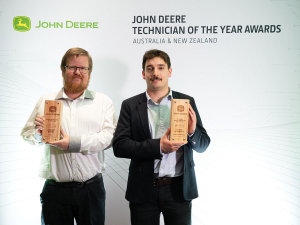
Leading John Deere technicians and apprentices from New Zealand and Australians were recognised at the recent sixth annual JD Technician of the Year Awards, held in Brisbane.
In Dacre, near Invercargill in New Zealand’s South Island, Bruce Dinnington is running a dairy operation unlike any other.
A free online platform aggregating governance vacancies across rural and regional New Zealand has been launched.
Environment Minister Nicola Grigg has announced details of a new rural plastics recycling scheme.
Agricultural drone operators say that a government decision to allow lower-risk drone work without certification won’t lower standards but drive innovation and efficiency.





OPINION: The same mainstream media muppets that brought you Jacindamania in 2017 have been flat out pimping for the Opportunities…
OPINION: Your old mate reckons the atrocious way farmers in the UK are treated by their lords and masters in…




