
Applications open for 2027 Zanda McDonald Award
Applications are set to open for the 2027 Zanda McDonald Award, a trans-Tasman award recognised for identifying and fast-tracking talented young leaders in agriculture and agribusiness.




 increase font size

Senior students interested in careers in agriculture turned up in droves to the first of this year's Get Ahead Experience days, held at the Karapiro Domain, Waikato.
Each school party was allocated to one of ten different groups to circulate around various problem-solving activities. The activities represented a variety of jobs likely to crop up on-farm or in related or consultative areas.
How much are my lambs worth today? Are they the right weight for what the works want? Should I hold off for another week? A trailer full of lambs was judged, condition scored, and the ups and downs of the meat schedules were examined.
My farm has numerous different environments and uses. What should happen in each area? How does effluent drainage work? What do I do with native bush, or wetlands, and what should be in the streams around my farm? Some teams were clued up, others had a lot to discover about caring for farm environments.
Which pasture plants are which, and what do their seeds look like? What sort of fertiliser mixes should be used where, and can you tell one from another? This bit was certainly easier for kids from farms, but the others learned from watching and listening.
Coping with nasties – whether fungal, insect species or weeds and pests – let students discover what products to use on each and what the words on the containers mean.
The complexities of shipping farm produce to other countries, and finding suitable ships sailing at appropriate times, had the maths whizzes leading the charge.
Working out which countries take our meat, and investigating the differences required in packaging was knowledge beyond many students, who needed to read a few more newspapers and farming papers to brush up their knowledge of what brings in a good chunk of New Zealand's export income.
Calculating pasture quality, stock energy requirements and quantity wasn't as easy as a first glance at the pictures might appear.
Naming and matching up containers of various seeds with the products they get turned into caused much discussion, and obviously some hadn't given raw materials much thought, while others were brashly confident.
A variety of 'things' in jars of formalin produced a mixture of reactions, and there were obviously some who weren't going to be vets, while others found the contents fascinating.
The afternoon was spent 'speed dating' with representatives from the variety of industries who talked about what they do in their jobs.
Some students spoken to at lunchtime were decided on what they wanted to do next year; others appeared blown away by the huge range of choices and the knowledge required for them.
Ten such events will be held this year, six in the North Island and four in the South, the final ones in June, funded jointly by DairyNZ and Beef + Lamb New Zealand.
The organisation of each experience day has been handed over to Young Farmers members, who urged their teams on and made sure the shy ones participated.
Applications are set to open for the 2027 Zanda McDonald Award, a trans-Tasman award recognised for identifying and fast-tracking talented young leaders in agriculture and agribusiness.
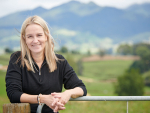
Minister of Conservation Hon Tama Potaka has appointed Susan O'Regan as Chair of the Queen Elizabeth II National Trust (QEII) for a three-year term.
A free online platform aggregating governance vacancies across rural and regional New Zealand has been launched.
OPINION: The stats speak for themselves.
Farms across the upper North Island are trialling different pasture mixes as part of a research programme that aims to build greater resilience into farming systems.

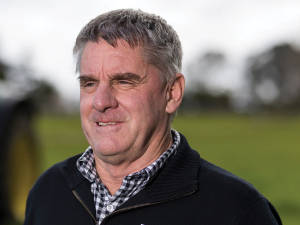
Federated Farmers has welcomed new rural policies released by ACT, saying they align closely with its own election priorities.

Rural Contractors NZ says proposed changes to land transport rules for agricultural vehicles are a welcome response by the Government to out of date regulations which have seen members hit with huge fines.
Alliance is calling for final applications for its 2027 Graduate Programme, with applications closing on Sunday 25 October.
Decades piloting planes has ensured vet and farmer David Hayes is focused on safety. So, after a serious accident while welding on farm, he is sharing his experience so others can learn from it.
Canterbury milk processor, Synlait Milk has confirmed Leon Fung as its chief executive officer.
OPINION: Making it easier to collect rainwater and use it to grow crops and livestock is a no brainer.

OPINION: The same mainstream media muppets that brought you Jacindamania in 2017 have been flat out pimping for the Opportunities…
OPINION: Your old mate reckons the atrocious way farmers in the UK are treated by their lords and masters in…




