
Federated Farmers Welcomes ACT’s New Farming Policies
Federated Farmers has welcomed new rural policies released by ACT, saying they align closely with its own election priorities.




 increase font size
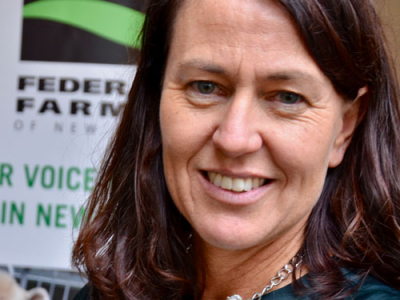 Feds arable and biosecurity spokesperson Karen Williams.
Farmers are questioning why the Government’s first ‘Wellbeing budget’ has left a critical gap in its commitment to conservation.
There is no additional funding for the QEII National Trust or the Ngā Whenua Rāhui Fund. Plus, woefully inadequate funding for the control of wilding conifers, Feds arable and biosecurity spokesperson Karen Williams says.
The extremely modest increase in funding for the National Wilding Conifer Control Programme means its work will be going backwards in terms of managing this out-of-control pest.
"We hoped to see the wilding conifer programme receive more like $25 million per year.
"It’s a $250 million problem growing at 20 per cent per year. We are not even going to hold our own at $10 million,” says Williams.
"By ignoring the problem all the Government is doing is pushing the responsibility further down the line for someone else to fix. If the country is not going to take pest plant wilding conifers seriously then it’s about time it was just said out loud."
QEII and the Department of Conservation’s Ngā Whenua Rāhui funded covenants provide the most cost effective and secure method of protecting and enhancing biodiversity values on private land.
Federated Farmers has worked closely with other non-government organisations and the Government on developing a workable National Biodiversity Strategy as part of the Biodiversity Collaborative Group. This group has identified the benefits of supporting the protection of indigenous biodiversity on private and Māori-owned land respectively. The benefits cannot be overstated and the demand for new covenants have outstripped demand.
"The Crown and the public expect greater protection of biodiversity value on private land to occur. How can work continue if the Government is not prepared to help fund it?"
QEII covenants protect more than 180,000 hectares on private land and play a critical role as a refuge for some of New Zealand’s rarest and most endangered ecosystems.
"It’s unfortunate the Government can’t see its way to support conservation efforts with a tried and true track record."
Federated Farmers has welcomed new rural policies released by ACT, saying they align closely with its own election priorities.

A farmgate milk price of $10/kgMS this season is firming up as milk powder prices soar and the New Zealand dollar weakens.
Federated Farmers is backing Feilding High School’s call to keep Agriculture and Horticultural Science as a standalone subject in Year 11.
National’s pledge to introduce 19 new national standards shows the party is serious about getting Wellington out of farming, Federated Farmers says.
Mobile phone coverage and reliability are deteriorating in rural areas, and farming families are bearing the cost, according to a Federated Farmers survey.


Dairy processors are ready to further boost New Zealand’s export earnings but want the incoming government to match their ambition with good policy.

Massey University is best placed to solve the “problems” facing the dairy industry, says vice chancellor, Pierre Venter.
Synlait's longest serving employee – a man who joined the Canterbury-based milk processor even before it began processing milk – is now its newest executive.
A dairy industry leader believes eradicating the common and costly disease, Bovine Viral Diarrhoea (BVD) is within reach.
A farmgate milk price of $10/kgMS this season is firming up as milk powder prices soar and the New Zealand dollar weakens.
Federated Farmers has welcomed new rural policies released by ACT, saying they align closely with its own election priorities.





OPINION: The same mainstream media muppets that brought you Jacindamania in 2017 have been flat out pimping for the Opportunities…
OPINION: Your old mate reckons the atrocious way farmers in the UK are treated by their lords and masters in…




