Fonterra FY26 Results: $9.69 Milk Price, $3.4bn Profit
Fonterra has unveiled its annual results for the 2026 financial year, posting $27 billion in revenue and close to $20 billion returned to New Zealand farmer owners and unit holders.




 increase font size
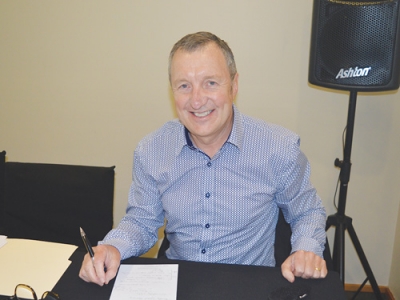 Global economist John Macfarlane.
Fonterra farmers have been told their longevity in business will be determined by their performance during their worst years.
Global economist John Macfarlane told Fonterra shareholders last week the key is to survive the worst years.
"The key challenge we have in the volatile market is to survive the bad years; the good years will look after themselves," he says.
Macfarlane and US brokerage firm head Brian Rice were invited by the Fonterra Shareholders Council to speak at eight meetings around the country.
Melbourne-based Macfarlane, who owns dairy farms in the South Island and supplies Fonterra, spoke about the global economic situation and its impact on commodity prices.
He urged farmers to protect their low cost production base and maintain balance sheet strength to ride out the downturn.
He also urged farmers not to rely on what European farmers were doing.
"We can't sit here as farmers and say it's irrational for the Europeans to produce milk at $7/kgMS. Relying on other people to act rationally is not a good strategy."
Macfarlane showed farmers a chart in which global growth had been revised down past two years, important because there is a strong relationship between global growth and demand for commodities.
"It's not a complicated relationship, but a linear [one]," he says.
Economies have grown less quickly and demand for commodities, including dairy products, has waned.
Macfarlane says New Zealand's major dairy trading partners -- China, other Asian markets, Middle East and Latin America -- have all been growing more slowly.
He believes the tightening of fiscal policy in the US is also impacting commodity prices.
Interest rates in the US have been kept at zero since the global financial crisis in 2008-09. Last December the Federal Reserve raised the rates to 0.25%, with more rises to follow.
Macfarlane says according to the Federal Reserve, the rate could go as high as 3.25%. This is important because every time the US Federal Reserve has tightened its fiscal policy there have been "casualties".
In 1990, it triggered the Latin American crisis and Argentina is still struggling to recover; in the 1990s the Asian financial crisis was caused by the US dollar going up, catching many Asian economies off guard. In 2008-09, it triggered the global financial crisis.
Macfarlane says commodity prices may be the first casualty of the latest US Federal Reserve move. In anticipation of rate hikes commodity prices have tumbled.
He says dairy farmers should not feel they have been picked on. "A range of agri commodities, like those traded in the US, have been affected, including soya bean, orange and pork."
China is transitioning from a manufacturing to a service and consumption economy, he says. "What China is attempting to do is incredibly ambitious; as major export partners we should be prepared for accidents along the way."
Macfarlane says demand for dairy products in China remains strong, unlike iron ore which was widely used in infrastructure projects until a few years ago.
Fonterra has unveiled its annual results for the 2026 financial year, posting $27 billion in revenue and close to $20 billion returned to New Zealand farmer owners and unit holders.
Fonterra Co-operative Group has confirmed the independently assessed candidates standing for election to its board in 2026.
Fonterra has revised its Farmgate Milk Price forecast for the 2026/27 season, lifting the midpoint and narrowing the range on the back of improving global dairy commodity prices.
Outgoing Fonterra Co-operative Council chair John Stevenson says that it has been a privilege to represent the co-op's farmer shareholders.
OPINION: It seems Canterbury processor Synlait is still in the doldrums.



Federated Farmers says it welcomes Labour's commitment to reviewing the Sharemilking Agreements Act, calling on other major parties to do the same.
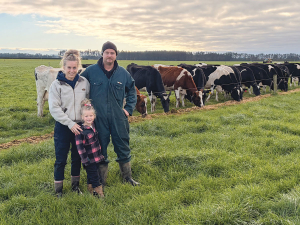
For Canterbury dairy farmers Sian Meijer and Rick Wobben, wearable technology has become one of their most valuable on-farm tools - helping manage 1850 cows across an expansive, high-performing dairy operation while improving efficiency, mating outcomes and day-to-day decision making.
Fonterra has unveiled its annual results for the 2026 financial year, posting $27 billion in revenue and close to $20 billion returned to New Zealand farmer owners and unit holders.
The first major update to the Dairy Cattle Code of Welfare in more than a decade has been released, marking what DairyNZ describes as an important step in ensuring animal welfare standards continue to evolve alongside scientific evidence and on-farm realities.
Ravensdown shareholders have elected Jane Montgomery and Kate Acland to the Ravensdown Board for three-year terms, following a closely contested director election.
Federated Farmers says new legislation replacing the Resource Management Act will cut red tape, unlock investment and help grow New Zealand's export-led economy, after the Planning Bill and Natural Environment Bill passed their third reading in Parliament yesterday.




OPINION: The same mainstream media muppets that brought you Jacindamania in 2017 have been flat out pimping for the Opportunities…
OPINION: Your old mate reckons the atrocious way farmers in the UK are treated by their lords and masters in…




