Election 2026: How Parties Would Lift the Arable Sector
As part of its Election 2026 coverage, Rural News asked political parties how they would help pull the arable sector out of the doldrums. Here's what they said:




 increase font size
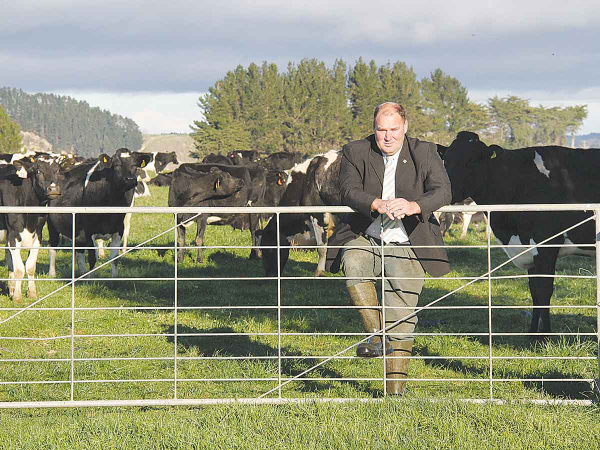 Associate Minister for Agriculture and the Environment, Andrew Hoggard.
As Associate Minister for Agriculture and the Environment, Andrew Hoggard has a number of delegations to focus on.
The most immediate one is dealing with problems relating to SNAs or significant natural areas - stopping the mapping of new ones and dealing with existing ones. This is in the 100-day plan.
Another matter he's been tasked with dealing is animal welfare and with that comes the controversial issue of the export of live animals. Hoggard says he will also havr to deal with animal welfare codes coming his way from the National Animal Welfare Advisory Committee (NAWAC). Food safety is another of his delegations.
Of major interest will be what happens regarding changes on environmental matters.
"Farm plans is something I will be putting quite a bit of effort to this year and I'll also look at water storage - another big issue for farmers," he says.
Hoggard says the key thing is making the plans simple so that farmers can do these themselves and not have to employ a $10,000 consultant.
He says it seems the consenting process has got out of hand with a plethora of consents required, whereas rolling many of these into one consent would be less costly and just as effective.
Hoggard says while some ideas about improving the environment may be desirable, the way they have been presented to farmers has been poor.
He adds that the connection between Wellington and farmers has been lost. He says there is a need to rebuild that relationship and for Wellington to come up with better outcomes that are practical and inexpensive.
"I'd like to see less money spent on paperwork and instead [see] that money invested that back to farmers to help them form of better practices," he says.
Hoggard says dealing effectively and efficiently with environmental issues would take some of the pressure off farmers - especially sheep and beef farmers - who are going through some hard times with lower returns and high on-farm costs.
As part of its Election 2026 coverage, Rural News asked political parties how they would help pull the arable sector out of the doldrums. Here's what they said:
OPINION: Rivers never sit still. They start as snowmelt and rain in the high country, pick up a creek here and a stream there, and carry all of it down to where it's needed.
OPINION: Well, the silly season is upon us and all us politicians are running around shaking babies and kissing hands, or maybe the other way around.
It was billed as a chance for all the political parties to woo the rural vote, but question marks hang over just how effective this was.
There's been widespread support from the primary sector for the Government's announcement on changes to freshwater farm plans that come under the Natural Environment Bill, which is now set to replace the existing RMA.


Alliance is calling for final applications for its 2027 Graduate Programme, with applications closing on Sunday 25 October.
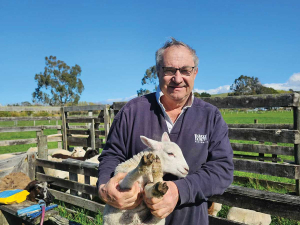
Decades piloting planes has ensured vet and farmer David Hayes is focused on safety. So, after a serious accident while welding on farm, he is sharing his experience so others can learn from it.
Canterbury milk processor, Synlait Milk has confirmed Leon Fung as its chief executive officer.
OPINION: Making it easier to collect rainwater and use it to grow crops and livestock is a no brainer.
As part of its Election 2026 coverage, Rural News asked political parties how they would help pull the arable sector out of the doldrums. Here's what they said:
Farmers are being encouraged to rethink how they manage waste on farm with the launch of ruralwastesorted.co.nz, a new website bringing together practical tips, real farmer experiences and resources.

OPINION: The same mainstream media muppets that brought you Jacindamania in 2017 have been flat out pimping for the Opportunities…
OPINION: Your old mate reckons the atrocious way farmers in the UK are treated by their lords and masters in…




