McRae Wins Southern South Island B+LNZ Director Vote
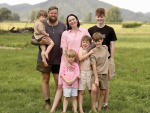
Matt McRae, a farmer from Mokoreta in Southland who runs a sheep, beef and dairy support business alongside a sheep stud, has been elected to the Beef +Lamb NZ Board as a farmer director.




 increase font size
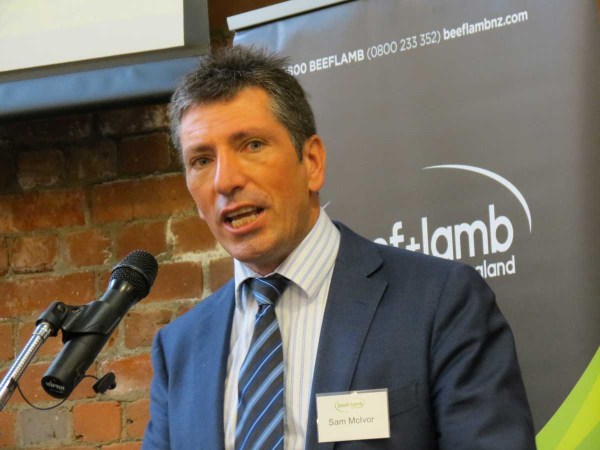 Beef+Lamb NZ chief executive Sam McIvor has been fronting the South Island leg of the HWEN roadshow.
Farmers are saying no to the ETS - that's the clear messge coming through from the He Waka Eke Noa (HWEN) climate consultation roadshow, according to DairyNZ and Beef+Lamb NZ.
The two industry-good organisations have, for the past week or so, been holding farmer meetings at various venues across the country. The CEOs of the respective organisations are leading these meetings - Tim Mackle from DairyNZ, who's heading up the North Island leg of the programme, and Sam McIvor from B+LNZ - who's fronting the South Island meetings. The two teams presenting the information comprise of six people, including Mackle and McIvor.
McIvor told Rural News that farmer attendances at the meetings he's been to in the South Island are good, considering there is a limit of 100 at each event. He says about 80% of those who registered are turning up and says the age range is a mixture of young and older farmers.
To gauge farmers' views on the HWEN, they are using an app called Slido which is a polling-type app where farmers using their mobile phones can register their preferences for the various options to give the organisers some direct feedback.
"The farmers are very quick to recognise the two options that are being offered to them," McIvor claims. "The farm level one looks like the fairest and they see themselves as getting rewarded for what we do and don't do on our own farm."
But he adds that they also understand that there are problems, such as an administrative burden. "Others favoured the processor hybrid model, which they recognise as being administratively simpler. They can see the advantages of that system, which will allow them to focus on their farming."
McIvor believes farmers are doing some homework to see how the sequestration numbers in HWEN line up on their own farm. He says they also want feedback on the targets.
He says what system is adopted is ultimately all abut a negotiation with the Government and getting quality feedback from farmers is a critical part of the process.
"It is the farmers who are going to make the changes on their farms, not the Government or the industry good organisations," McIvor adds. "So, the systems have to absolutely work for farmers - both administratively and practically."
He says the model that is finally adopted also needs to support farmers and motivate them, as well as give them confidence to get on and make changes.
"Therefore, farmer observation and critique is absolutely critical."
Attendances at the North Island meetings have been much the same as the South Island, Mackle says.
He admits to being surprised at the large numbers coming along - despite the presence of Omicron in most areas.
Dairy farmers and their sheep and beef colleagues are attending the same meetings and Mackle says the balance of each depends on the locality of the meeting.
"Where there are more dairy farms, there is larger number of dairy farmers present and the reverse happens in hill country areas."
Mackle told Rural News there have been some really good discussions at the meetings. He adds that more online options are being made available for those who "understandably" can't attend.
"There is nothing like having face-to-face discussions and being able to drill down a bit more and a read the body language."
Mackle believes the reaction from farmers attending the meetings in the North Island is similar to those in the South Iland, with the overwhelming majority wanting to get to the farm-level measurement system which rewards people for what they do.
"The isue is do we end up transitioning from a processor level first for pragmatic reasons," he says.
While the roadshow was still continuing when this article was written, B+LNZ and DairyNZ says they are meeting daily to assess the situation in light of the Covid pandemic.
Matt McRae, a farmer from Mokoreta in Southland who runs a sheep, beef and dairy support business alongside a sheep stud, has been elected to the Beef +Lamb NZ Board as a farmer director.
Ospri is reducing TB testing frequencies and movement control measures as the disease risk subsidies in parts of the country.
Southland farmer and director Tony Cleland has been named OSPRI New Zealand’s new chair.
The red meat sector is poised for a strong rebound this season, with export receipts forecast to top $10 billion and farm profitability to almost double.
Progeny testing at Pāmu’s Kepler farm in Southland as part of Beef + Lamb New Zealand’s Informing New Zealand Beef programme is showing that the benefits of hybrid vigour could have a massive impact on the future of beef breeding.
OPINION: In politics, credibility is and should be big. It must surely rank higher than charisma, which is quite trite and superficial. Yet, voters nowadays are often wooed and influenced by how someone looks or talks at a superficial level. TV plays a huge role in this.
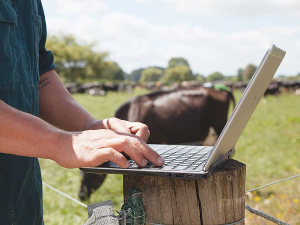
Farmers can spend less time on paperwork, thanks to a new data sharing agreement between DairyNZ’s DairyBase and LIC’s MINDA software.
Kaikōura families affected by July's severe storm have found a practical solution to a problem that's kept some children away from regular schooling for weeks: a washed-out section of Inland Kaikōura Road, which has stopped the local school bus from running its usual route.
Rural New Zealand is welcoming the Government’s recent package of rural healthcare initiatives.
Interest in agritech and production animal systems has prompted Massey University's School of Agriculture and the Environment to new majors to its popular animal science degree.
Ballance Agrinutrients chief executive Kelvin Wickham says despite a tough year, he is pleased the business has returned to profit.

OPINION: The same mainstream media muppets that brought you Jacindamania in 2017 have been flat out pimping for the Opportunities…
OPINION: Your old mate reckons the atrocious way farmers in the UK are treated by their lords and masters in…