
Mahia's high-flying engineer
Onenui Station on Mahia Peninsula in northern Hawke's Bay is a world first in more ways than one.




 increase font size
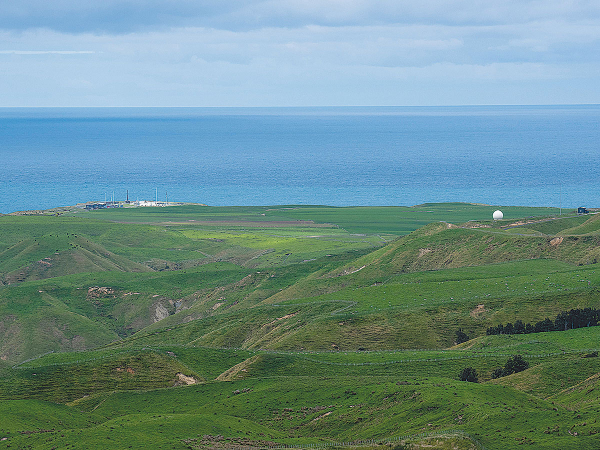 Rocket Lab uses the farm to launch their rockets. Photo Credit: Alpha Pix
A large Māori farm on the Mahia Peninsula in northern Hawke's Bay has rocket science to thank for improving its viability.
Onenui Station is a sheep and beef station run by the proprietors of Tawapata South and it's here that sheep and cattle graze around a high-tech rocket launch pad - and probably wonder what this is all about.
Onenui Station runs 15,000 stock units including 6,000 breeding ewes and 600 breeding cattle on 17000ha (eff.). About three quarters of the land is classified as steep North Island hard hill country and the remaining 350 hectares is productive flat land.
According to the chair of the organisation, Lester White, his goal and the goal of the previous chair and committee was to 'diversify'. He says there was a realisation that their operation was not in a particularly good space financially. This was because of relatively poor returns for meat and wool.
"But in 2016 we struck it lucky when the large international space company Rocket Lab asked if we'd be willing to allow them to launch their rockets from our farm. What was special for us was it was owned by a New Zealander, Sir Peter Beck. This changed our position dramatically," he told Rural News.
Rocket Lab has leased land from the Māori owners and has established a launch pad at Ahuriri Point, right on the tip of Mahia Peninsula, from where their rockets are launched.
White says the relationship with Rocket Lab aligns with their strategy to diversify income opportunities while still maintaining the integrity of the whenua/land. He says Rocket Lab has brought investment to the region, creating jobs and fostering innovation.
"Rocket Lab takes a small footprint of our whenua but returns on that investment means a lot to our operation. We are able to do a lot of things operationally that we may not have been able to have done before and so it helps the financial position of our farming operation," he says.
White says the partnership with Rocket Lab has been an amazing journey with benefits to both parties.
Onenui Station on Mahia Peninsula in northern Hawke's Bay is a world first in more ways than one.



Federated Farmers has welcomed new rural policies released by ACT, saying they align closely with its own election priorities.

Rural Contractors NZ says proposed changes to land transport rules for agricultural vehicles are a welcome response by the Government to out of date regulations which have seen members hit with huge fines.
Alliance is calling for final applications for its 2027 Graduate Programme, with applications closing on Sunday 25 October.
Decades piloting planes has ensured vet and farmer David Hayes is focused on safety. So, after a serious accident while welding on farm, he is sharing his experience so others can learn from it.
Canterbury milk processor, Synlait Milk has confirmed Leon Fung as its chief executive officer.
OPINION: Making it easier to collect rainwater and use it to grow crops and livestock is a no brainer.


OPINION: The same mainstream media muppets that brought you Jacindamania in 2017 have been flat out pimping for the Opportunities…
OPINION: Your old mate reckons the atrocious way farmers in the UK are treated by their lords and masters in…




