PC1 Pause Looms as Coalition Targets Waikato Farm Rules
A pause on Waikato Regional Council's (WRC) plan change that sets new freshwater rules for farming could be announced in the coming weeks.




 increase font size
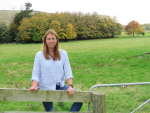
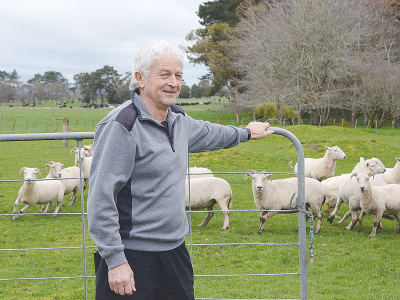 Farmer Keith Holmes is standing for the Waikato Regional Council.
Politics, whether national or local body, is not for the faint-hearted.
It does, however, attract people with huge egos or myopic crusades, and a few with genuine altruistic intent.
Keith Holmes, candidate for Waikato Regional Council (WRC), believes he fits the latter description.
Holmes’ history in governance includes involvement with the Waikato Regional Council’s Lower-Waikato Zone Committee, the Integrated Catchment Committee and the Tauhei Flood Protection Scheme.
He has been a dairy farmer for 40 years and is eager to discuss issues affecting the rural community.
“There’s no doubt that the farming community and related businesses are being slathered at the moment,” he said.
“Farmers are feeling like the ‘lepers’ of our society. There’s a lot of regulation coming through, a lot of compliance and a lot of public distaste towards them.”
Holmes reckons it is getting harder to do business in Waikato and that failure is scaring a whole generation of youngsters away from farming, as it’s not attractive to be a hands-on farmer anymore.
“When you have a region such as ours getting screwed, it’s very serious because we don’t have any viable economic alternative at the moment.”
Holmes’s solution to these issues, and his vision for council, is what he terms “exceptional governance”.
“Governance is a very unsexy subject,” he said. “In simple terms, in a household you have the parents, they look after the budget, ensure the fridge is full, the children are fed and watered.”
He says if the parents are fighting everyone suffers as they are not providing leadership and good examples for the household.
“That’s what we have at regional council. The councillors, who are the ‘parents’, are responsible for employing the chief executive, setting strategy and policy and driving accountability. It is the chief executive’s right to be empowered and carry out that strategy set by council.”
He believes that councillors, despite being good people, do not understand their role.
“Our regional council has had a lot of criticism, because the chief executive has not been given good guidance and the blame lies fairly at the feet of the councillors.”
Holmes says councillors should not be involved in the day to day operations of the council but should be well informed and hold the chief executive to account.
“A huge number of diverse things need to be addressed in the way the council operates,” he said. “Unless we get stronger, more effective governance those problems and complexity are going to perpetuate themselves.”
Holmes believes that with exceptional governance, WRC can achieve the correct balance of the Resource Management Act, ensuring that economic, environmental and societal needs are met symbiotically, to support each other.
“Guardianship of our region demands we have the vision and strength to balance these needs, in order to generate wealth for all our communities and families.”
A pause on Waikato Regional Council's (WRC) plan change that sets new freshwater rules for farming could be announced in the coming weeks.

OPINION: Staying on Plan Change 1, NZ First deputy leader Shane Jones took to social media to gain some political points.
OPINION: All eyes are on the Government as Waikato farmers seek urgent help to fend off the controversial Plan Change 1 (PC1), designed to manage nutrient discharges into waterways in the region.
Waikato farmers have been told that the Government’s new planning system legislation and the region’s Plan Change 1 (PC1) “won’t mesh together very well”.
The Government is looking at intervening on behalf of Waikato farmers who face new regulations around agricultural land use while Resource Management Act (RMA) reforms are underway.


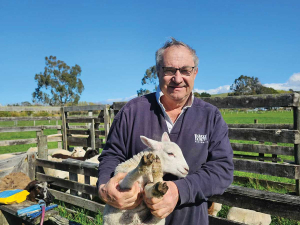
Decades piloting planes has ensured vet and farmer David Hayes is focused on safety. So, after a serious accident while welding on farm, he is sharing his experience so others can learn from it.
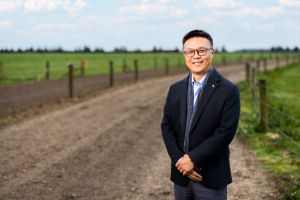
Canterbury milk processor, Synlait Milk has confirmed Leon Fung as its chief executive officer.
OPINION: Making it easier to collect rainwater and use it to grow crops and livestock is a no brainer.
As part of its Election 2026 coverage, Rural News asked political parties how they would help pull the arable sector out of the doldrums. Here's what they said:
Farmers are being encouraged to rethink how they manage waste on farm with the launch of ruralwastesorted.co.nz, a new website bringing together practical tips, real farmer experiences and resources.
New Zealand Winegrowers (NZW) is celebrating the India-New Zealand Free Trade Agreement (FTA) coming into force today, bringing New Zealand wine improved access to one of the world’s fastest-growing economies.


OPINION: The same mainstream media muppets that brought you Jacindamania in 2017 have been flat out pimping for the Opportunities…
OPINION: Your old mate reckons the atrocious way farmers in the UK are treated by their lords and masters in…




