Federated Farmers Welcomes ACT’s New Farming Policies
Federated Farmers has welcomed new rural policies released by ACT, saying they align closely with its own election priorities.




 increase font size
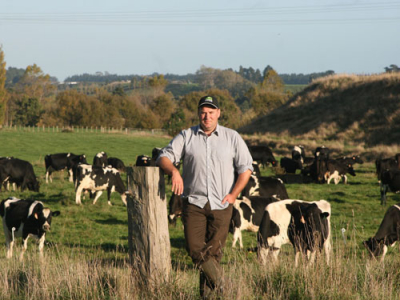 Andrew Hoggard.
Federated Farmers says a capital gains tax will add unacceptably high costs and complexity.
"There is nothing in the Tax Working Group’s final report, released today, that persuades us otherwise," Feds vice-president and commerce spokesperson Andrew Hoggard says.
"A CGT would make our well-regarded tax system more complex, it will impose hefty costs, both in compliance for taxpayers and in administration for Inland Revenue, and it will do little or nothing to ease the housing crisis."
Federated Farmers says it is notable that the members of the working group could not agree on the best way forward, with three deciding a tax on capital gains should only apply to the sale of residential rental properties and the other eight recommending it should be broadened to also include land and buildings, assets, intangible property and shares.
"Federated Farmers believes that the majority on the tax working group have badly under-estimated the complexity and compliance costs of what they’re proposing, and over-estimated the returns."
The recommended ‘valuation day’ approach to establishing the value of assets, even with a five-year window, will be a feeding frenzy for valuers and tax advisors, "and just the start of the compliance headaches for farmers and other operators of small businesses that are the driving force of the New Zealand society and economy.
Lifestyle block owners whose properties are bigger than 4,500m2 will not be fully exempt.
"Trying to look for positives, at least if farmers and small business operators have to swallow the CGT rat, it is made slightly more palatable by the TWG’s recommendation that roll-over relief applies."
It would mean that if a farm is ‘sold’ to family successors, or there is a transfer on death or matrimonial separation to a family member, or a business restructuring where there is no change of ownership, there would be no capital gains tax to pay at that time. However, the potential tax liability would accumulate and kick if the farm property was ever sold out of that family’s ownership.
"We’re also glad that the Tax Working Group has confirmed that money that farmers and other land owners spend on QEII and Nga Whenua covenants, locking up and protecting land for biodiversity and environmental enhancement, should be tax deductible.
"There are many other aspects of the TWG’s report that Federated Farmers would wish to examine and debate further."
Federated Farmers has welcomed new rural policies released by ACT, saying they align closely with its own election priorities.

Federated Farmers is backing Feilding High School’s call to keep Agriculture and Horticultural Science as a standalone subject in Year 11.
National’s pledge to introduce 19 new national standards shows the party is serious about getting Wellington out of farming, Federated Farmers says.
Mobile phone coverage and reliability are deteriorating in rural areas, and farming families are bearing the cost, according to a Federated Farmers survey.
Central Otago District Council (CODC) has voted against a plan to spread treated sewage sludge from Cromwell and Alexandra on farmland near Lauder, a decision Federated Farmers says reflects strong opposition from rural residents.



Federated Farmers has welcomed new rural policies released by ACT, saying they align closely with its own election priorities.

Rural Contractors NZ says proposed changes to land transport rules for agricultural vehicles are a welcome response by the Government to out of date regulations which have seen members hit with huge fines.
Alliance is calling for final applications for its 2027 Graduate Programme, with applications closing on Sunday 25 October.
Decades piloting planes has ensured vet and farmer David Hayes is focused on safety. So, after a serious accident while welding on farm, he is sharing his experience so others can learn from it.
Canterbury milk processor, Synlait Milk has confirmed Leon Fung as its chief executive officer.
OPINION: Making it easier to collect rainwater and use it to grow crops and livestock is a no brainer.




OPINION: The same mainstream media muppets that brought you Jacindamania in 2017 have been flat out pimping for the Opportunities…
OPINION: Your old mate reckons the atrocious way farmers in the UK are treated by their lords and masters in…




