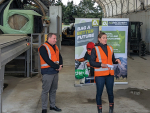
New Rural Recycling Scheme to Replace Voluntary Farm Plastics Programmes by 2027
Environment Minister Nicola Grigg has announced details of a new rural plastics recycling scheme.




 increase font size
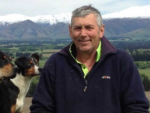
 Tony Cleland says farm environment plans – driven by the farmers, properly audited and with consequences if not adhered to – is a better way to improve waterways.
After hearing about problems with the Government’s new freshwater regulations, Tony Cleland organised a meeting between farmer representatives and the Ministers for the Environment and Agriculture.
Peter Burke reports…
Southland dairy farmer and chairman of rural insurer FMG, Tony Cleland, told Rural News he first found out about the nature of the problems when talking with DairyNZ.
Cleland says, once he went through the changes, he was very worried about the implications and about whether the industry was doing enough to explain what the problems are, talking to the right people and trying to get some sensible solutions.
“I talked with the chairmen of DairyNZ and Beef+Lamb NZ and suggested it would be useful if a group of farmers could talk to the government ministers involved to voice their concerns to them directly,” Cleland explains. “The ministers were contacted and agreed to come and Environment Southland chairman Nicol Horrell agreed to host the meeting.”
A list of invitees to the meeting was then drawn up. There are rumours that Federated Farmers was not on the original list, but was added in much later than the others. Rural News has been told that the Feds are unhappy about this situation and feel that they are being left on the outer. However, it seems that during the meeting the contribution of Feds Southland vice president, Bernadette Hunt was well-received by all parties.
Cleland says that at the meeting there was agreement among the farmer representatives that there were problems with the new rules and that it was going to be challenging for farmers to implement them, and
for Environment Southland to administer.
“Our main thing was that the rules were not necessarily going drive better outcomes and weren’t a good way of trying to improve the waterways,” he says. “We all agreed we wanted to improve waterways, but we saw the idea of a farm environment plan – driven by the farmers, properly audited and with consequences if not adhered to – was a better way to improve the waterways.”
Cleland says Environment Minister David Parker stated that he would not back down on having a consenting process for winter grazing, but was prepared to look at the merits of a strong environment plan as a potential option in certain circumstances. Cleland says such a move would avoid the council having to build up a large consenting team and instead focus on monitoring the performance of farmers.
Cleland says farmers are concerned about the regulations, but also want to get sensible and workable outcomes.
“That’s why they took time out from our diaries, at the busiest time of the year, to have the discussion to get out points across,” he says.
Cleland says regardless of what farmers might think of the rules, they are now in place and have to be met. However, he hopes that a pathway to meeting these new regulations will now be less onerous and more practical to meet on farm.
Environment Minister Nicola Grigg has announced details of a new rural plastics recycling scheme.

The Ballance Farm Environment Awards are coming to the West Coast of the South Island.
There's been widespread support from the primary sector for the Government's announcement on changes to freshwater farm plans that come under the Natural Environment Bill, which is now set to replace the existing RMA.
The chair of the country's environmental regulator, the Environmental Protection Authority (EPA), says changes are already under way to improve the performance of the agency to better meet the needs of those who interface with them.
New Zealand's Emissions Trading Scheme (NZ ETS) encourages afforestation while not achieving climate goals, says a new report released by the Parliamentary Commissioner for the Environment, Simon Upton.


Alliance is calling for final applications for its 2027 Graduate Programme, with applications closing on Sunday 25 October.
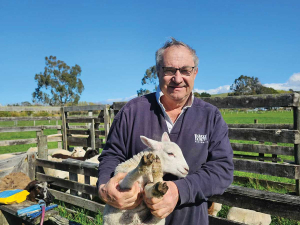
Decades piloting planes has ensured vet and farmer David Hayes is focused on safety. So, after a serious accident while welding on farm, he is sharing his experience so others can learn from it.
Canterbury milk processor, Synlait Milk has confirmed Leon Fung as its chief executive officer.
OPINION: Making it easier to collect rainwater and use it to grow crops and livestock is a no brainer.
As part of its Election 2026 coverage, Rural News asked political parties how they would help pull the arable sector out of the doldrums. Here's what they said:
Farmers are being encouraged to rethink how they manage waste on farm with the launch of ruralwastesorted.co.nz, a new website bringing together practical tips, real farmer experiences and resources.



OPINION: The same mainstream media muppets that brought you Jacindamania in 2017 have been flat out pimping for the Opportunities…
OPINION: Your old mate reckons the atrocious way farmers in the UK are treated by their lords and masters in…




