
Feds Back National’s 19 Farming National Standards
National’s pledge to introduce 19 new national standards shows the party is serious about getting Wellington out of farming, Federated Farmers says.




 increase font size
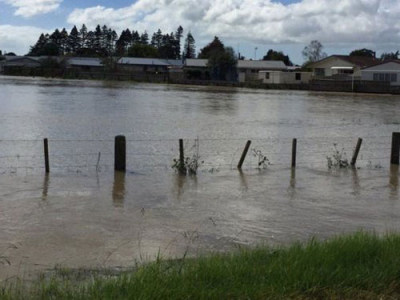 Flooding in Edgecumbe. Photo: New Zealand Defence Force.
Some dairy farmers in flood-hit Edgecumbe face hefty financial pressure as the impact of the floods is realised.
Federated Farmers Bay of Plenty president Darryl Jensen, who is helping coordinate the recovery operation in rural areas, says if cows need to be dried off those farmers will lose about eight weeks of production.
“On top of this, many will have to spend money getting their farms up and running.”
Last week, the Government classified the flooding from Cyclone Debbie as a medium-scale adverse event. This provides for extra recovery assistance including recovery coordination, more support from Enhanced Task Force Green teams and the Bay of Plenty Rural Support Trust, and tax flexibility.
Jensen says about two dozen dairy farmers in the flood-hit Edgecumbe area have had to send their stock away because of the damage to their properties.
“About half the farms were totally underwater and had to get all their stock away,” he says. “Farms close to Edgecumbe tended to be inundated with water, while those further out near Taneatua tended to be affected by silt.”
Jensen says some kiwifruit orchards in the area have been affected and maize crops damaged.
Some farmhouses have had water through them, but many houses and dairy sheds built on higher ground are not so badly affected.
Jensen says Urban Search and Rescue and the Rural Support Trust have been out checking on the needs of farmers and Fonterra has brought in its emergency recovery unit to help farmers clean out their dairy sheds and where possible get the farms up and running.
“The silt that came down has gone into water troughs and they need to be cleaned up; depending on the size of farm hundreds of troughs could need cleaning out.”
Primary Industries Minister Nathan Guy visited the region last week and flew over some of the worst hit areas, noting some maize crops wiped out and others damaged and sodden.
Silting on pastures is a big problem, he says.
“We need to get experts into the region who have been through floods and know how to handle re-grassing on silt because there are all sorts of different theories about the best way to deal with this.”
Guy is impressed with the way farmers and other rural organisations have worked together to deal with the problems of the flooding.
“I also went on a kiwifruit orchard and had a look there with Zespri’s Lain Jager. How long the orchard has been under water will determine how long the crop survives, but every day they have wet roots it’s not ideal.”
Guy says kiwifruit growers are coming into a bumper harvest and want to get the crop off as soon as they can. But a lot depends on what the weather does over Easter.
National’s pledge to introduce 19 new national standards shows the party is serious about getting Wellington out of farming, Federated Farmers says.
Mobile phone coverage and reliability are deteriorating in rural areas, and farming families are bearing the cost, according to a Federated Farmers survey.
New Zealand's role is not to compete with Indian growers, according to NZ Apples and Pears.
The red meat sector is in great heart.
Central Otago District Council (CODC) has voted against a plan to spread treated sewage sludge from Cromwell and Alexandra on farmland near Lauder, a decision Federated Farmers says reflects strong opposition from rural residents.



Mark Hooper has been appointed the new chair of NZPork, the industry organisation representing New Zealand pig farmers.

As the India-New Zealand free trade agreement enters into force, New Zealand’s apple industry has reaffirmed its commitment to the long-term development of India’s apple sector.
Fonterra shareholders can begin voting on Tuesday 20 October in the 2026 Board of Directors’ election, a Co-operative Council election in one Ward, and seven Annual Meeting resolutions.
National’s pledge to introduce 19 new national standards shows the party is serious about getting Wellington out of farming, Federated Farmers says.
The National Party’s policies to make it easier to grow fresh vegetables, secure reliable water and energy and simplify farm planning are practical changes that will give growers the confidence to invest, according to Horticulture New Zealand (HortNZ).
Fonterra Co-operative Group chief financial officer Andrew Murray has resigned to take up a role outside the dairy giant.



OPINION: The same mainstream media muppets that brought you Jacindamania in 2017 have been flat out pimping for the Opportunities…
OPINION: Your old mate reckons the atrocious way farmers in the UK are treated by their lords and masters in…




