World Butchers' Challenge captains go head-to-head before competition
Ahead of the World Butchers' Challenge, the captains of 14 nations’ teams squared off in Paris over the weekend.




 increase font size
In ten years, red meat production will start with the consumer and we need to look now at what the consumer will be wanting, says the general manager of Whangara Farms, Richard Scholefield.
“There is a big push for grass-fed quality beef and lamb. That is what the consumer is wanting now... It is just going to increase.
“They want that product, that beef and lamb, to be sustainably farmed... You’ve got to look after your environment.”
Scholefield said this on a panel at a Northland Genetics Showcase Day at Landcorp Kapiro Station, near Kerikeri. The panel was challenged with outlining where the sector would be in 2027.
He said news media content is today damaging not only dairy, but sheep and beef farming.
“We must be mindful of that; we must be environmentally conscious and environmentally aware how we farm and what we are producing.”
He says cow efficiency is important to Whangara Farms.
“Our cows have to be efficient to produce the product.”
Profitability is the big thing. “If we are not profitable then we are not going to be able to make the changes to produce better product. The market has to reward us for what we produce.”
He forsees a lot more use of genomics for both sheep and beef.
Heifer selectors are used overseas. “Wouldn’t it be amazing to take a DNA snip out of a heifer calf at calf marking then identify your best heifers. That is your tool… you can cull the rest and focus on [the best].”
Scholefield says he feels likes the squeaking wheel in respect of the DNA technology, which he has seen overseas and thinks New Zealand could use.
He forsees much more use of EBVs (estimated breeding values), which “can really increase productivity in sheep and cattle”.
Scholefield wants to see more movement towards niche marketing rather than commodities.
“We are still commodity trading, still producing into the commodity market; whereas I see huge potential with our grass-fed story, our New Zealand story and NZ Inc.”
He can see these feeding into niche markets and would “like to see a lot more collaboration, between breeds, between countries, all the industry”.
“We are fighting for the same markets amongst ourselves all the time and they are not very big; if there was more collaboration we could be a lot more profitable.”
Background
Whangara Farms is a partnership between two Maori incorporations – Pakarae and Whangara B5.
This has created a substantial farming operation leading the way for Maori land-based businesses.
The partnership runs 75,000 stock units including 35,000 Romney/Coopworth ewes and 6000 cattle including 2000 Angus and Angus X breeding cows.
Richard Scholefield was appointed general manager in 2006 after 18 years working in agriculture in NZ, US and UK.
During that time he managed sheep and beef farms for 14 years, seven of those with various Maori incorporations.
Ahead of the World Butchers' Challenge, the captains of 14 nations’ teams squared off in Paris over the weekend.
Alliance Group has launched a new $16 million warehouse technology system at its Lorneville plant near Invercargill.
The main beneficiaries of the EU FTA will be kiwifruit, onions, honey, wine and seafood.
A new independent global report commissioned by Meat Business Women shows a rise in women’s representation in senior leadership roles in the meat industry over the past three years.
OPINION: Your old mate was told about some research that proves that what consumers claim and what they actually do are very different.


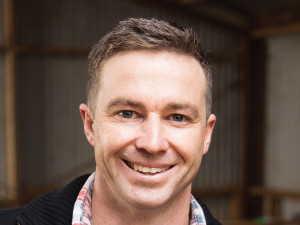
For the first time in a quarter of a century, Federated Farmers has something positive to say about the Labour Party’s climate change policy leading into a general election.
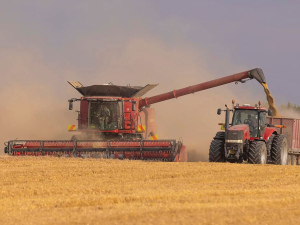
A warning for New Zealand seed and grain companies – be prepared for an exodus of farmers from the arable sector.
Now in its fourth year, the 2026 Fencing Industry Awards, formed part of the proceedings of the FCANZ Conference, held in Nelson during August.
DairyNZ deputy chair Cameron Henderson has been re-appointed unopposed for another term.
OPINION: The stats speak for themselves.
Farms across the upper North Island are trialling different pasture mixes as part of a research programme that aims to build greater resilience into farming systems.


OPINION: The same mainstream media muppets that brought you Jacindamania in 2017 have been flat out pimping for the Opportunities…
OPINION: Your old mate reckons the atrocious way farmers in the UK are treated by their lords and masters in…