
Feds Back National’s 19 Farming National Standards
National’s pledge to introduce 19 new national standards shows the party is serious about getting Wellington out of farming, Federated Farmers says.




 increase font size
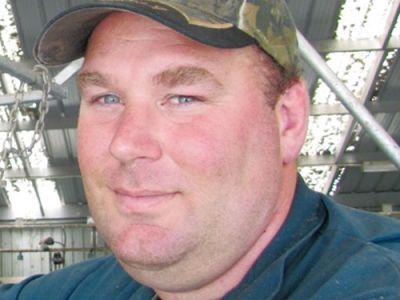 Feds dairy chair Andrew Hoggard.
Fonterra is being urged not to force restrictions on the use of palm kernel expeller (PKE) without consulting farmers.
The co-op's handling of the issue hasn't gone down well with farmers, says Federated Farmers Dairy chairman Andrew Hoggard.
He says many farmers were disappointed to get a letter last month urging them to restrict PKE usage below 3kg/day/cow.
"It's the way it was announced; rather than engaging with farmers the co-op sent a letter leaving farmers a bit concerned," he told Rural News.
Hoggard last week attended a Fonterra shareholders meeting in Palmerston North and raised the issue; chairman John Wilson and
chief executive Theo Spierings were at the meeting.
Hoggard says the farmers were told that excessive use of PKE could become an issue for our international customers.
"If there's an issue, then we have to take action; we can't be making milk that no one will buy. But I hope Fonterra doesn't come down with us on with processes; I hope they give us information and get our feedback before deciding what to do."
Hoggard believes a bonus system for less PKE use and a demerit system for high PKE use may work.
Fonterra has told farmers it is setting guidelines for the use of PKE: maximum quantity 3kg/cow/day.
Fonterra chairman John Wilson says PKE usage has doubled in the past four years. Higher levels of PKE begin to affect milk composition, he says.
Fonterra is planning more tests and research in the coming months on PKE usage and its effect on milk composition.
Fonterra subsidiary Farm Source is a major traders of PKE, a by-product of the palm oil industry in South East Asia. PKE is the residue of mechanical extraction of oil from the nut of the palm tree.
PKE is a dry, gritty meal with a soapy smell and has low palatability until cows get a taste for it. However, it has reasonable levels of energy (ME) and protein, and is relatively easy to introduce to cows.
Fonterra group director co-operative affairs Miles Hurrell says after pasture, PKE is one of the cheapest supplementary feed options for farmers.
Our data shows that use of PKE is increasing, he says.
"We recommend our farmers follow [our maximum ration] guidelines.... The recommended maximum of 3kg/per day/per cow is a voluntary guideline and we will work with our farmers to help them maximise profitability while ensuring the health of their herd."
Hurrell says consumers globally are driving a trend towards dairy products that are sourced from pasture-based milk.
"Consumers want to know what is in their food and where it comes from. We... make the most of this trend to enhance returns to our farmers who are already renowned for producing the best milk in the world... from pasture-based farming.
"This gives us a key competitive advantage globally. Our milk products have an excellent reputation and we want to maintain that, and stay ahead of increasing consumer expectations."
Why new rules?
National’s pledge to introduce 19 new national standards shows the party is serious about getting Wellington out of farming, Federated Farmers says.

Fonterra Co-operative Group chief financial officer Andrew Murray has resigned to take up a role outside the dairy giant.
OPINION: Rivers never sit still. They start as snowmelt and rain in the high country, pick up a creek here and a stream there, and carry all of it down to where it's needed.
Mobile phone coverage and reliability are deteriorating in rural areas, and farming families are bearing the cost, according to a Federated Farmers survey.
Four candidates have been confirmed for two director positions on Fonterra’s board.



National’s pledge to introduce 19 new national standards shows the party is serious about getting Wellington out of farming, Federated Farmers says.
The National Party’s policies to make it easier to grow fresh vegetables, secure reliable water and energy and simplify farm planning are practical changes that will give growers the confidence to invest, according to Horticulture New Zealand (HortNZ).
Fonterra Co-operative Group chief financial officer Andrew Murray has resigned to take up a role outside the dairy giant.
A major move is about to get underway to improve the quality and viability of dairy beef and cattle in NZ.
Veterinarians say changes to the code of welfare for dairy cattle provides a positive foundation for improved cattle welfare across the country.
Today, 15 October, is the International Day of Rural Women, which recognises rural women’s contribution to farming, communities and the environment.




OPINION: The same mainstream media muppets that brought you Jacindamania in 2017 have been flat out pimping for the Opportunities…
OPINION: Your old mate reckons the atrocious way farmers in the UK are treated by their lords and masters in…




