
Federated Farmers Backs Year 11 Agricultural Science
Federated Farmers is backing Feilding High School’s call to keep Agriculture and Horticultural Science as a standalone subject in Year 11.




 increase font size
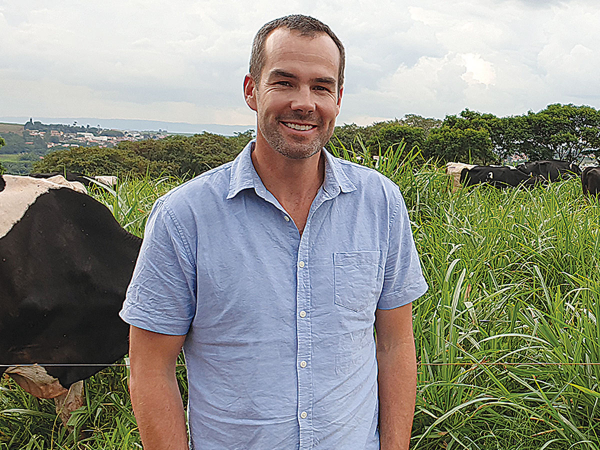 Federated Farmers North Canterbury president Cam Henderson.
The new National Environment Standard (NES) for Freshwater could derail the progress already made on improving water quality in Canterbury, claim Federated Farmers regional presidents.
"The new regulations coming in over the top of what Environment Canterbury already has in place will waste farmers’ time and ratepayers’ money," says Federated Farmers North Canterbury president Cam Henderson, who was also speaking on behalf of David Clark (Mid Canterbury), Jason Grant (South Canterbury) and Jared Ross (North Otago).
The new NES rules include limits on land use intensification, set controls on intensive winter grazing, and limits the use of synthetic nitrogen fertiliser.
Federated Farmers says it has been consistently raising issues with the workability of the regulations. The organisation’s Southland province went as far as calling for a boycott on consents related to winter grazing.
"We agree that a number of the new rules are not workable. But more than that, in Canterbury the NES is simply not needed. Not because we don’t have intensive farming but because our current regional plan already deals with improving water quality in a much more targeted and effective way," says Henderson.
The plan already contains provisions to control land use intensification and ensure good management practices are adhered to for all farm types, including for intensive winter grazing. All forms of nitrogen fertiliser, not just synthetic, are accounted for.
Furthermore, the regional plan requires all intensive farms to hold a resource consent to farm. One consent condition is for a personalised and independently audited farm environment plan.
‘’Canterbury farmers and the regional council have contributed years of work and considerable financial investment to implement the plan and drive real change on farm that will lead to improved water quality over time," says Henderson.
Federated Farmers says the new national standard uses different rules to the current regional plan, which means many farmers will likely need to reapply for their consents and rewrite their farm plans, which will then require re-auditing.
‘’We are talking years of council work to reassess farms. That means more staff and ratepayer funding and extra time and money from farmers too - all to end up where we started. And in the meantime, action on improving freshwater quality stands still.
‘’This time and resource would be better spent on continuing to help farmers implement their current plans, and further developing the regional plan to be even more effective."
The Canterbury Federated Farmers presidents will be writing to Environment Minister David Parker claiming the new freshwater standard is being met by the current regional plan.
Federated Farmers is backing Feilding High School’s call to keep Agriculture and Horticultural Science as a standalone subject in Year 11.
National’s pledge to introduce 19 new national standards shows the party is serious about getting Wellington out of farming, Federated Farmers says.
Mobile phone coverage and reliability are deteriorating in rural areas, and farming families are bearing the cost, according to a Federated Farmers survey.
Central Otago District Council (CODC) has voted against a plan to spread treated sewage sludge from Cromwell and Alexandra on farmland near Lauder, a decision Federated Farmers says reflects strong opposition from rural residents.
Federated Farmers has called on Central Otago District Council (CODC) to drop or vote down a plan to truck sludge from Alexandra and Cromwell to farmland near Lauder, warning it would compound an "outrageous" situation created by a separate council's decision weeks earlier.



Rural Contractors NZ says proposed changes to land transport rules for agricultural vehicles are a welcome response by the Government to out of date regulations which have seen members hit with huge fines.
Alliance is calling for final applications for its 2027 Graduate Programme, with applications closing on Sunday 25 October.
Decades piloting planes has ensured vet and farmer David Hayes is focused on safety. So, after a serious accident while welding on farm, he is sharing his experience so others can learn from it.
Canterbury milk processor, Synlait Milk has confirmed Leon Fung as its chief executive officer.
OPINION: Making it easier to collect rainwater and use it to grow crops and livestock is a no brainer.
As part of its Election 2026 coverage, Rural News asked political parties how they would help pull the arable sector out of the doldrums. Here's what they said:




OPINION: The same mainstream media muppets that brought you Jacindamania in 2017 have been flat out pimping for the Opportunities…
OPINION: Your old mate reckons the atrocious way farmers in the UK are treated by their lords and masters in…




