Susan O'Regan Appointed New Chair of QEII National Trust
Minister of Conservation Hon Tama Potaka has appointed Susan O'Regan as Chair of the Queen Elizabeth II National Trust (QEII) for a three-year term.




 increase font size
 The Waikato river.
A committee made up of river iwi governors and Waikato regional councillors has agreed to recommend a proposed plan change for the Waikato and Waipa rivers to the regional council for consideration.
The committee’s decision at a meeting at Karapiro yesterday followed consideration of the proposed plan change formulated by a multi-sector Collaborative Stakeholder Group (CSG).
The CSG was formed as part of the Healthy Rivers: Plan for Change/Wai Ora: He Rautaki Whakapaipai project, which has been running since 2012. The project has been a partnership that has involved river iwi, Waikato Regional Council and a wide range of key stakeholders, including the farming sector.
The regional council is now due to consider the notification of the proposed plan change on September 15. Public consultation is due to be carried out once a plan change recommendation is signed off by the council, giving the wider public the chance to have a formal say on what’s proposed. The committee agreed that this submissions process should be extended from a recommended 60 days to no less than 80 days given the level of public interest in the plan change, as well as the complexity of, and the volume of information supporting, the plan change.
The plan change is designed to take the rivers on the first stage of an 80-year journey towards being safe for swimming and food gathering along their entire lengths, as is required by the Te Ture Whaimana o Te Awa o Waikato (Vision and Strategy for the Waikato and Waipa rivers). The Vision and Strategy stemmed from Treaty settlement legislation giving iwi a central role in protecting their tupuna awa (ancestral rivers). The CSG had regard to both the Vision and Strategy and the National Policy Statement on Freshwater Management in its deliberations.
The plan change focusses on the contaminants nitrogen, phosphorous, pathogens and sediment getting into the rivers. These can harm the health of water bodies or present risks to people and stock, and the aim is to reduce their presence to acceptable levels.
Due to the extent of change required, the CSG has recommended an 80-year staged approach to achieving the water quality required by the Vision and Strategy for the rivers. The first stage covered by the proposed plan change recommended by the committee yesterday involves actions over a decade that will ultimately result in 10 per cent of the change towards achieving Te Ture Whaimana.
Analysis indicates the measures proposed by the CSG will make major improvements in bacteria levels and some improvement in phosphorus and sediment levels in the first 10 years.
The CSG’s full draft plan change recommendations are available via www.waikatoregion.govt.nz/healthyrivers
Minister of Conservation Hon Tama Potaka has appointed Susan O'Regan as Chair of the Queen Elizabeth II National Trust (QEII) for a three-year term.
Farms across the upper North Island are trialling different pasture mixes as part of a research programme that aims to build greater resilience into farming systems.
The Government has announced it will pause key parts of Waikato Plan Change 1 (PC1) in a decision that is set to give Waikato farmers a reprieve from new consenting and farm-planning requirements while the wider resource management system is overhauled.
When Fraser Hasnip returned to his family farm in Pirongia, Waikato, he saw an opportunity to do things differently.



Fonterra Co-operative Group chief financial officer Andrew Murray has resigned to take up a role outside the dairy giant.
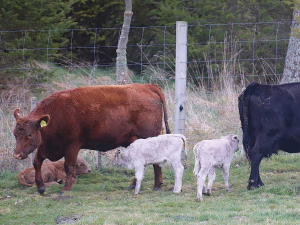
A major move is about to get underway to improve the quality and viability of dairy beef and cattle in NZ.
Veterinarians say changes to the code of welfare for dairy cattle provides a positive foundation for improved cattle welfare across the country.
Today, 15 October, is the International Day of Rural Women, which recognises rural women’s contribution to farming, communities and the environment.
Global dairy giant Lactalis has integrated its Australian operations with the Mainland Dairy consumer business it acquired from Fonterra earlier this year.
High country stations, mixed sheep and beef farms, Māori-owned farms, corporates and family operations are among the nine commercial farms taking part in the Livestock Innovation Farming Transformation programme, known as LIFT.



OPINION: The same mainstream media muppets that brought you Jacindamania in 2017 have been flat out pimping for the Opportunities…
OPINION: Your old mate reckons the atrocious way farmers in the UK are treated by their lords and masters in…