PGG Wrightson Revenue Tops $1.1b as Profit Jumps 46%
After delivering a strong financial year, rural trader PGG Wrightson says the coming months will depend on customer confidence and weather.




 increase font size
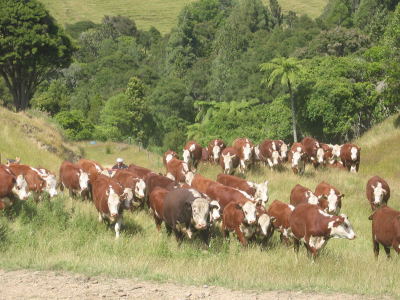
A premium line-up of Hereford sires will be offered for sale in Manawatu next week.
Fourteen top Hereford bulls will be offered for sale at the PGG Wrightson Livestock Hereford National Sale on May 14 at the Strahan Land Company, Kiwitea.
Sourced from prominent studs from the North and South Islands, the bulls have been grazing on the Strahan property at Kiwitea for three and a half months to create a level playing field.
“The bulls are looking great despite the adverse weather - no rain, no grass – showing how great the Hereford breed is under all sorts of conditions,” says Robert Kane, chairman of the breed’s show and sales committee.
The bulls' genetics will suit the many different beef breeding programmes in New Zealand today; 70% of the bulls have below average gestation length EBVs, 65% have below average birth weight EBVs, 80% have 600-day weight EBVs in top 30% for the breed and 80% have above average EMA, with 65% in the top 30% of breed.
“A high proportion are performance bulls with top carcase and growth genetics. Some are curve benders (low birth weight EBV to high 600-day weight) and some are ideal for heifer mating or breeding bulls for the dairy market.”
The sale will kick-off with an on-farm parade at 9.30am followed by paddock inspection and judging results.
On the day the bulls will be paraded down a laneway with Chris Douglas compering and giving vendors a brief pedigree summary.
They then can be sighted in the paddock and subsequently sold on site in the marquee with a photo displayed behind the auctioneer.
The on-farm sale starts at 11.30am and will be followed by a Hereford Prime BBQ lunch.
There is an online catalogue and photos of all the bulls are available on the NZHA website.
After delivering a strong financial year, rural trader PGG Wrightson says the coming months will depend on customer confidence and weather.
Strong competition and tightening supply have seen wool reach its highest prices paid at auction since 2011.
A firm belief in the agricultural sector has kept the PGG Wrightson business going for 175 years, says chief executive Stephen Guerin.
Strong farmgate milk price is helping boost investment on farms, says PGG Wrightson chief executive Stephen Guerin.
Booming primary sector exports are helping lift earnings for farm service providers.

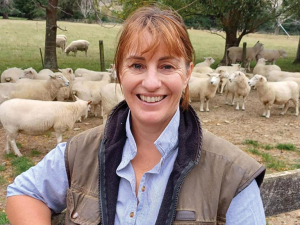
B+LNZ's Wormwise veterinarian Mary Bowron has won the Best Sheep and Beef Vet of the Year Award in recognition of her outstanding contribution to New Zealand’s sheep and beef sector.
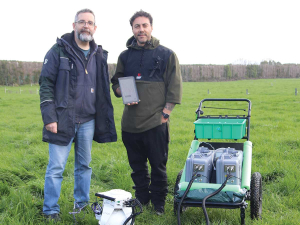
Researchers at Massey University are using a special piece of scientific equipment to improve the measurement of greenhouse gas emissions from pasture soils.
More signs of a booming kiwifruit sector.
OPINION: David Seymour and James Meager's plan to make it easier for farmers and orchardists to operate drones can best be described a 'courageous' move.
New Zealand wool is reaching new heights as air filtration companies move away from synthetic products to biodegradable alternatives.
Opuha Dam's ability to protect South Canterbury communities from major flooding has taken a significant step forward, with Opuha Water Limited (OWL) successfully commissioning a new outlet valve capable of releasing record volumes of water from the dam ahead of a weather event.

OPINION: The same mainstream media muppets that brought you Jacindamania in 2017 have been flat out pimping for the Opportunities…
OPINION: Your old mate reckons the atrocious way farmers in the UK are treated by their lords and masters in…