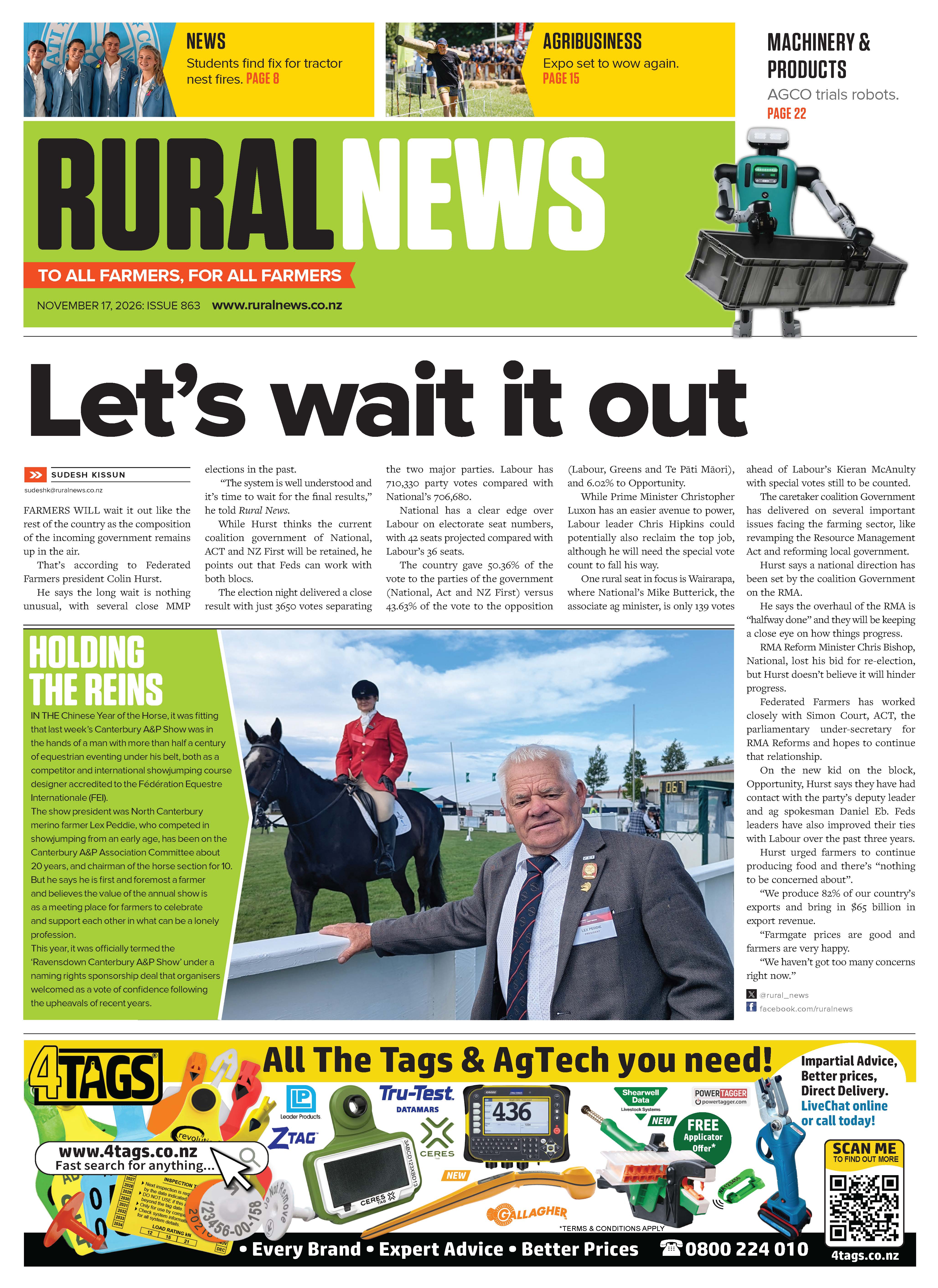
Farmers Wait Out Close Election, Says Federated Farmers
Farmers will wait it out like the rest of the country as the composition of the incoming government remains up in the air.




 increase font size
 Miles Anderson.
Farmers hope next week’s wool summit in Wellington will bring much needed action for New Zealand’s wool industry.
Federated Farmers says they hope the summit will produce tangible opportunities for collaboration to help move the New Zealand wool industry forward.
Our wool producers cannot afford for the downward spiral the strong wool industry is experiencing to continue, says the organisation’s Meat & Wool chairperson, Miles Anderson.
"We want our farmers to be successful - and given the growing desire for sustainable products and awareness of what micro plastics are doing to the environment there has never been a better time for wool to be the environmentally friendly choice for business and the wider community."
"Using wool is a win for everyone involved. It is natural and renewable, biodegradable, breathable, non-allergenic and flame retardant, while creating jobs sustaining our rural communities."
It is great wool’s key stakeholders are gathering at this meeting but it has to be more than just another talkfest, says Miles.
"Wool has gone through enough dips. Let’s come up with some concrete actions to re-position wool in its rightful place as the sustainable choice for all consumers. We are committed to being part of the journey."
Farmers will wait it out like the rest of the country as the composition of the incoming government remains up in the air.

OPINION: The Government's decision to reinstate agriculture and horticultural science as a standalone subject from Year 11 is the right one.
With less than a week to go before voters choose the next government, Federated Farmers has a simple message to its members - get out and vote.
Federated Farmers has welcomed new rural policies released by ACT, saying they align closely with its own election priorities.
A farmgate milk price of $10/kgMS this season is firming up as milk powder prices soar and the New Zealand dollar weakens.

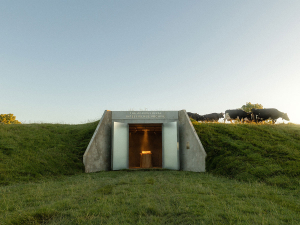
Halter has launched Mav, an AI farming assistant that lets dairy farmers ask questions about their herd and pasture and get answers drawn from the data the company’s collars already collect.

OPINION: At first glance it appears that Father Christmas has delivered the rural sector good tidings, with most pundits predicting the return of the centre-right coalition.
For 15 years, Glenda Rees has travelled from Gore to Awarua, often several times a week, to keep watch over one of the country’s rarest birds.
With some farmers opposing a government-industry partnership set up to develop methane reducing products, one NZ company claims that it already has a product on the market.
During the nesting season, from September to December, industrious starlings can quickly build nests in the darker areas behind tractor and vehicle, usually close to hot engines, typically resulting in localised damage or in some cases complete write-offs.
The meat processing industry is much more collegial than it was in the past and is now more focused on common goals.

OPINION: The same mainstream media muppets that brought you Jacindamania in 2017 have been flat out pimping for the Opportunities…
OPINION: Your old mate reckons the atrocious way farmers in the UK are treated by their lords and masters in…