James Blair Named 2026 Young Grower National Champion
James Blair, an agronomist for AS Wilcox and the Pukekohe regional champion, has won the 2026 Young Grower national title.




 increase font size
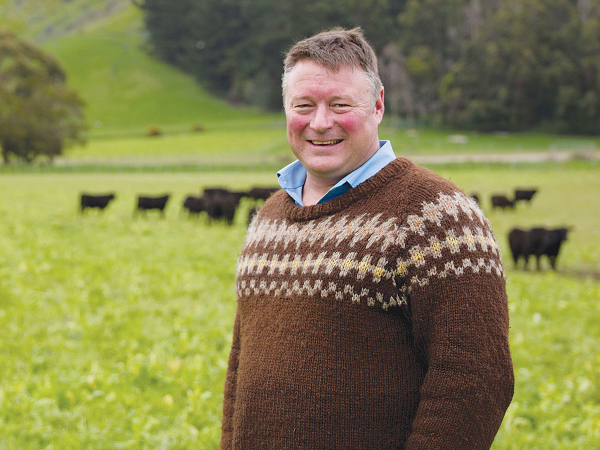 Silver Fern Farms and Farmlands chair Rob Hewett has urged horticulturalists to back He waka Eke Noa.
The country's horticulturalists have been urged to get in behind the controversial He Waka Eke Noa (HWEN) agricultural emissions plan.
In a speech to the recent Horticulture Conference, Silver Fern Farms and Farmlands chair Rob Hewett claimed this would help play the sustainability card in wooing the world’s consumers. He says the world’s most affluent consumers increasingly care about their food’s origins.
“We’ve got to be relentless about chasing these affluent consumers,” Hewett added.
“We can feed about 40 million, and those 40 million, in my view, need to be the wealthiest people around the globe. I don’t care where they are, what they say, what they look like.”
That meant playing to their value set, which includes sustainability.
“We just need to do it. You need to track and trace what you do on your farm to verify to your consumers that what you say you do, and what you do, are the same thing.
“They can buy your product with confidence.”
Hewett believes New Zealanders take our advantages for granted.
“Consumers around the globe have got more envious of what we have here since they’ve had two years to think about it as they stared at their walls during lockdown.”
“But we are a producer of quality food. When you are a producer of expensive high quality food, you need to find the right consumers who have the right value set, to then go in shamelessly and get the premiums off them.
“That means behaving differently, but it’s worth it. And the counterfactual is if we don’t, we’ll be squashed by commodities.”
He added that it’s not just the products that we grow, but consumers’ perception that’s really important to leverage our “Brand New Zealand” story.
Hewett says it’s a matter of visibility of information for the consumer. Farmers and orchardists need to be able to say what they are doing, what they have applied, how they manage staff, and that they stand behind their policies.
He invariably finds that while they are doing all this, but they’re not recording that they’re doing it.
“Consumers are increasingly asking for that.”
Hewett said the recent Free Trade Agreements with the UK and EU were good for New Zealand – although they gave little or nothing for the red meat and dairy sectors. He also questioned the worth of diversifying away from China and Asia towards markets that pay less.
Although there was a risk in concentrating on one market, China is the best paying market in the globe and it takes everything we can produce, he says.
“Being on the doorstep of such burgeoning economies as Southeast Asia, particularly plays well into fruit and veg, in my view.”
Hewett says China has effectively outsourced large animal ruminant production because they don’t grow enough grass and importing feed is really expensive.
He noted that China has dairy farms (established by Fonterra but now sold to Australia) producing white milk for city consumption.
“But quite frankly, it’s a drop in the bucket of domestic demand up there and you could – not to put too fine a point on it – say it was window dressing.
“They need what we have here and they’ve outsourced it. They’re going to go really hard in other areas and horticulture is in that space.”
Praise for Trade Bureaucrat
Hewett praised the work done by the Ministry of Foreign Affairs and Trade – singling out trade negotiator Vangelis Vitalis.
He says Vitalis has done an outstanding job, “navigating that very wiggly and narrow path between China and the US”, and how we deal with foreign trade as a consequence of that.
“It’s a difficult space to occupy, but we have to occupy that space. We can’t afford to choose sides because there will be a net loss there for us as a trading partner.”
Hewett says Australia has quite clearly picked a side and has already seen some consequences in their trade with China.
He added that a rules-based trading environment really helps small countries like New Zealand. However, Hewett characterised New Zealand as a free-trade dinghy in an increasingly protectionist sea.
“The clarity around our free trade environment, the fact that we have no subsidies and we have a clear line of sight to the markets and are responsive to those consumer needs, has stood us in good stead.”
Jacinda Fanboy
Hewett may have raised some farming sector eyebrows with his praise for Labour’s former Prime Minister, Jacinda Ardern.
“I can tell you now, Jacinda was our biggest marketing tool offshore during Covid,” he told the conference.
“She got us about a 5% Covid premium for New Zealand – that would be my estimate – and I think there’s about a 5% ‘grass-fed New Zealand’ premium as well.
“In a commodity space, this is really important.”
James Blair, an agronomist for AS Wilcox and the Pukekohe regional champion, has won the 2026 Young Grower national title.
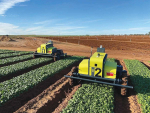
Claimed to be the first autonomous robot for New Zealand vegetables growers, the first Kilter AX-1 unit has arrived in the country.
After delivering a strong financial year, rural trader PGG Wrightson says the coming months will depend on customer confidence and weather.
The apple sector is working with the Government to unlock access to two key markets that could bring millions in revenue for apple growers.
New Zealand needs to make sure that it continues to focus on its own food security, according to HortNZ board member and blueberry grower Dermott Malley.



Now in its fourth year, the 2026 Fencing Industry Awards, formed part of the proceedings of the FCANZ Conference, held in Nelson during August.
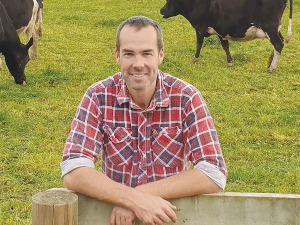
DairyNZ deputy chair Cameron Henderson has been re-appointed unopposed for another term.
OPINION: The stats speak for themselves.
Farms across the upper North Island are trialling different pasture mixes as part of a research programme that aims to build greater resilience into farming systems.
Election years are always a concerning time for farmers, according to DairyNZ chair Tracy Brown.
The Ballance Farm Environment Awards are coming to the West Coast of the South Island.


OPINION: The same mainstream media muppets that brought you Jacindamania in 2017 have been flat out pimping for the Opportunities…
OPINION: Your old mate reckons the atrocious way farmers in the UK are treated by their lords and masters in…