Labour Supports NZ/India FTA
National's decision to ‘dribble’ information about the NZ/India to Labour contributed to the delay in it deciding to supported the FTA.




 increase font size
 Agriculture Minister Damien O'Connor
Agricultural sector organisations and the Government have signed a memorandum of understanding as part of a plan to reduce agricultural emissions.
The Ministry for Primary Industries signed the agreement alongside representatives from ANZCO Foods, Fonterra, Ngāi Tahu Holdings, Ravensdown, Silver Fern Farms and Synlait.
The joint venture is a key component of the Centre for Climate Action on Agricultural Emissions.
Agriculture Minister Damien O'Connor says the Government is committed to reducing agricultural emissions and need to get new tools and technology into the hands of farmers as soon as possible.
He says the joint venture will be a combined effort by government and industry to achieve this.
The joint venture will undertake targeted investments and actions to accelerate the development, commercialisation, and delivery of effective and affordable solutions for farmers to significantly reduce agricultural emissions.
"It will be a long-term partnership with industry funding being matched by the Government. Initial indicative commitments would see around $172 million invested over the next four years by industry and government to develop and commercialise practical tools and technologies for farmers. That includes $7.75 million by industry this financial year alone," he says.
O'Connor says NZ can and should be, a leader in developing innovative new tools and technologies to reduce emissions on-farm and be the one other countries can look to.
The setting up of Centre for Climate Action on Agricultural Emissions was announced as part of the $338.7 million in funding allocated by the Government in this year's Budget over the next four years to strengthen the role of research and development for new tools and technologies to reduce on-farm emission.
The Government has committed to a net-zero target for 2050 and reducing biogenic methane emissions by 10% by 2030, relative to 2017 levels, and 24 to 47% lower by 2050. The agriculture sector contributes around 50% of New Zealand's gross greenhouse gas emissions, and around 91% of our biogenic methane emissions.
National's former agriculture spokesperson Barbara Kuriger says the move is a step in the right direction. "The $172 million over four years committed to tools and technology, including $7.75 million in this financial year, is a constructive spend of committed Budget funds," she says.
Kuriger says National supports the current emissions targets and budgets and the Government needs to work constructively with farmers to enable them to continue to lead the world in lowering agricultural emissions.
"Science and technology will play a big part in that, so government funding should be directed towards progressing innovative developments in this space."
National's decision to ‘dribble’ information about the NZ/India to Labour contributed to the delay in it deciding to supported the FTA.
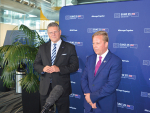
When it comes to international trade, politicians from all sides of the aisle are united, says Labour's trade spokesman Damien O'Connor.
Federated Farmers have reiterated their support for the coalition Government to abolish the present ban on the live export of animals.
As the coalition Government mulls new regulations to reinstate the export of live animals, debate is heating up between supporters and opponents.
OPINION: Your canine crusader was truly impressed by the almost unanimous support given by politicians of all stripes in Parliament to the recent passing of legislation for the NZ/EU free trade deal.

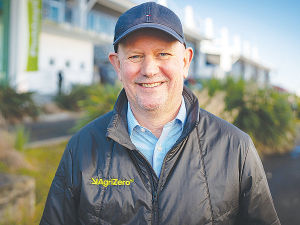
A move to boost farmer uptake of low methane emitting sheep is underway.
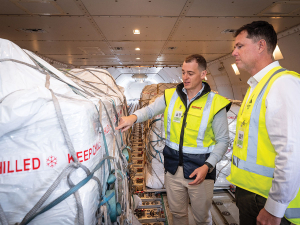
Silver Fern Farms has tackled the ongoing war-induced shipping challenges to mideast markets by airlifting 90 tonnes of chilled New Zealand lamb and beef to the United Arab Emirates.
The primary sector is leading New Zealand's economic recovery, according to economist and researcher Cameron Bagrie.
Dairy industry leader Jim van der Poel didn't make much of the invitation he received to the recent New Zealand Dairy Industry Awards in Rotorua.
Farmers around the country are going public big time, demanding their local district, city and regional councils come up with amalgamation plans that meet the needs of rural communities and don't allow urban councils to dominate.
The battle for the rural vote is on and parties are securing high profile names to try and bolster their chances at the general election.



OPINION: It's been an eye-opener watching the big media companies behaving exactly like the powers-that-be who the crusading hacks from…
OPINION: Town and country find themselves on the same page when it comes to anger over price hikes from NZ…