McRae Wins Southern South Island B+LNZ Director Vote
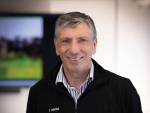
Matt McRae, a farmer from Mokoreta in Southland who runs a sheep, beef and dairy support business alongside a sheep stud, has been elected to the Beef +Lamb NZ Board as a farmer director.




 increase font size
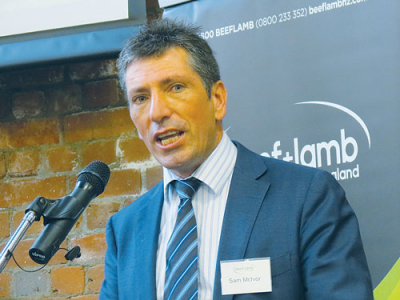 Sam McIvor.
Sheep and beef farmers have vastly improved their productivity since the 1990s, says Beef + Lamb NZ’s chief executive Sam McIvor.
He told the recent Pastoral Greenhouse Gas Research Consortium (PGgRc) conference that this was best illustrated by increased lambing percentages – up from 100% to a 125% average.
“Additionally, we are achieving higher lamb weights sold per ewe wintered, increasing by 93% -- remarkable,” he says.
Sheep and beef farmers are using far less resources, maintaining the amount of meat produced and exported (over 90% of the sheepmeat produced is exported) from half the number of sheep.
“And it’s been achieved on 23% less land as conversions to dairy have occurred and hill country has been retired into native bush reserves,” he adds.
At least 600% of new QE2 covenants are occurring on sheep and beef farms; not only has the land-use footprint reduced, so have the greenhouse gas emissions.
It’s been calculated that since 1990, driven by genetic and productivity gains, greenhouse gas emissions have fallen by 19% on sheep and beef farms.
“Sheep and beef emissions are 19% below what they were in 1990. In emissions intensity (kg of CO2 equivalent per kg of product) sheep have improved 23.1% and beef 19.7% -- about 1% per year. If the current rate of emissions reduction continues, sheep and beef will just make the 30% below 2005 mark, and will also hit the 50 by 50 mark,” he says.
McIvor says while the global meat industry is being challenged on its environmental/sustainability footprint, NZ has a strong argument to mount on its production methods. At least 70% of the land farmed by sheep and beef is hill country, producing food on land that would otherwise unused.
McIvor says while the UK remains an important market for NZ, a carcase these days makes 42 different cuts, exported to 100 countries.
“In the 1960s over 90% was sold as frozen carcases; today 18% is chilled cuts and boneless product and frozen carcases make up only 5% of our trade. This has been a great effort by our processors and exporters, meeting the demands of consumers in many different countries.”
Matt McRae, a farmer from Mokoreta in Southland who runs a sheep, beef and dairy support business alongside a sheep stud, has been elected to the Beef +Lamb NZ Board as a farmer director.
Ospri is reducing TB testing frequencies and movement control measures as the disease risk subsidies in parts of the country.
Recent widespread autumn rain will have triggered the germination of subterranean clover seeds, and the resulting seedlings should be allowed to reach the 3–4 trifoliate leaf stage before grazing, says Beef+Lamb NZ.
Southland farmer and director Tony Cleland has been named OSPRI New Zealand’s new chair.
A hub farm in each of Beef + Lamb NZ’s seven regions and more focus groups are being rolled out for the red meat sector this year.


Farmgate lamb prices are down by 8%, beef cattle by 4.5% and farm expenditure up by 4.2%.
Kiwifruit growers are watchful but remain optimistic as concerns around the potential effects of the El Niño weather pattern this season.
Almond hulls sourced from Australian orchards may have the potential to help New Zealand cows reduce emissions, boost milk yield and lower input costs.
Striking a balance between meeting the needs of industry to speed up approval time for products but on the other hand ensuring that risks are properly assessed.
Surprised, humbled and quite thrilled. That’s the reaction of James Allen, one of the founding partners and now chief executive of AgFirst, on being made a life member of the Institute of Rural Professionals.

OPINION: The same mainstream media muppets that brought you Jacindamania in 2017 have been flat out pimping for the Opportunities…
OPINION: Your old mate reckons the atrocious way farmers in the UK are treated by their lords and masters in…